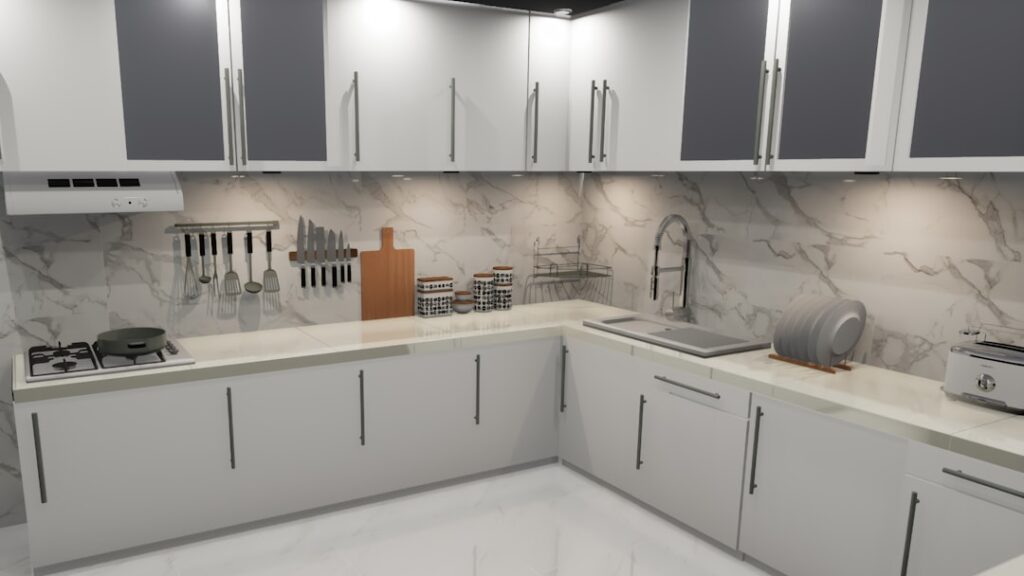
The kitchen is the most electrically demanding room in your home, and it is also where water and high-wattage appliances meet, so the rules are strict for good reason. Understanding kitchen electrical code before you remodel or wire a kitchen keeps your family safe and your inspection painless. The National Electrical Code (NEC), updated every three years, sets the baseline, though your local jurisdiction may amend it. This guide breaks down the core requirements: how many circuits you need, where outlets must go, and when GFCI and AFCI protection is required. Always confirm current local code and pull a permit.
- Required Small-Appliance Circuits
- Countertop Receptacle Spacing
- GFCI Protection Is Mandatory
- AFCI Protection for Kitchen Circuits
- Dedicated Circuits for Major Appliances
- Lighting Circuits and Switch Rules
- Outlet Height and Placement Details
- Working With Permits and Inspectors
- Building a Safe, Compliant Kitchen
Required Small-Appliance Circuits
The single most important kitchen rule is the requirement for dedicated power to countertop outlets. The NEC requires at least two 20-amp small-appliance branch circuits serving the countertop receptacles. These circuits cannot also serve lighting or outlets in other rooms; they are reserved for the kitchen counter, dining area, and pantry receptacles.
Why two? A single circuit cannot handle a microwave, toaster, and coffee maker running at once without tripping. Spreading countertop outlets across two 20-amp circuits prevents constant nuisance trips.
Countertop Receptacle Spacing
Code dictates exactly where outlets go along the counter so you are never far from power. The rule of thumb is that no point along the countertop wall line should be more than 24 inches from a receptacle. In practice this means an outlet at least every 4 feet.
- A receptacle is required for any countertop section 12 inches or wider.
- No point along the wall counter may be more than 24 inches from an outlet.
- Island and peninsula countertops also require receptacles under current code.
This spacing means a typical run of counter gets multiple outlets, which is exactly what a busy kitchen needs.
GFCI Protection Is Mandatory
Ground-fault circuit interrupter (GFCI) protection is one of the most critical kitchen safety requirements. A GFCI device shuts off power in a fraction of a second if it detects current leaking to ground, which is exactly what happens when an appliance contacts water.
All 125-volt receptacles serving kitchen countertops must be GFCI protected. Recent code editions have expanded GFCI requirements to additional kitchen receptacles and, in newer editions, to certain hardwired appliances as well. You can satisfy this with GFCI outlets or a GFCI breaker protecting the circuit.
AFCI Protection for Kitchen Circuits
Arc-fault circuit interrupter (AFCI) protection guards against fires caused by damaged wiring that arcs. Current NEC editions require AFCI protection for kitchen branch circuits supplying 120-volt outlets. Many homeowners now install dual-function breakers that provide both GFCI and AFCI protection in a single device, simplifying the panel.
If you are updating an older kitchen, expect the inspector to require these protections on the circuits you touch.
Dedicated Circuits for Major Appliances
Large appliances draw too much current to share a circuit, so each generally gets its own dedicated line.
- Refrigerator: often a dedicated 15- or 20-amp circuit so a tripped countertop circuit will not spoil food.
- Dishwasher: a dedicated 15- or 20-amp circuit, GFCI protected.
- Garbage disposal: a dedicated circuit, sometimes shared with the dishwasher per local code.
- Microwave (built-in/over-range): a dedicated 20-amp circuit.
- Electric range/oven: a dedicated 240-volt, 40- or 50-amp circuit on heavy-gauge wire.
Sizing each appliance circuit correctly prevents overloads and keeps essential appliances running independently.
Lighting Circuits and Switch Rules
Kitchen lighting must be on a separate circuit from the small-appliance circuits so a tripped counter outlet does not leave you in the dark. At least one wall switch must control lighting in the kitchen, and recessed cans, under-cabinet lighting, and fixtures should be planned on their own general-purpose circuit.
Under-cabinet LED strips and puck lights have become standard and add both function and ambiance, but plan their wiring during rough-in.
Outlet Height and Placement Details
Beyond spacing, code and good practice govern where receptacles sit vertically. Countertop outlets are typically mounted so the bottom of the box sits a few inches above the counter, generally not more than 20 inches above the countertop surface to count toward the required spacing. Outlets installed face-up in a countertop surface are prohibited because spills can run into them; receptacles must be on the wall or the face of the cabinet, not the horizontal counter.
Islands and peninsulas have their own evolving rules. Recent code changes have moved away from requiring receptacles in the side of an island (a tripping and damage concern) toward allowing them in pop-up or above-counter locations. Because this is an area where code has shifted between editions, confirm what your local jurisdiction currently enforces before you plan island outlets.
Also remember that receptacles serving specific appliances, such as a dedicated outlet behind the refrigerator or under the sink for a disposal, do not count toward the countertop spacing requirement. Those are separate, dedicated circuits, and the counter still needs its own properly spaced, GFCI-protected receptacles on the two small-appliance circuits.
Working With Permits and Inspectors
Nearly all kitchen electrical work requires a permit and inspection. The inspector will check circuit count, outlet spacing, GFCI and AFCI protection, proper wire gauge for each breaker, and secure connections in approved boxes. Skipping the permit can cause problems when you sell the home and, worse, can leave dangerous work undiscovered.
Unless you are experienced and your jurisdiction allows homeowner electrical work, hire a licensed electrician for new circuits and panel work.
Building a Safe, Compliant Kitchen
Following kitchen electrical code is not bureaucracy; it is the difference between a safe kitchen and a fire or shock hazard. Plan for at least two 20-amp counter circuits, space outlets so no point is more than 24 inches from one, protect everything with GFCI (and AFCI where required), and give major appliances dedicated lines. Confirm the current code edition with your local building department, pull a permit, and when in doubt, bring in a licensed pro.