Kitchen lino flooring has been a staple in homes for over a century, and it remains one of the most practical choices for the room that takes the most abuse. Lino — short for linoleum — offers water resistance, easy cleaning, cushioned comfort underfoot, and a price point that fits almost any renovation budget.
- True Linoleum vs Vinyl: What Is the Difference?
- Why Lino Works Well in Kitchens
- Sheet vs Tile vs Plank Formats
- Natural Linoleum: Brands and Options
- Vinyl Sheet Flooring for Kitchens
- Waterproof Considerations
- Design Options and Trends
- Installation Methods
- Professional Installation (Recommended for Sheet)
- DIY Installation (Tiles and Click Formats)
- Subfloor Requirements
- Pricing Guide
- Maintenance and Cleaning
- Pros and Cons
- Frequently Asked Questions
But the term “lino” has become complicated. Many people use it to describe both true linoleum (made from natural materials) and vinyl sheet flooring (made from PVC). These are different products with different properties, price points, and performance characteristics. This guide covers both, explains the differences, and helps you choose the right one for your kitchen.
While you’re upgrading the kitchen floor, it might be a good time to rethink the seating too. Swapping out old bar stools is one of those small changes that makes the whole room feel more pulled together.
We may earn a commission when you purchase through our links.
True Linoleum vs Vinyl: What Is the Difference?
This distinction matters because the products perform differently and cost different amounts.
True Linoleum
True linoleum is made from natural raw materials — linseed oil, wood flour, cork dust, limestone, tree resins, and jute backing. It was invented in 1860 and was the dominant kitchen flooring material for nearly a century. Modern linoleum is manufactured primarily by Forbo (Marmoleum brand) and Tarkett. It is biodegradable, naturally antibacterial, and can last 40+ years with proper care.
Vinyl Sheet Flooring
Vinyl sheet flooring is made from PVC (polyvinyl chloride) with plasticizers, a printed design layer, and a clear wear layer. It is the product that most people mean when they say “lino.” Vinyl sheet is less expensive than true linoleum, comes in a wider range of designs (including realistic wood and stone looks), and is easier to install. Major brands include Armstrong, Mannington, Congoleum, and Tarkett.
Quick Comparison
- Material: Linoleum is natural; vinyl is synthetic PVC
- Durability: Linoleum lasts 25-40 years; vinyl lasts 10-20 years
- Color: Linoleum color goes all the way through; vinyl color is a printed surface layer
- Environmental impact: Linoleum is biodegradable and low-VOC; vinyl is not biodegradable and can off-gas
- Cost: Linoleum is $4-$8/sq ft; vinyl sheet is $1-$5/sq ft
- Design variety: Vinyl offers more realistic patterns; linoleum comes in solid colors, marbled, and flecked patterns
Why Lino Works Well in Kitchens
Kitchen lino flooring remains popular because it addresses every challenge a kitchen floor faces.
- Water resistance. Both linoleum and vinyl resist surface water from spills, splashes, and mopping. Vinyl sheet is particularly effective because a full-width sheet can cover the entire kitchen with no seams for water to penetrate.
- Comfort. Lino is softer underfoot than tile, stone, or hardwood. The slight cushion reduces leg fatigue during long periods of standing — a real benefit for anyone who cooks regularly.
- Easy cleaning. Kitchen floors collect grease, crumbs, and spills daily. Lino wipes clean with a damp mop and does not require sealing, polishing, or special products.
- Durability. True linoleum in particular is extremely tough. Its color goes through the full thickness, so scratches and wear do not expose a different layer underneath.
- Affordability. Vinyl sheet is one of the least expensive flooring materials per square foot, making it ideal for budget kitchen renovations.
Sheet vs Tile vs Plank Formats
Sheet
Sheet lino comes in rolls 6 to 13 feet wide. In most kitchens, a single sheet can cover the entire floor with no seams. This is the most waterproof format because there are no joints for water to seep through. The downside is that sheet installation requires precise measuring, cutting, and handling of a large, heavy roll — it is not a beginner DIY project.
Tile
Linoleum and vinyl tiles come in squares (typically 12×12 or 18×18 inches) or rectangles. Tiles allow creative pattern work — checkerboard, diagonal, borders — and are easier to handle than a full sheet. However, the many seams between tiles create potential entry points for water if not properly adhered or grouted.
Plank
Vinyl plank (sometimes called lino plank) mimics the look of hardwood with a wood-grain printed surface. Planks are available in click-lock floating formats that are very DIY-friendly. While technically a different product category from traditional lino, many homeowners shopping for kitchen lino flooring end up choosing vinyl plank for its wood-look aesthetics and easy installation. For more on this format, see our vinyl flooring guide.
Natural Linoleum: Brands and Options
Forbo Marmoleum
Forbo’s Marmoleum is the dominant natural linoleum brand worldwide. It is available in sheet, tile (Marmoleum Modular), and click (Marmoleum Click) formats. The color range includes over 300 options — solids, marbled, flecked, striped, and concrete-look designs. Marmoleum carries Cradle to Cradle certification and is carbon-neutral to produce.
For kitchens, Marmoleum Sheet (glued down) is the most popular choice. Marmoleum Click is a floating format with an HDF core that installs like laminate — easier for DIY but less water-resistant at the seams.
Tarkett Linoleum
Tarkett also produces natural linoleum in sheet and tile formats, though it is less widely available in the US market than Forbo. Tarkett’s linoleum ranges include Veneto (solid colors), Etrusco (marbled), and Lino Art (decorative patterns).
Armstrong (Discontinued)
Armstrong used to manufacture linoleum but has since shifted entirely to vinyl and luxury vinyl products. If you see Armstrong lino mentioned online, the information is likely outdated.
Vinyl Sheet Flooring for Kitchens
If true linoleum is too expensive or too limited in design options, vinyl sheet is the practical alternative. Modern vinyl sheet flooring looks far better than the products from the 1980s and 1990s.
Key Features to Look For
- Wear layer thickness: Kitchen floors take a beating. Choose a vinyl sheet with at least a 15-mil (0.38 mm) wear layer. Premium products go up to 28 mil.
- Fiberglass core: Better-quality vinyl sheets use a fiberglass reinforcement layer that prevents shrinking, expanding, and curling. Brands like Mannington and Armstrong use this construction.
- Cushioned backing: A foam or felt backing adds comfort underfoot and helps insulate against cold subfloors.
- Realistic printing: Modern vinyl uses high-definition printing to replicate wood, stone, tile, and concrete looks with surprising realism.
Top Vinyl Sheet Brands for Kitchens
- Mannington: Premium vinyl sheet with excellent realism and fiberglass construction
- Armstrong Flooring: Wide range of styles and price points
- Congoleum: Good mid-range option with strong water resistance
- IVC/Mohawk: Budget-friendly with decent durability
Waterproof Considerations
Kitchens are wet environments. Water hits the floor from dishwasher leaks, sink splashes, pot boilovers, and mopping. How well your kitchen lino flooring handles water depends on the product and installation method.
- Vinyl sheet (full-spread adhesive): Excellent water resistance. A single sheet with no seams and full adhesive bond creates a near-waterproof surface.
- Vinyl sheet (perimeter-adhered): The sheet is only glued around the edges. Water can potentially pool under the sheet if a large spill occurs.
- Natural linoleum (glue-down): Water-resistant on the surface, but the natural materials can be damaged by prolonged water exposure. Wipe up spills promptly.
- Click-lock formats: Seams between planks or tiles can allow water penetration over time. Not ideal for kitchens prone to large spills or leaks.
For areas with serious water exposure, consider options from our waterproof flooring guide such as SPC vinyl or porcelain tile.
Design Options and Trends
Modern kitchen lino flooring offers far more design variety than the floral and geometric prints of decades past.
Wood-Look Lino
The most popular kitchen lino design in 2026. Vinyl sheet and plank products replicate oak, walnut, hickory, and reclaimed wood with remarkable accuracy. Choose lighter wood tones for small kitchens to create a sense of space, or dark walnut for a dramatic, modern look.
Stone and Tile Look
Slate, travertine, concrete, and terrazzo looks are trending for contemporary kitchens. Vinyl sheet with embossed grout lines creates a convincing tile appearance without the cold, hard surface.
Patterned and Geometric
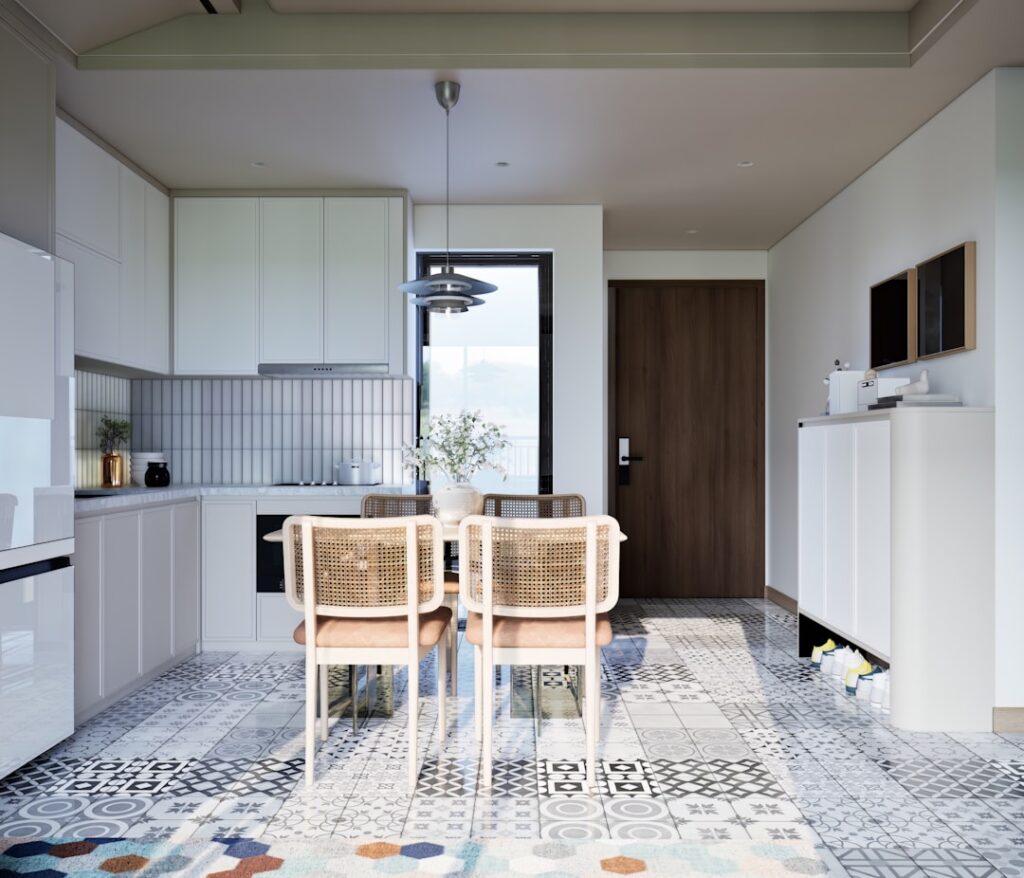
Retro-inspired patterns — checkerboard, encaustic tile looks, Moroccan-style prints — are popular for kitchens with character. Both linoleum tiles and vinyl sheet are available in these designs.
Solid and Marbled
Natural linoleum’s specialty. Marmoleum’s marbled patterns create organic, movement-rich surfaces that hide dirt and wear beautifully. These work well in modern minimalist kitchens where a clean, understated floor is desired.
Installation Methods
Professional Installation (Recommended for Sheet)
Sheet lino installation involves unrolling the material, template-fitting it to the room’s shape (including around cabinets, islands, and appliances), cutting precisely, and adhering it to the subfloor. Seams, if needed, must be heat-welded for waterproofing. This is skilled work — professional installation is strongly recommended for sheet products.
DIY Installation (Tiles and Click Formats)
Linoleum tiles and vinyl tiles with peel-and-stick backing can be installed by a confident DIYer. Clean and level the subfloor, snap chalk lines for layout, and lay tiles from the center of the room outward. Click-lock formats install like laminate — float over the subfloor with spacers at the walls.
Subfloor Requirements
- Subfloor must be flat, clean, dry, and smooth
- For sheet lino, even minor bumps and dips will telegraph through the surface — skim-coat or use leveling compound if needed
- Plywood underlayment (1/4-inch luan or birch) is often installed over existing subfloors to create a perfectly smooth base
- Do not install linoleum directly over concrete without a moisture test — natural linoleum is sensitive to moisture from below
Pricing Guide
Material Costs
- Vinyl sheet (basic): $1 to $2 per square foot
- Vinyl sheet (premium): $3 to $5 per square foot
- Natural linoleum sheet: $4 to $8 per square foot
- Linoleum tile (Marmoleum Modular): $4 to $7 per square foot
- Vinyl peel-and-stick tiles: $0.50 to $2 per square foot
Installation Costs
- Sheet installation (professional): $2 to $5 per square foot
- Tile installation (professional): $2 to $4 per square foot
- Old flooring removal: $1 to $2 per square foot
- Subfloor preparation: $1 to $3 per square foot if leveling is needed
Total Project Cost
For a typical 150-square-foot kitchen:
- Budget vinyl sheet: $450 to $1,050 installed
- Premium vinyl sheet: $750 to $1,500 installed
- Natural linoleum: $900 to $1,950 installed
Maintenance and Cleaning
- Sweep or vacuum daily to remove grit that can scratch the surface
- Damp mop weekly with a pH-neutral floor cleaner
- Wipe up spills immediately, especially on natural linoleum
- Avoid abrasive cleaners, scouring pads, and ammonia-based products
- For natural linoleum, apply a thin coat of manufacturer-recommended polish once or twice a year to maintain the finish
- For vinyl, no polishing or waxing is needed — the wear layer is the protective surface
- Place mats at the sink, stove, and entry points to catch water and grease
Pros and Cons
Pros
- Affordable (especially vinyl sheet)
- Water-resistant surface ideal for kitchens
- Comfortable and warm underfoot compared to tile
- Huge range of design options in modern products
- Easy to clean and maintain
- Natural linoleum is eco-friendly and biodegradable
- Sheet format minimizes seams for better water protection
Cons
- Vinyl sheet and linoleum can be punctured by sharp objects or heavy point loads
- Sheet installation requires professional skill
- Lower perceived value than tile, hardwood, or luxury vinyl plank
- Natural linoleum requires periodic maintenance and is sensitive to excess moisture
- Vinyl is not eco-friendly — made from PVC and difficult to recycle
- Can yellow or discolor under rubber-backed mats
Frequently Asked Questions
Is lino flooring waterproof?
Vinyl sheet lino is effectively waterproof on the surface when properly installed with full-spread adhesive. Natural linoleum is water-resistant but not fully waterproof — standing water can damage it over time. Neither product protects against water coming up from below (subfloor moisture).
How long does kitchen lino last?
Natural linoleum lasts 25 to 40 years with proper maintenance. Vinyl sheet typically lasts 10 to 20 years depending on quality, thickness of the wear layer, and how much traffic the kitchen sees.
Can I install lino over old lino?
In most cases, yes — as long as the old lino is firmly adhered, flat, and in reasonable condition. If the old lino is peeling, bubbling, or uneven, it should be removed or covered with a skim coat of leveling compound before installing the new floor.
Is linoleum better than vinyl for kitchens?
It depends on priorities. Natural linoleum is more durable, eco-friendly, and has through-body color that ages gracefully. Vinyl is cheaper, available in more realistic designs (especially wood and stone looks), and requires less maintenance. For a budget kitchen renovation, vinyl is the practical choice. For a long-term investment with environmental benefits, natural linoleum is superior.
Does lino flooring add value to a home?
Lino flooring typically has a neutral impact on home value. It does not increase value the way hardwood or quality tile does, but a clean, well-installed lino floor will not hurt resale either. Buyers in lower and mid-range markets often expect lino or vinyl in kitchens and are satisfied with it.
Prefer to explore on your own?
See how new flooring looks in your actual room in seconds — free, no signup.
Try the free Floor Studio →