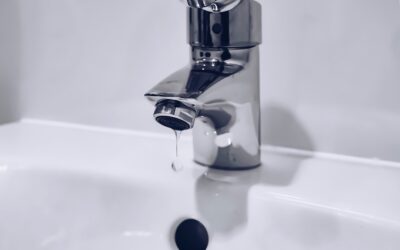
A faucet that drips once a second wastes over 3,000 gallons a year, and the fix is often a $10 part and twenty minutes of work. Most kitchen sink faucet repair jobs are well within reach of any homeowner who owns a screwdriver and a pair of pliers, no plumber required. Knowing the handful of common failures behind a leaky, sputtering, or loose tap means your next kitchen sink faucet repair costs a few dollars in parts instead of a $150 service call. This guide covers the usual culprits and exactly how to fix each one.
Part of our Kitchen Remodeling guide — explore the full guide →
- Diagnosing the Problem First
- Tools and Parts You'll Need
- Fixing a Dripping Spout
- Stopping a Leak at the Base
- Restoring Water Pressure
- Tightening a Loose Faucet or Handle
- When to Replace Instead of Repair
- Fixing a Leaking Sprayer Hose
- Dealing With Hard Water Damage
- Preventive Maintenance Tips
- Broken Kitchen Faucet? Match the Symptom to the Part That Failed
Diagnosing the Problem First
Before you touch a wrench, figure out what is actually wrong, because each symptom points to a different part.
- Dripping from the spout: almost always a worn cartridge, washer, or valve seat.
- Leaking at the base of the spout: usually a failed O-ring where the spout swivels.
- Leaking under the sink: a loose supply line connection or a cracked hose.
- Low water pressure: a clogged aerator or a mineral-choked spray head.
- Loose or wobbly handle: a loosened set screw or mounting nut.
- Sputtering or spitting water: air in the line or, again, a dirty aerator.
Identify the faucet type too. Single-handle faucets use either a cartridge or a ball assembly; two-handle faucets use compression washers or ceramic disc cartridges. Knowing your type tells you which repair kit to buy.
Tools and Parts You’ll Need
- Adjustable wrench and a set of hex/Allen keys
- Phillips and flathead screwdrivers
- Needle-nose pliers and channel-lock pliers
- Plumber’s grease and plumber’s tape
- Replacement cartridge, O-rings, or washers matched to your brand
- White vinegar for descaling and a small brush
For cartridges, buy the exact part for your faucet model. Moen, Delta, and Kohler all sell brand-specific cartridges for $10 to $40, and Moen even replaces its cartridges free under a lifetime warranty if you call them. Universal O-ring kits run about $8 and cover most base leaks.
Fixing a Dripping Spout
A constant drip is the most common complaint, and the cure is a fresh cartridge or washer.
- Shut off both supply valves under the sink and open the faucet to drain the pressure.
- Plug the drain with a rag so no small parts fall in.
- Pop off the handle cap, remove the set screw, and lift the handle off.
- Remove the retaining clip or nut holding the cartridge, then pull the cartridge straight up with pliers. A cartridge puller tool helps if it is stuck from mineral buildup.
- Insert the new cartridge in the same orientation, coating the O-rings with plumber’s grease first.
- Reassemble the handle, turn the water back on slowly, and test.
If you have an older two-handle compression faucet, the fix is even simpler: replace the rubber washer and, if scored, the brass valve seat at the bottom of the stem. A $5 washer assortment usually contains the size you need.
Stopping a Leak at the Base
When water pools around the base of the spout only while running, the swivel O-rings have worn out. Turn off the water, remove the handle, and lift the spout straight up off its base. You will see one or more rubber O-rings on the body underneath. Cut off the old rings, clean the groove, coat new rings in plumber’s grease, and roll them into place. Slide the spout back down and it seals like new. This ten-minute fix solves a leak people often mistake for a much bigger problem.
Restoring Water Pressure
Weak or uneven flow is nearly always mineral buildup in the aerator, the small screen at the tip of the spout. Unscrew it by hand or with pliers wrapped in tape to avoid scratching the finish. Disassemble the little screens, soak everything in white vinegar for a few hours to dissolve the scale, scrub with an old toothbrush, rinse, and reassemble.
If yours is a pull-down sprayer, the same buildup clogs the spray head. Unscrew the head, soak it in vinegar overnight, and clear the nozzles by rubbing them with your thumb while running water. Persistent low pressure across the whole house points to a bigger supply issue, but at a single faucet it is almost always the aerator.
Tightening a Loose Faucet or Handle
A wobbling handle usually just needs its set screw snugged with an Allen key. A faucet base that rocks on the sink is a loosened mounting nut underneath. Reach under the sink with a basin wrench and tighten the nut that clamps the faucet to the deck, being careful not to overtighten and crack a plastic nut. A dab of plumber’s putty or silicone under the base plate stops future wobble and water seepage.
When to Replace Instead of Repair
Repair makes sense when the faucet body is solid and only a wear part has failed. Replace the whole faucet when the finish is flaking off, the body is cracked, parts are no longer available for an old model, or you have already replaced the cartridge and it still leaks. A decent new kitchen faucet runs $80 to $250, and swapping it is a two-hour job.
Calling a plumber, at $150 to $350, is worth it if the shutoff valves are seized, the connections are corroded solid, or you hit a leak you cannot trace. For the everyday drip, base leak, or clogged aerator, though, a confident kitchen sink faucet repair saves real money and water, and gives you a skill you will use for years.
Fixing a Leaking Sprayer Hose
Pull-down and pull-out sprayers add a common failure point of their own. If water drips from the spray head when the faucet is off, mineral buildup may be holding the diverter or the spray head’s internal valve open; soak the head in vinegar overnight to clear it. If the leak is at the hose connection under the sink, the fitting has likely worked loose from repeated pulling, so tighten it and wrap the threads in fresh plumber’s tape.
A wand that will not retract into its dock is almost always a slipped counterweight on the hose. Reach under the sink, find the weight clamped to the hose, and reposition it lower where the hose has clear swing room, then confirm nothing snags on the shutoff valves as the wand pulls back. A cracked or split hose is a $15 to $30 replacement part that snaps in with quick-connect fittings on most modern faucets, a ten-minute swap.
Dealing With Hard Water Damage
If you live with hard water, mineral scale is the root cause of many faucet problems, from weak flow to a stiff handle to a leaky spray head. The white crust you see is calcium and magnesium deposits that build inside the aerator, the cartridge, and the hose over time. Regular descaling, soaking removable parts in white vinegar every few months, keeps flow strong and extends the life of every moving part.
For a long-term fix, consider a water softener or a point-of-use filter, which dramatically slows scale buildup throughout the plumbing, not just at the faucet. When shopping for a replacement faucet in a hard-water home, choose one with a rubber-nub spray face you can wipe clean and ceramic disc valves, both of which resist mineral trouble far better than older designs. Managing hard water is often the difference between a faucet that lasts five years and one that lasts fifteen.
Preventive Maintenance Tips
A little routine care prevents most repairs. Wipe the faucet dry after use to limit water spotting and scale, clean the aerator every few months, and avoid yanking the sprayer wand hard, which stresses the hose and counterweight. Do not overtighten the handle or connections, since forcing them cracks parts and strips threads. Keep the area under the sink clear so you can spot a small drip before it becomes a cabinet-ruining leak.
Every year or so, run through a quick check: look for drips at the spout and base, test the sprayer’s retraction, feel the connections under the sink for moisture, and confirm the shutoff valves still turn freely. Catching a worn O-ring or a slightly loose fitting early turns a potential flood into a two-dollar fix. Treated this way, most kitchen faucets deliver a decade or more of reliable service, and any kitchen sink faucet repair you do need stays quick and cheap.
Broken Kitchen Faucet? Match the Symptom to the Part That Failed
A broken kitchen faucet usually fails in one of a handful of predictable ways, and each symptom points to a specific part. Use this map to decide what to buy, and whether it is a quick repair or time for a new faucet.
| Symptom | Part That Usually Failed | Typical Fix |
|---|---|---|
| Handle spins freely and does nothing | Stripped handle adapter or broken cartridge stem | Replace the handle adapter; if the stem is snapped, replace the cartridge |
| Water will not shut off completely | Cracked cartridge or failed disc | New cartridge; close the under-sink valves until then |
| Only hot or only cold comes out | Cartridge installed backward, a failing cartridge, or a partly closed shutoff | Check both shutoffs, then reseat or replace the cartridge |
| Handle is stiff or grinds | Mineral scale on the cartridge or dry O-rings | Clean and grease, or replace the cartridge |
| Sprayer will not switch back to stream | Stuck diverter or spray-head button | Descale or replace the spray head |
| Spout snapped or cracked at the swivel | Spout body or swivel housing | Replacement spout if sold separately; otherwise a new faucet |
| Water in the cabinet with the faucet off | Supply line, hose connection, or shutoff valve | Tighten or replace the line or valve |
If Water Will Not Stop
A broken sink faucet that keeps running is an emergency only until you close the two shutoff valves under the sink, turning each clockwise. If they are missing, seized, or still let water through, close the home’s main water shutoff and call a plumber. Never pry apart a faucet that is still under pressure; turn the water off and open the handle to relieve it first.
Repair or Replace?
A failed cartridge, handle adapter, or spray head is a routine repair, especially if the faucet is from a major brand with parts still in stock. Check the brand’s warranty before buying: several manufacturers replace cartridges and some finish defects at no charge for the original owner. A cracked faucet body, a snapped spout on a model with no replacement spout, or corroded mounting hardware generally means replacement is the better value.
When you order parts, find the model number on the original paperwork, the underside of the faucet, or a tag on the supply hose. Photograph the faucet from several angles and bring the broken part to the store if you cannot identify it, since many cartridges look nearly identical but differ in length and spline count.