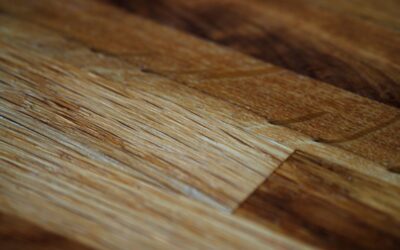
You spot it after a dishwasher leak or a tracked-in puddle: edges peaking up, planks separating, a soft swollen ridge along a seam. Laminate flooring lifting due to water is one of the most common failures homeowners face, and the hard truth is that once the fiberboard core swells, it almost never goes back. Understanding why it happens tells you whether you can save the floor or whether replacement is the only honest fix.
Why Water Wrecks Laminate
Laminate looks tough on top, but its strength is skin-deep. The core is high-density fiberboard (HDF), essentially compressed wood fibers. When water penetrates through a seam, an unsealed edge, or a damaged spot, those fibers absorb it and swell like a sponge. That swelling has nowhere to go, so the plank pushes upward and outward, lifting at the joints and creating the telltale peaked or cupped edges.
Unlike solid wood, which can dry and sometimes flatten again, expanded HDF is permanently deformed. The wear layer may still look fine while the structure underneath has failed, which fools people into thinking the floor can be salvaged when it can’t.
The Signs of Water Damage
Catching the problem early limits how far it spreads. Watch for these symptoms.
- Peaking — joints push up into a tent shape where two planks meet.
- Cupping — plank edges rise higher than the center, forming a concave surface.
- Buckling — sections lift entirely off the subfloor in a wave.
- Soft or spongy spots — the floor flexes underfoot where the core has weakened.
- Gapping and separation — swollen planks shove neighbors apart.
- White haze or staining — moisture trapped under the wear layer.
Can You Dry It Out and Save It?
Sometimes, but manage your expectations. If you catch surface water within minutes and the planks haven’t swelled yet, mop it up immediately, run fans and a dehumidifier, and you may dodge damage entirely. The faster you act on a fresh spill, the better your odds.
Once planks have visibly swelled or peaked, however, drying rarely restores them. The HDF has expanded and the click joints are stressed. You can sometimes pull up and re-dry the subfloor to stop mold, but the swollen planks themselves usually must be replaced. Don’t waste days hoping a buckled plank flattens; it won’t, and the trapped moisture invites mold underneath.
Pros and Cons of Repair vs. Replacement
Deciding between patching and a full redo comes down to how much is damaged and whether you have matching planks.
- Spot repair pros: cheaper, faster, and possible if you saved leftover boxes from the original install. Floating floors let you unlock and swap individual planks.
- Spot repair cons: matching discontinued patterns is often impossible, and a new plank may not click cleanly into swollen neighbors. Hidden subfloor moisture can resurface.
- Full replacement pros: a clean slate, a chance to address the subfloor, and an opportunity to upgrade to a waterproof product.
- Full replacement cons: higher cost and more labor.
How to Replace Damaged Planks
For a floating laminate floor, you can often replace a section without tearing up the whole room. Remove the baseboard on the nearest wall, then unclick planks one row at a time until you reach the damaged area. Keep the good planks in order so you can reinstall them. Dry the exposed subfloor completely and confirm it reads below the manufacturer’s moisture threshold before laying new boards. Snap in matching replacements, work back to the wall, and reset the trim.
If the damage is widespread or the subfloor itself is saturated and warped, full removal and a fresh start is the durable answer.
Preventing It From Happening Again
Prevention is cheaper than any repair. Build these habits and choices into your floor’s life.
- Wipe up spills the moment they happen; never let water sit on a seam.
- Use a vapor barrier underlayment over concrete and confirm the slab is dry before installation.
- Caulk or seal the perimeter and around appliances in kitchens and laundry rooms.
- Place mats at exterior doors and in front of sinks and dishwashers.
- Install drip pans and leak sensors under dishwashers, washing machines, and refrigerators with ice makers.
- Maintain indoor humidity in the manufacturer’s recommended range, often 35 to 65 percent.
Choosing a Better Floor for Wet Areas
If water keeps finding your floor, the product is the real problem. Standard laminate is simply the wrong material for bathrooms, kitchens, and basements. Consider waterproof laminate with a sealed or plastic-composite core, or switch to rigid-core luxury vinyl plank, which has no fiberboard to swell and tolerates standing water far better. These cost a bit more up front but eliminate the heartbreak of a floor that buckles after one accident.
Don’t Forget the Subfloor and Mold
The planks get all the attention, but the real danger often hides below them. When water lifts a laminate floor, much of it pools on the subfloor and underlayment, where it can sit unseen for days. A wood subfloor that stays wet will warp, rot, and grow mold, and mold spores spread fast in dark, humid conditions. So even after you remove damaged planks, pull up the underlayment in the affected zone and measure the subfloor’s moisture content with a meter before laying anything new. Plywood and OSB should read within the manufacturer’s safe range, typically below 12 to 14 percent, before you proceed.
If you smell a musty odor or see dark staining, treat the area for mold with an appropriate cleaner and let it dry fully with fans and a dehumidifier. For large or recurring leaks, especially in basements, it’s worth involving a professional to confirm the structure is sound and dry. Rebuilding over a compromised subfloor only guarantees the new floor fails too, so resist the urge to rush this step.
The Bottom Line
Laminate lifting from water is a structural failure, not a cosmetic one. Act fast on fresh spills to prevent it, but accept that visibly swollen planks almost always need replacing rather than drying. When you rebuild, fix the moisture source, dry the subfloor, and seriously consider a waterproof product so the next leak is an inconvenience instead of a teardown. The right material and a few preventive habits keep your floor flat for the long haul.
Prefer to explore on your own?
See how new flooring looks in your actual room in seconds — free, no signup.
Try the free Floor Studio →