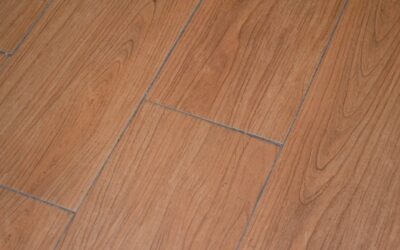
When homeowners search for laminate flooring water damage pictures, they are usually standing over a suspicious spot trying to decide whether it is a minor cosmetic issue or the start of a floor-wide failure. I have pulled up plenty of soggy laminate over the years, and the visual clues are consistent enough that you can diagnose most problems by eye. Since I cannot show you actual photos here, I will describe exactly what each stage of damage looks like so you can compare it to your own floor.
Laminate’s weak point is its core. Underneath the tough printed wear layer sits high-density fiberboard, which is essentially compressed wood pulp. It sheds surface splashes just fine, but once water works into a seam or sits long enough to soak the core, that fiberboard swells and never fully recovers. Catching it early is the difference between swapping a plank or two and replacing an entire room.
Edge Swelling and Peaking
The earliest and most common sign shows up along the seams where two planks meet. As the fiberboard core absorbs moisture, the edges puff up and the wear layer rises with them. Run your hand across the joint and you will feel a raised, slightly rough lip that was not there when the floor was new. In pictures, this reads as a subtle ridge line catching the light along the plank edges, sometimes called peaking or tenting.
Look for a faint white or chalky line right at the seam, and edges that feel gritty or flaky. Catch it here and you may only need to dry the area, find the leak, and replace a couple of boards. Left alone, that swelling spreads across the whole plank.
Buckling and Lifting
When more water gets in, or a floating floor has no room to expand, the planks buckle. Instead of lying flat, sections rise off the subfloor in a hump or a wave. Picture a board that has lifted an inch in the middle of the room, or a whole row bowing upward so daylight shows underneath. You may hear a hollow knock when you step near it and feel the floor move.
Buckling has two possible causes and they often combine. A soaked core swells and forces planks upward, and a floating floor installed without an expansion gap has nowhere to go, so it peaks at the weakest point. Either way, buckled laminate is done. The core has expanded permanently and those planks will not lie flat again even after they dry.
Discoloration and Staining
Color changes are a reliable tell, especially for slow, hidden leaks under a dishwasher, fridge, or bathroom vanity. Watch for these visual cues:
- Dark or gray patches where water has wicked into the core and stained the fiberboard from within.
- White, cloudy, or milky spots under the wear layer, a sign moisture is trapped between the film and the core.
- Yellowing or amber halos around a recurring spill or a planter that leaks.
- Black speckling or fuzzy growth at the seams, which points to mold and a longer-term moisture problem.
Discoloration frequently appears before the floor feels different underfoot, so a stain that keeps coming back after cleaning is your cue to investigate what is happening beneath the planks.
Gapping, Cupping, and a Soft Feel
Water damage does not always push up. Sometimes planks that swelled and then dried will shrink unevenly, leaving gaps between boards that used to sit tight. You might also see cupping, where the center of a plank dips lower than its edges, giving the surface a subtle washboard look across the grain. In photos this shows as shadow lines running the length of each board.
The most alarming sign is a spongy, soft spot underfoot. If a section of floor gives or flexes when you step on it, moisture has likely reached the subfloor below the laminate, not just the planks. That is a bigger repair, because the plywood or OSB underneath may be rotting and needs to be inspected and possibly replaced.
How to Confirm What You Are Seeing
Visual signs point you in the right direction, but a couple of quick checks confirm the diagnosis.
- Press along the seams. Raised, crumbly edges mean core swelling has already started.
- Use a moisture meter if you have one. Readings above roughly 12 percent in the planks or subfloor confirm active moisture.
- Pull a plank in an inconspicuous spot. A floating floor lets you lift a board at the wall to check for staining, damp underlayment, or a wet subfloor.
- Smell the area. A musty odor almost always means moisture has been trapped long enough for mold to begin.
Trace the source before you repair anything. Common culprits are dishwasher and refrigerator lines, toilet and vanity leaks, poor bathroom sealing, a leaking exterior door threshold, and rising vapor from an unsealed concrete slab.
Repair or Replace?
The extent of the damage decides your path. Use this rough guide:
- Minor edge swelling on one or two planks: Fix the leak, dry the area, and replace only the affected boards if you have matching stock.
- Buckling or widespread staining: Plan on replacing the whole affected section or room, since swollen planks will not flatten.
- Soft subfloor or mold: Remove the laminate, dry and treat or replace the subfloor, then reinstall. This is not a cosmetic fix.
Because laminate is a floating floor, replacing planks means unclicking rows back to the damaged spot and re-laying them, which is doable but tedious. Keeping a few leftover boxes from the original install makes color matching painless. Without them, dye lots and discontinued lines can make a seamless patch nearly impossible.
Where Water Damage Shows Up First
Certain spots in a house fail before others, and knowing them tells you where to look at the first sign of trouble. In my experience the trouble zones are predictable.
- In front of the dishwasher and under the fridge: Slow supply-line and ice-maker leaks pool unseen and wick into the nearest seams. The swelling often appears a few feet away from the actual leak.
- Around toilets and vanities: A failing wax ring or a dripping supply valve keeps the subfloor damp, so bathroom laminate stains and cups near the fixtures first.
- At exterior door thresholds: Wind-driven rain and a worn seal push water under the door, swelling the plank ends right at the entry.
- Along the base of exterior walls in basements: Rising slab vapor or seepage shows as a band of discoloration and peaking that runs parallel to the wall.
When you spot damage, resist the urge to only fix what you can see. The visible swelling is usually downhill or downstream from the real source, so trace the water back to where it enters before you replace a single plank.
What Happens If You Ignore It
Laminate water damage never improves on its own; it compounds. A single swollen seam wicks moisture into neighboring planks, so a one-board problem becomes a five-board problem over a few weeks. Trapped moisture at the seams feeds mold, which spreads under the floor where you cannot see it and creates the musty smell that eventually fills the room. Worst of all, water that reaches the subfloor rots the plywood or OSB, turning a plank swap into a structural repair that can run into the thousands.
Acting on the first ridge you feel along a seam is not being fussy. It is the cheapest, simplest moment to intervene. The gap between a two-plank repair and a full-room-plus-subfloor replacement is often just a few weeks of ignoring the early signs.
Preventing the Next Leak
Once you have dealt with the damage, a few habits keep it from returning. Wipe spills promptly rather than letting them sit in the seams. Use a well-wrung mop, never a soaking one, and skip steam mops entirely, since they force hot vapor straight into the joints. Seal the perimeter and any bathroom transitions with silicone, put trays under appliances and planters, and confirm a 6-mil vapor barrier is in place over any concrete slab.
The visual signs behind those laminate flooring water damage pictures, swelling seams, buckled rows, and creeping stains, are your early warning system. Learn to read them, act on the first ridge you feel, and you can often stop a small leak from becoming a full floor replacement.
Prefer to explore on your own?
See how new flooring looks in your actual room in seconds — free, no signup.
Try the free Floor Studio →