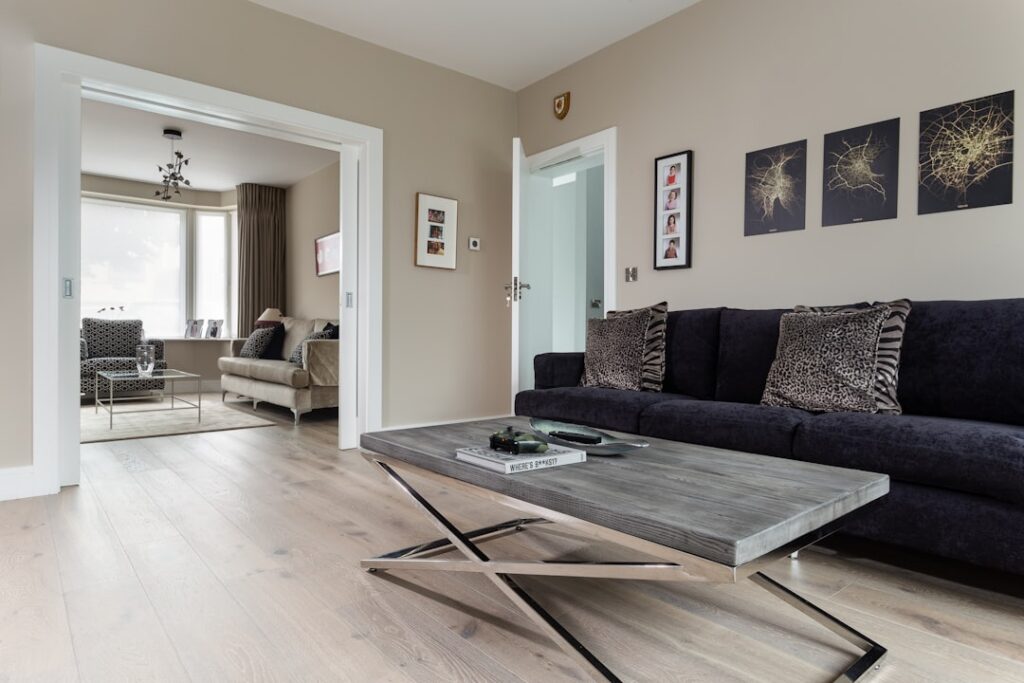
Laminated floors — more commonly known as laminate flooring — have earned their place as one of the most popular flooring choices in North American homes. Combining realistic wood and stone visuals with affordable pricing and straightforward DIY installation, laminate delivers a lot of value per square foot.
But laminate flooring has also evolved significantly since its introduction in the 1970s. Today’s products bear little resemblance to the thin, plasticky laminates of decades past. This guide covers everything you need to know about modern laminate: how it is made, how to choose the right product, installation basics, costs, and the common misconceptions that still follow this flooring category. For our full resource, visit our laminate flooring pillar page.
How Laminate Flooring Is Constructed
Understanding laminate construction helps you evaluate products and choose the right one for your space. Every laminate plank or tile consists of four layers bonded together under high pressure and heat.
The Four Layers
Backing layer (bottom): This melamine-treated layer provides moisture resistance from below and adds structural stability. It also helps the plank lie flat and resist warping. Some products include an attached underlayment pad on this layer for sound dampening.
Core layer: The core is the thickest component, typically made from high-density fiberboard (HDF). HDF is denser and more moisture-resistant than the medium-density fiberboard (MDF) used in cheaper laminates. Core thickness ranges from 6mm to 12mm and directly affects the floor’s feel underfoot, sound performance, and durability.
Design layer: A high-resolution photographic image printed on specialty paper gives laminate its visual appearance. Modern printing technology produces remarkably realistic wood grain, stone texture, and tile patterns. Premium laminates use longer pattern repeats — meaning you need to scan many planks before spotting a duplicate pattern, creating a more natural-looking floor.
Wear layer (top): A clear aluminum oxide coating protects the design layer from scratches, fading, stains, and wear. The thickness and quality of this layer determine the floor’s AC (Abrasion Class) rating.
Understanding AC Ratings
The AC rating system, developed by the European Producers of Laminate Flooring (EPLF), measures a laminate floor’s resistance to abrasion, impact, staining, and burning. It is the single most important specification when comparing products.
AC1 (Moderate Residential): Suitable only for closets or bedrooms with very light traffic. Rarely sold in North America.
AC2 (General Residential): Handles normal residential traffic in living rooms and dining rooms. Adequate for households without pets or children.
AC3 (Heavy Residential / Moderate Commercial): The most common rating for quality residential laminate. Withstands heavy household traffic including pets and active families. Also suitable for light commercial spaces like small offices.
AC4 (General Commercial): Designed for commercial spaces with moderate foot traffic such as offices, boutiques, and cafes. An excellent choice for busy residential households that want extra durability.
AC5 (Heavy Commercial): The highest rating, built for high-traffic commercial environments like department stores and public buildings. Overkill for most homes but guarantees maximum longevity.
For most homeowners, AC3 is the minimum recommended rating. If you have large dogs, active children, or heavy furniture that gets moved frequently, stepping up to AC4 is worthwhile.
Thickness Matters
Laminate flooring thickness typically ranges from 6mm to 12mm, and this dimension affects performance more than many buyers realize.
6mm to 7mm: Entry-level products. These feel thinner underfoot, produce more hollow sound when walked on, and are less forgiving over minor subfloor imperfections. They work in rentals, guest rooms, or other light-use areas where budget is the primary concern.
8mm to 10mm: The sweet spot for most residential installations. These planks feel solid underfoot, absorb sound better, and bridge small subfloor irregularities more effectively. Most AC3 and AC4 products fall in this range.
10mm to 12mm: Premium laminate territory. Thicker cores provide the most realistic wood-floor feel, superior sound dampening, and the best structural integrity. These products often feature enhanced locking mechanisms and attached underlayment pads.
Remember that thickness alone does not determine quality. A well-made 8mm laminate with an AC4 rating will outperform a cheap 12mm product with an AC2 rating.
Water Resistance Options
Traditional laminate’s biggest weakness has been water. HDF cores absorb moisture and swell, causing irreversible damage. However, the industry has made major strides in water resistance.
Water-resistant laminate: Features sealed edges, wax-coated locking mechanisms, and treated HDF cores that resist moisture penetration for limited periods — typically 24 to 72 hours. Spills must still be wiped promptly, but accidental splashes will not cause immediate damage. Brands like Pergo WetProtect and Shaw Repel fall in this category.
Waterproof laminate: A newer category that replaces the HDF core with a waterproof rigid core (similar to SPC vinyl). Products like Mohawk RevWood Plus and Quick-Step Impressive Ultra can handle standing water without damage. These blur the line between laminate and luxury vinyl but maintain the harder, more wood-like feel that laminate is known for.
For kitchens, bathrooms, basements, and laundry rooms, water-resistant or waterproof laminate is essential. Standard laminate should be reserved for dry areas like bedrooms, living rooms, and hallways.
Click-Lock Installation
One of laminate’s biggest selling points is its floating click-lock installation system. Planks snap together at the edges and ends without glue, nails, or staples, and the assembled floor rests on top of the subfloor without being attached to it.
Installation Basics
Subfloor preparation: The subfloor must be clean, dry, and flat within 3/16 inch over a 10-foot span. Concrete subfloors need a moisture test — moisture levels above 3 pounds per 1,000 square feet (calcium chloride test) require a vapor barrier.
Underlayment: A foam or cork underlayment provides cushioning, sound absorption, and minor moisture protection. If your laminate includes an attached pad, skip the separate underlayment to avoid making the floor too soft and compromising the locking system.
Acclimation: Most manufacturers recommend leaving the unopened boxes in the installation room for 48 to 72 hours to allow the planks to adjust to the room’s temperature and humidity.
Expansion gaps: Leave a 1/4-inch gap around all walls and fixed objects. Laminate expands and contracts with temperature and humidity changes, and without expansion gaps, the floor can buckle. Baseboards or quarter-round molding covers these gaps.
Staggering: Offset end joints by at least 12 inches between adjacent rows for structural integrity and a natural appearance. Avoid H-patterns where end joints line up every other row.
Most DIY-savvy homeowners can install laminate in a typical room within a weekend. The click-lock system requires no special tools beyond a tapping block, pull bar, spacers, and a miter saw for cuts.
Cost Breakdown
Laminate flooring is one of the most budget-friendly options that still delivers an attractive result.
Materials: Entry-level laminate runs $1 to $2 per square foot. Mid-range products (AC3, 8mm to 10mm) cost $2 to $4 per square foot. Premium laminate (AC4+, 10mm to 12mm, water-resistant) costs $4 to $7 per square foot.
Underlayment: $0.25 to $0.75 per square foot if not included with the flooring.
Professional installation: $2 to $5 per square foot, though many homeowners save this cost by installing it themselves.
Total for a 500-square-foot project: DIY with mid-range materials runs roughly $1,250 to $2,375. Professionally installed, the same project costs $2,250 to $4,875.
Maintenance and Care
Laminate is low-maintenance compared to hardwood or natural stone, but it does require some attention to stay looking its best.
Daily/weekly cleaning: Sweep or vacuum regularly with a soft-bristle attachment to remove grit that can scratch the wear layer. A dry or slightly damp microfiber mop handles deeper cleaning. Avoid wet mopping — excess water can seep into seams and damage the core.
Stain removal: Most stains wipe away with a damp cloth. For stubborn marks, use a laminate-specific cleaner. Avoid abrasive scrubbers, steel wool, and harsh chemicals like bleach or ammonia.
Prevention: Use felt pads under furniture legs. Place mats at entryways to trap grit. Trim pet nails regularly. Use a laminate-safe cleaner rather than oil-based products that can leave residue.
What you cannot do: Laminate cannot be sanded or refinished. Once the wear layer is worn through, the floor needs to be replaced. This is the primary trade-off compared to solid hardwood.
Top Laminate Flooring Brands
Pergo: The original laminate flooring brand, founded in Sweden. Known for consistent quality, good water resistance (WetProtect line), and realistic visuals. Mid to premium price range.
Quick-Step: Belgian-made laminate with excellent locking systems (Uniclic) and a wide range of styles. Their Impressive and Majestic lines are popular among homeowners who want wider, longer planks.
Shaw: One of the largest flooring manufacturers in the world. Shaw offers laminate across all price points, with the Repel water-resistant line being a standout for kitchens and bathrooms.
Mohawk: Mohawk’s RevWood and RevWood Plus lines have been market leaders in waterproof laminate technology. Their Uniclic locking system (shared with Quick-Step, as both are part of the same parent company) ensures reliable installation.
Bruce: A trusted name in hardwood that also produces quality laminate. Bruce laminate often features very realistic wood visuals due to the brand’s deep experience with real wood species.
Common Misconceptions About Laminate
Despite its popularity, laminate flooring still suffers from outdated perceptions. Here are the most common myths, debunked.
“Laminate looks fake.” This was true 20 years ago. Modern laminate features embossed-in-register (EIR) technology that aligns the surface texture with the printed grain pattern. Premium laminates are genuinely difficult to distinguish from real wood without getting on your hands and knees to inspect them.
“Laminate is not durable.” An AC3 or AC4 laminate resists scratches, dents, and wear better than many solid hardwoods. The aluminum oxide wear layer is harder than most wood species. Laminate will not dent from dropped objects the way pine or walnut hardwood will.
“Laminate is bad for resale.” Quality laminate in good condition does not hurt resale value in most markets. While hardwood commands a premium, buyers readily accept well-maintained laminate, especially in mid-range homes. Worn-out carpet or damaged vinyl hurts resale far more than quality laminate.
“All laminate sounds hollow.” Thin laminate over a bare subfloor without underlayment absolutely sounds hollow. But thicker laminate (10mm+) with quality underlayment sounds solid and feels convincing. Attached-pad products have improved dramatically in acoustic performance.
“Laminate cannot go in kitchens.” Standard laminate does not belong in kitchens due to water risk. However, water-resistant and waterproof laminate products are specifically designed for kitchen use and perform well when installed correctly with sealed perimeters.
Laminate vs. Other Flooring Types
Laminate competes primarily with luxury vinyl plank (LVP) and engineered hardwood. Here is how they compare.
Laminate vs. LVP: Laminate feels harder and more like real wood underfoot. LVP is fully waterproof and handles wet areas better. Laminate has better scratch resistance at comparable price points. LVP is quieter. Both offer click-lock installation. For more on vinyl options, check our vinyl flooring guide.
Laminate vs. engineered hardwood: Engineered hardwood offers a real wood surface that can be refinished (if the veneer is thick enough). Laminate offers better scratch and dent resistance at a lower cost. Engineered hardwood has higher resale value. Laminate is easier to install as a DIY project.
Laminate vs. solid hardwood: Solid hardwood can be refinished multiple times and lasts a century with care. Laminate costs a fraction of the price and resists scratches better but cannot be refinished and has a shorter lifespan of 15 to 25 years. Visit our hardwood flooring guide for a deeper comparison.
Final Thoughts
Laminated floors have come a long way. With realistic visuals, solid performance ratings, water-resistant options, and easy installation, modern laminate deserves serious consideration for almost any room in your home. Focus on AC rating, core thickness, and water resistance rather than just price per square foot, and you will end up with a floor that looks great and lasts for years.
Prefer to explore on your own?
See how new flooring looks in your actual room in seconds — free, no signup.
Try the free Floor Studio →