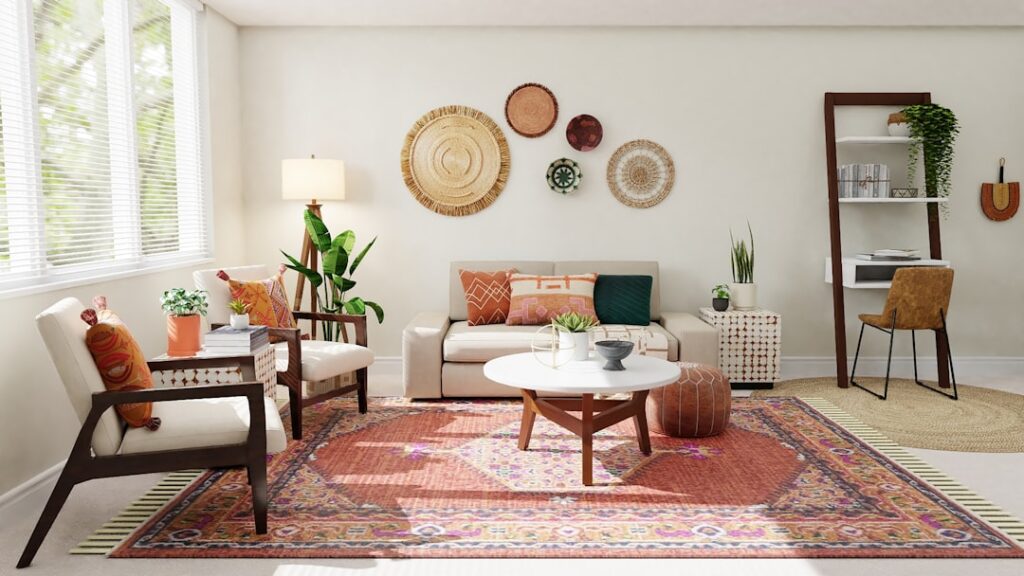
Some of the best-looking rooms in design magazines aren’t using one expensive rug, they’re using a layered rug setup, stacking a smaller patterned rug on top of a larger neutral base. It’s a designer trick that adds instant depth, texture, and warmth, and it solves real problems too: covering an awkward-sized floor, breathing life into a plain rug, or making a budget rug look intentional. I use this approach constantly to give rooms a collected, lived-in feel without buying a single oversized statement piece.
This guide breaks down how layering actually works, which rugs to combine, the sizing and placement rules that keep it looking deliberate, and the mistakes that make it look like an accident.
Why Layer Rugs at All
Layering earns its popularity because it does several things at once. It introduces contrast in color, pattern, and texture that a single rug can’t. It adds physical warmth and cushion underfoot, which matters on hard floors. It lets you feature a small, special rug, a vintage find or a bold print, that would get lost on its own. And practically, it can disguise stains or wear on an older base rug while you decide whether to replace it.
The Basic Formula
The reliable starting point is simple: a large, neutral, low-pile base layer, then a smaller, more interesting rug on top. The base provides scale and a calm foundation; the top rug provides personality.
- Base layer: Natural fibers like jute, sisal, or seagrass are the go-to. They’re flat, textured, neutral, and inexpensive enough to buy big.
- Top layer: Wool, vintage, kilim, or anything with pattern and color. This is where you spend your design budget.
The contrast between a flat natural base and a softer, patterned top is what reads as intentional. Two similar rugs stacked together just look like a mistake.
Sizing the Two Layers
Getting the proportions right is what separates polished from sloppy. The base should be noticeably larger so it frames the top rug like a mat around a photo. Aim to leave roughly 8 to 12 inches of the base showing on all sides, give or take depending on room scale. A common pairing is a 9×12 jute base under a 6×9 or 8×10 patterned rug, or a 8×10 base under a 5×8 top piece.
Avoid making the gap uneven or razor-thin; a consistent border of the base peeking out is what creates the framed, deliberate effect.
Mixing Patterns and Textures
Combining rugs is part art, but a few rules keep you safe. Pair a busy pattern with a plain or subtly textured base so they don’t compete. Keep a shared undertone, both warm or both cool, so the rugs feel related even when their patterns differ. Vary the texture: a flat natural-fiber base against a plush or hand-knotted top creates satisfying contrast. When in doubt, let one rug be the star and the other play support.
Best Rooms for Layering
Layered rugs work almost anywhere, but they shine in a few spots:
- Living rooms: Anchor the seating area and add cozy depth.
- Bedrooms: Place layers at the foot of the bed or stack them partly under it for a soft landing.
- Entryways: A small durable rug over a larger flat base handles dirt while looking welcoming.
- Reading nooks and offices: Define a zone within a larger open space.
Keeping Layered Rugs in Place
A layered setup that slides around is both annoying and unsafe. Start with a non-slip pad under the base rug to anchor the whole stack to the floor. Between the two rugs, use double-sided rug tape or a thin rug-to-rug gripper so the top piece doesn’t shift when you walk on it. Pay special attention to corners, which are the first to curl and the most likely to trip someone. Smoothing and weighting the layers for a day after setup helps them settle flat.
Common Mistakes to Avoid
Layering goes wrong in predictable ways. The top rug too close in size to the base kills the framed look. Two loud patterns together create visual chaos. Clashing undertones, a cool gray over a warm tan, make the pairing feel off even if you can’t say why. Skipping the pad and tape leaves you with rugs that bunch and creep. And forcing layers into a room that’s already busy with pattern can overwhelm the space. When something feels wrong, simplify: a bolder top over a quieter base almost always fixes it.
Budget-Friendly Layering Ideas
One of the best things about layering is that it stretches a small budget further than buying a single large statement rug. A big natural-fiber base, jute or seagrass, costs a fraction of a comparably sized wool rug, and it’s exactly the calm, textured foundation you want underneath. That lets you spend your money on a smaller top rug, where a vintage find, a hand-knotted piece, or a bold flatweave goes a long way at half the square footage. Layering is also the smart move when you already own a rug you’ve grown tired of: drop a fresh patterned piece on top and the old one becomes a base nobody really sees, no replacement needed. Watch for end-of-season sales and remnant bins for affordable top layers, and don’t overlook washable rugs as the top piece in high-mess areas like entries and kids’ rooms. With a little hunting, a layered look can cost less than a single premium rug while looking far more designed.
Final Thoughts
Layering rugs is one of the cheapest, fastest ways to make a room feel designed rather than just furnished. Start with a large neutral natural-fiber base, add a smaller patterned rug with a shared undertone, leave an even border showing, and secure everything with pads and tape. Follow those basics and a well-executed layered rug arrangement will give any room the warmth, texture, and collected character that a single rug rarely achieves on its own.