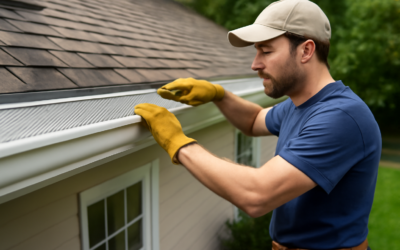
Cleaning gutters twice a year is a chore most homeowners would happily pay to eliminate, but the range of quotes for guards is enough to cause whiplash. Leaf guard gutter prices swing from a couple of dollars a foot for a basic screen you clip on yourself to well over $30 a foot for a professionally installed reverse-curve system. Understanding what drives that spread lets you buy the right protection without overpaying. Here is the real cost picture.
Part of our Roofing guide — explore the full guide →
The Price Range at a Glance
Gutter guards are priced per linear foot, and the type you choose is the single biggest cost factor. An average home has roughly 150 to 200 linear feet of gutter, so multiply accordingly when you scale these numbers to your project.
| Guard Type | Price per Foot (Installed) | DIY Material Only |
|---|---|---|
| Plastic/vinyl screen | $1-$3 | $0.50-$1.50 |
| Metal mesh screen | $3-$6 | $1.50-$4 |
| Foam insert | $2-$4 | $1-$3 |
| Micro-mesh | $5-$15 | $2-$8 |
| Reverse-curve/surface tension | $15-$35+ | Rarely sold DIY |
For a typical 180-foot home, that translates to as little as $200 in DIY screens to $6,000 or more for a premium professionally installed reverse-curve system. The gap is enormous, so match the type to your actual leaf and debris load rather than the salesperson’s pitch.
What You Get at Each Price Tier
Higher price generally buys better filtration and durability, but the cheapest option is not always the worst value for a given home.
- Plastic and metal screens ($1-$6/ft): Snap or slide over the gutter and block big leaves. Cheap and easy, but small debris and pine needles slip through and they can pop off in storms.
- Foam inserts ($2-$4/ft): Blocks of foam fill the gutter so water passes but debris stays on top. Simple DIY, but they degrade and can hold moisture and seeds that sprout.
- Micro-mesh ($5-$15/ft): Fine stainless mesh over a frame stops even pine needles and shingle grit. The best balance of performance and price, and increasingly popular.
- Reverse-curve ($15-$35+/ft): Solid covers that use surface tension to pull water around a curved lip while leaves fall off. Effective and durable but the priciest, and usually professionally installed only.
Micro-mesh is where most quality-conscious homeowners land, filtering fine debris without the premium of a branded reverse-curve system.
What Drives Your Total Beyond Guard Type
The per-foot number is only the start. Several factors move the final quote up or down.
- Home height and stories: A two- or three-story home costs more because of scaffolding, ladders, and added labor time and risk.
- Roof pitch and complexity: Steep or cut-up rooflines with many valleys take longer and cost more.
- Gutter condition: If your existing gutters are sagging or damaged, the contractor may require repairs or new gutters first.
- Guard brand: Name-brand systems carry a premium for the brand and warranty over comparable generic micro-mesh.
- Number of feet: Larger jobs sometimes earn a lower per-foot rate.
Labor is a big part of professional installs, often accounting for a significant share of the total. That is why the same micro-mesh product can cost $5 a foot in materials but $10 to $12 a foot installed.
DIY vs. Professional Installation
Screens, foam, and many micro-mesh products are sold in DIY kits you can install with a ladder and basic tools, cutting the cost dramatically. If you are comfortable on a ladder and have a single-story home, DIY micro-mesh can protect your gutters for a fraction of a contractor quote.
Reverse-curve and premium branded systems are typically sold only with professional installation, bundled with a labor warranty. For tall homes, steep roofs, or anyone not steady on a ladder, professional installation is the safer path even if it costs more. A fall from a two-story gutter line is not worth saving a few hundred dollars.
Do Gutter Guards Pay for Themselves?
The payback comes from two directions: eliminating the recurring cost of gutter cleaning and preventing water damage. Professional gutter cleaning runs $100 to $250 per visit, and a home in a heavy-leaf area might need it two or three times a year. Over a decade, that adds up to thousands of dollars in avoided cleanings.
More important is the damage guards prevent. Clogged gutters overflow, and that water can rot fascia boards, saturate your foundation, flood a basement, or create ice dams in cold climates. A quality guard system that keeps water flowing away from the house protects far more expensive components than its own cost.
Matching the Guard to Your Trees
The debris around your home should drive the choice more than any sales pitch. A screen that blocks big oak leaves does nothing against pine needles, and a home surrounded by pines needs a finer filter than one under a single maple. Match the guard’s filtration to what actually falls on your roof.
- Large leaves only: A basic metal screen at $3 to $6 per foot may be plenty.
- Pine needles and seeds: Step up to micro-mesh, which stops fine debris a screen lets through.
- Shingle grit and fine sediment: Micro-mesh with the tightest weave, since even roof granules can clog coarser guards.
- Heavy mixed debris and ice: Reverse-curve or a heated system in snow country.
Spending more on micro-mesh for a home under pines is money well spent, while paying reverse-curve prices for a yard with almost no trees is overkill. Honest assessment of your debris load prevents both under- and over-buying.
Warranty and Longevity
Guards are a long-term investment, so the warranty matters as much as the upfront price. Cheap plastic screens may last only a few years before sun exposure makes them brittle and they crack or pop off. Quality stainless micro-mesh and aluminum-framed systems can last decades, and premium branded systems often carry long transferable warranties, some spanning the life of the home.
Read the warranty carefully, because some cover only the product while others include a clog-free performance guarantee that promises free cleaning if the gutters ever clog. A longer, transferable warranty also adds value if you sell the home. Weigh that durability and coverage against the price so you are comparing total long-term value, not just the sticker figure per foot, when you evaluate competing leaf guard gutter prices.
Finally, do not overlook your existing gutters before buying guards. If they sag, leak at the seams, or pitch the wrong way, adding guards on top only locks in those problems. A contractor may recommend re-hanging, resealing, or replacing sections first, and factoring that into the project keeps you from paying for guards on gutters that will fail anyway. Sort out the underlying gutter health, match the guard type to your trees, weigh the warranty against the price, and your investment will keep water flowing cleanly off the roof and away from your foundation for many years.
It also helps to time the purchase well. Many gutter companies run seasonal promotions in late summer and fall when demand for leaf protection peaks, and getting quotes in the off-season can occasionally land a better rate. Whatever the season, resist the pressure of a one-day-only discount that expires the moment the salesperson leaves your driveway, since that tactic almost always signals inflated pricing with room to drop. Compare at least three itemized bids, confirm the guard type and warranty in writing, and choose the company whose value, not just its price, holds up under scrutiny.
Getting an Accurate Quote
Because home height, roofline, and gutter condition all affect the price, the only reliable figure comes from an in-person measurement. When collecting bids, ask each contractor to specify the guard type and material, the price per linear foot, the total linear footage, any gutter repairs included, and the warranty terms in writing.
Be wary of high-pressure sales pitches that quote only a lump sum without a per-foot breakdown, and get at least three quotes to see the real market range. Leaf guard gutter prices span from a weekend DIY screen project to a five-figure premium install, so decide honestly how much debris your roof sheds, how comfortable you are on a ladder, and how long you plan to stay in the home. Match those answers to the tiers above and you will pay for exactly the protection you need, not the most expensive brand in the market.