
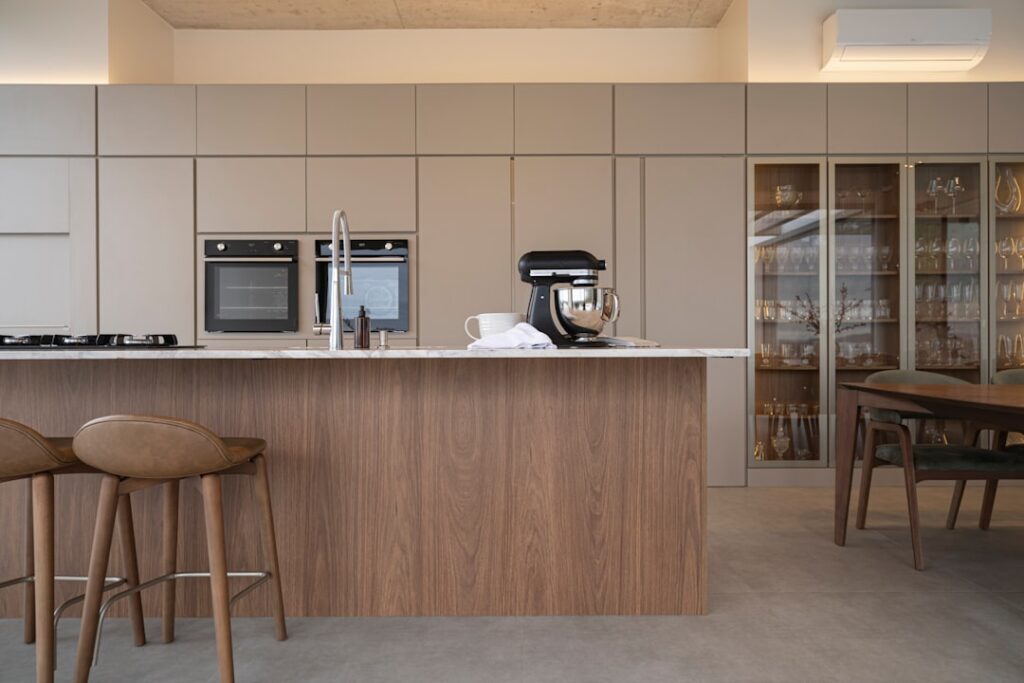
Leathered granite countertops have become one of the most requested finishes in kitchen and bathroom renovations over the past several years. This textured finish offers a sophisticated alternative to the traditional polished look while hiding fingerprints, water spots, and minor imperfections better than any other granite finish available.
Part of our Countertops guide — explore the full guide →
Over our 30+ years installing natural stone surfaces, we have watched leathered granite go from a niche choice to a mainstream favorite. This guide covers everything you need to know, from what the leathering process actually involves to cost comparisons, the best granite colors for this treatment, and honest pros and cons based on real-world performance.
- What Is a Leathered Granite Finish?
- Leathered vs Polished vs Honed Granite
- Pros of Leathered Granite Countertops
- Cons of Leathered Granite Countertops
- Best Granite Colors for Leathering
- Cost of Leathered Granite Countertops
- Maintenance and Care
- Best Applications for Leathered Granite
- Frequently Asked Questions
What Is a Leathered Granite Finish?
A leathered finish is created by running diamond-tipped brushes across the surface of a granite slab. This process closes the pores of the stone while creating a soft, dimpled texture that resembles leather. The result is a surface that retains the natural color and pattern of the granite but with a matte, tactile quality instead of the mirror-like reflection of polished stone.
The leathering process starts with a honed slab (matte, smooth) and adds the textured dimension through specialized equipment. Not every fabricator offers leathering because it requires specific tooling and experience. The process takes longer than standard polishing, which partly explains the higher cost.
When you run your hand across leathered granite countertops, you feel gentle undulations and a slight roughness that follows the natural mineral structure of the stone. Softer minerals in the granite wear away slightly more than harder ones during the process, creating a surface that highlights the stone’s natural character.
This finish has roots in European design but gained popularity in North American kitchens starting around 2010. Today it accounts for roughly 15-20% of all granite countertop installations we handle, up from less than 5% a decade ago.
Leathered vs Polished vs Honed Granite
Understanding how leathered granite compares to the other two main finishes helps you make the right choice for your space.
Polished granite has a glossy, mirror-like surface that reflects light and showcases the full depth of color in the stone. It is the most common finish and the easiest to clean. However, polished surfaces show fingerprints, water spots, and scratches more readily. Polished granite works best in formal kitchens and spaces where you want maximum visual impact.
Honed granite has a smooth, matte surface with no shine. It creates a more casual, contemporary look and hides fingerprints well. The downside is that honed granite is more porous than polished because the pores remain open, making it more susceptible to staining without diligent sealing. Honed finishes also tend to make colors appear lighter and less saturated.
Leathered granite combines benefits of both. The texturing process closes the pores (similar to polishing) while maintaining a matte appearance (similar to honing). Colors stay rich and saturated, fingerprints are virtually invisible, and the surface resists staining better than honed granite. The trade-off is a textured surface that some people find harder to clean and a higher upfront cost.
From a durability standpoint, all three finishes perform equally well since the underlying granite is the same material. The differences are purely about appearance, texture, and maintenance preferences.
Pros of Leathered Granite Countertops
Leathered granite countertops offer several distinct advantages that explain their growing popularity.
Hides fingerprints and water spots. This is the number one reason clients choose leathered granite. In busy kitchens, polished granite requires constant wiping to look clean. Leathered granite looks great all day without constant attention.
Enhances natural stone character. The leathering process brings out the natural texture and mineral variations in ways that polished granite cannot. Each slab looks more unique and organic with a leathered finish.
Rich color retention. Unlike honed granite, which can wash out darker colors, leathered granite maintains deep, saturated tones. Dark granites like Black Pearl and Absolute Black look stunning with a leathered finish.
Better stain resistance than honed. Because the leathering process closes the stone’s pores, it offers better stain resistance than a honed finish. You still need to seal it, but spills are less likely to penetrate.
Warm, tactile feel. Leathered granite feels warm and inviting under your hands. Many homeowners describe it as more natural and pleasant to touch compared to the cold, slick feel of polished stone.
Contemporary aesthetic. The matte, textured look fits perfectly with modern, transitional, and rustic kitchen designs. It pairs beautifully with matte cabinet finishes and brushed metal hardware.
Cons of Leathered Granite Countertops
No finish is perfect, and leathered granite has legitimate drawbacks to consider.
Harder to clean thoroughly. The textured surface has tiny crevices where crumbs, flour, and sticky substances can settle. Wiping requires a bit more effort than cleaning a smooth polished surface. A damp microfiber cloth with gentle pressure handles it, but it takes more passes.
Higher cost. The leathering process adds $5-15 per square foot to the cost of the slab, and not all fabricators offer it. Limited availability can drive prices up further in some markets.
Not available for all granites. Some granite varieties do not leather well. Very uniform, fine-grained granites may not develop enough texture to justify the process. The best candidates are granites with varied mineral compositions that create interesting surface relief.
Difficult to change later. Once a slab is leathered, you cannot easily convert it to polished. If you decide you want a different finish, you are looking at full countertop replacement. Choose carefully.
Shows oil-based stains more. While the texture hides water and fingerprints, cooking oils can darken the surface in high-use areas if the sealant is not maintained. Regular resealing (every 6-12 months) prevents this issue.
Best Granite Colors for Leathering
The leathering process produces dramatically different results depending on the granite variety. These colors consistently deliver the best outcomes in our experience.
Black Pearl is arguably the most popular choice for leathered granite countertops. The silver and copper flecks catch light beautifully against the dark background, and the texture creates a sophisticated, almost metallic appearance.
Absolute Black (Zimbabwe Black) transforms from a flat, uniform surface to something with real visual depth when leathered. The texture reveals subtle mineral variations invisible in a polished finish.
Cosmic Black features dramatic white and gold veining that gains dimension with a leathered finish. The contrast between the dark base and light veining becomes more tactile and natural.
Antique Brown is a warm-toned granite that leathers exceptionally well. The mix of brown, gold, and black minerals creates a richly textured surface with genuine depth.
Steel Grey produces a sophisticated, industrial look when leathered. The subtle blue-grey tones pair well with contemporary kitchen designs and stainless steel appliances.
Colonial White is one of the lighter granites that works well with leathering. The warm white base with grey and burgundy specks gains a soft, organic quality that polishing simply cannot achieve.
Granites to avoid for leathering include very uniform varieties like Uba Tuba and Baltic Brown, which may not develop enough surface variation to make the leathered look worthwhile.
Cost of Leathered Granite Countertops
The total cost of leathered granite countertops depends on the granite variety, your location, and the fabricator you choose.
Material cost: Granite slabs suitable for leathering typically range from $40-100 per square foot for the material alone. Premium exotic granites can exceed $150 per square foot.
Leathering surcharge: The additional processing adds $5-15 per square foot to the slab cost. Some fabricators include it in their standard pricing, while others list it as an upgrade.
Fabrication and installation: Cutting, edge profiling, and installation add another $30-60 per square foot. Standard edges like eased or bullnose cost less, while waterfall or mitered edges add to the total.
Total installed cost: Most homeowners spend between $75-175 per square foot for leathered granite fully installed. For an average kitchen with 40 square feet of countertop space, that translates to $3,000-7,000 total.
Compared to polished granite of the same variety, expect to pay roughly 10-15% more for a leathered finish. The premium comes from the additional processing time and the specialized equipment required.
Maintenance and Care
Proper maintenance keeps leathered granite countertops looking their best for decades. The routine is straightforward but slightly different from caring for polished granite.
Daily cleaning: Use warm water with a few drops of mild dish soap and a microfiber cloth. The textured surface benefits from slightly more pressure than you would use on polished granite. Wipe in the direction of the grain where possible.
Sealing: Apply a quality penetrating stone sealer every 6-12 months. Leathered granite absorbs sealer slightly differently than polished surfaces, so apply in thin coats and buff off excess after 15-20 minutes. Two thin coats outperform one heavy coat.
Stain treatment: For oil-based stains, make a poultice from baking soda and water. Apply it to the stain, cover with plastic wrap, and let it sit for 24-48 hours. The poultice draws the oil out of the stone. For organic stains, use a poultice made with hydrogen peroxide instead of water.
Avoid harsh chemicals. Acidic cleaners (vinegar, citrus-based sprays) and alkaline cleaners (ammonia, bleach) can damage the sealer and dull the finish over time. Stick with pH-neutral stone cleaners or plain dish soap.
Re-leathering: In rare cases where the texture becomes worn in high-traffic areas (typically after 15-20 years), a stone restoration professional can re-leather the surface. This is far less common than needing to re-polish polished granite.
Best Applications for Leathered Granite
While kitchens are the most common location, leathered granite countertops work well in several settings.
Kitchen countertops: The hide-everything texture is ideal for busy cooking spaces. Leathered granite around the stovetop and prep areas stays looking clean between formal wipe-downs.
Kitchen islands: Large island surfaces benefit greatly from the leathered finish because they are the most visible countertop surface and the most touched. The texture makes islands feel more like furniture than stone slabs.
Outdoor kitchens: Leathered granite holds up better in outdoor applications than polished granite because the texture provides better grip when wet and shows weather-related wear less noticeably.
Bathroom vanities: The warm, tactile quality of leathered granite creates a spa-like feel in master bathrooms. It also hides water spots and soap residue better than polished stone.
Fireplace surrounds: The organic, textured surface pairs naturally with stone fireplace designs and adds visual interest without competing with the fire itself.
Frequently Asked Questions
Is leathered granite more expensive than polished?
Yes. Leathered granite typically costs 10-15% more than polished granite of the same variety. The additional cost comes from the extra processing step and the specialized equipment required. For a typical kitchen, this translates to $300-1,000 more than a polished finish.
Does leathered granite stain easily?
Leathered granite resists stains better than honed granite but requires regular sealing to maintain that protection. The closed-pore texture is naturally more resistant than open-pored honed stone. With proper sealing every 6-12 months, staining is rarely an issue.
Can any granite be leathered?
Not all granites produce good results when leathered. The best candidates have varied mineral compositions that create interesting texture during the process. Very uniform, fine-grained granites may look underwhelming with a leathered finish. Ask your fabricator to show you leathered samples of your chosen stone before committing.
How do you clean leathered granite countertops?
Clean daily with warm water and mild dish soap using a microfiber cloth. The textured surface may require slightly more wiping effort than polished granite. Avoid acidic or alkaline cleaners. For deep cleaning, use a pH-neutral stone cleaner formulated for natural stone surfaces.
Will leathered granite go out of style?
Leathered finishes have been gaining popularity steadily for over 15 years, which suggests staying power rather than a passing trend. The finish has a timeless, natural quality that works across multiple design styles. Even if preferences shift, leathered granite ages gracefully and maintains its appeal.


