Real linoleum is a British invention, and the UK market still produces the highest-quality natural lino on the planet. When US homeowners search for linoleum flooring UK information, they are usually trying to source the same Forbo Marmoleum or Tarkett Veneto sheets that British architects have specified for schools and hospitals since the 1920s. The good news is that the same rolls ship to the States; the bad news is that most American retailers lump linoleum together with vinyl and confuse every spec sheet they write.
- Linoleum Is Not Vinyl
- Why British Lino Dominates the Category
- Pros of Choosing Natural Linoleum
- Cons and Real-World Limitations
- Top Brands Available to US Buyers
- Cost Comparison for a 200 sq ft Kitchen
- Installation Process
- Maintenance That Keeps Lino Looking New
- Who Should Choose Linoleum
- How Linoleum Ages Over Decades
- Commercial vs Residential Grades
- Final Thoughts
Linoleum Is Not Vinyl
Linoleum is made from linseed oil, pine rosin, wood flour, cork dust, limestone, and natural pigments pressed onto a jute backing. Vinyl is petroleum-based PVC. The two look similar after installation but behave differently in every way that matters: linoleum is biodegradable, naturally antimicrobial, and lasts 40+ years when maintained. Vinyl usually taps out at 20 years and off-gasses phthalates for months after install. If a retailer calls a product “linoleum” but the back is foam or fiberglass, it is vinyl.
Why British Lino Dominates the Category
Forbo Flooring Systems, headquartered in Scotland and the Netherlands, runs the oldest continuously operating linoleum factory in the world at Kirkcaldy, Fife. Armstrong stopped making true lino in the US decades ago, so American homeowners who want real linoleum are almost always buying Forbo Marmoleum, Tarkett’s UK-sourced product, or DLW from Germany. British spec requirements for schools and NHS hospitals keep quality standards high, which trickles down to the residential rolls.
Pros of Choosing Natural Linoleum
There are genuine reasons to choose lino over vinyl, engineered wood, or tile.
- 40-50 year lifespan with basic maintenance. I have seen original 1950s lino in British post offices still performing.
- Naturally antimicrobial thanks to ongoing linseed oxidation. No special coatings required.
- Biodegradable at end of life; modern vinyl is landfill-only.
- Warm underfoot compared to tile or stone, closer to cork than to vinyl.
- Color goes all the way through the sheet, so scratches don’t show a different base layer.
- Low VOC after initial cure — under 10 μg/m³ after 28 days.
Cons and Real-World Limitations
Lino is not a miracle product. The jute backing hates standing water, so basement and bathroom installations require seam sealing and proper subfloor vapor barriers. The initial “new linoleum” smell (from linseed oxidation) takes 2-6 weeks to fade and bothers some people. Installation demands a skilled sheet vinyl installer because seams must be heat-welded with Forbo’s proprietary rod. Finally, natural lino costs more up front — $4.50-$7.00 per sq ft installed versus $2.50-$4.50 for mid-grade LVP.
Top Brands Available to US Buyers
These are the brands a flooring professional actually orders when a client wants real British-spec lino.
- Forbo Marmoleum Sheet: The gold standard. Sold through specialty flooring dealers. $4.50-$6.00 per sq ft for material only.
- Forbo Marmoleum Click: Click-lock panels for DIY. $5.50-$7.50 per sq ft. Limited color range versus sheet goods.
- Forbo Marmoleum Modular: Tile format for commercial and high-design residential. $6.00-$8.00 per sq ft.
- Tarkett Veneto xf2: European-made, available through commercial flooring reps. $5.00-$6.50 per sq ft.
- DLW Armstrong (now Gerflor): German natural lino. Hard to source in the US but worth the effort for colorways Forbo doesn’t offer.
Cost Comparison for a 200 sq ft Kitchen
Budget $1,400-$2,600 for materials on a 200 sq ft kitchen using genuine British-spec lino, plus $800-$1,600 for professional installation including heat-welded seams and a proper 6-inch cove base if you want the hospital-style finish. Total delivered cost lands around $11.00-$21.00 per sq ft. That is roughly double a mid-grade LVP job but represents a 25-year cost advantage when you amortize the longer lifespan.
Installation Process
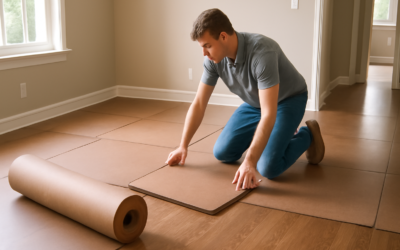
Sheet linoleum installation is not a weekend project for most DIYers.
- Acclimate rolls flat in the installation room for 48 hours at 65-75°F.
- Confirm subfloor flatness within 1/8 inch over 10 feet and test for moisture (under 4 lb/1000 sq ft per calcium chloride).
- Apply Forbo L910 adhesive with a 1/16 inch V-notch trowel, wait for proper open time (20-30 minutes).
- Lay the sheet, roll with a 100-lb three-section roller, then heat-weld seams with the color-matched welding rod.
- Wait 48 hours before heavy use; 2 weeks before applying any topical finish.
Maintenance That Keeps Lino Looking New
Sweep daily or use a dust mop. Damp-mop weekly with a neutral pH cleaner like Forbo Monel or a dilute solution of Dr. Bronner’s. Never use ammonia, bleach, or pine-based cleaners; they break down the linseed binder. Refinish with Forbo Monel every 3-5 years in residential settings to refresh the topcoat and protect the color layer.
Who Should Choose Linoleum
Lino makes the most sense for kitchens, mudrooms, and playrooms in homes where owners plan to stay 15+ years. It suits people who value natural materials, can tolerate a modest initial odor period, and are willing to pay upfront for decades of low-maintenance performance. Anyone flipping a house in under five years or installing in a below-grade bathroom should look at LVP instead.
How Linoleum Ages Over Decades
One of the underrated features of natural lino is how it develops patina. The linseed oxidation continues slowly for the first 2-3 years, producing a subtle color shift that manufacturers call “bloom.” Early yellowing in low-light areas evens out within 6-8 weeks of normal room exposure. After 10 years, a well-maintained lino floor looks better than a new one because surface microtexture softens and the colors deepen.
Commercial vs Residential Grades
Forbo Marmoleum comes in sheet thicknesses from 2.0 mm to 3.2 mm. The 2.5 mm residential grade is adequate for homes; the 3.2 mm commercial grade lasts longer in high-traffic areas like mudrooms and entries. Commercial grades also include additional surface sealers that reduce refinishing frequency from every 3-5 years to every 7-10 years. The price premium for commercial grade runs about 15-20%.
Final Thoughts
British-spec linoleum is still the right answer for buyers who want a natural, long-lasting, biodegradable floor that ages well. Source Forbo Marmoleum through a specialty dealer, budget for professional installation, and you will end up with a floor that outlives two rounds of kitchen cabinets and three refrigerators.
Prefer to explore on your own?
See how new flooring looks in your actual room in seconds — free, no signup.
Try the free Floor Studio →