Bathrooms punish the wrong floor faster than any other room in the house. Standing water, humidity, and temperature swings will warp, stain, or buckle a material that was not chosen for the job. Lowes bathroom flooring covers a wide range of categories that suit wet rooms well, from porcelain tile to waterproof luxury vinyl, and understanding those categories is the key to picking the right one. This guide breaks down the realistic options you will find at a major home improvement retailer, what each does well, and how to budget the project sensibly.
The Main Categories You’ll Find
A large retailer like Lowe’s organizes bathroom-appropriate flooring into a few core families. Each handles moisture differently:
- Ceramic and porcelain tile — the traditional waterproof choice, available in countless sizes and looks.
- Luxury vinyl plank and tile (LVP/LVT) — waterproof, warmer underfoot, and easier to install.
- Sheet vinyl — a continuous, seam-minimizing surface that is among the most affordable options.
Solid hardwood is generally a poor fit for full bathrooms because of moisture, so retailers steer wet-room shoppers toward these three families. Carpet is also best avoided in bathrooms for hygiene and mildew reasons.
Porcelain and Ceramic Tile
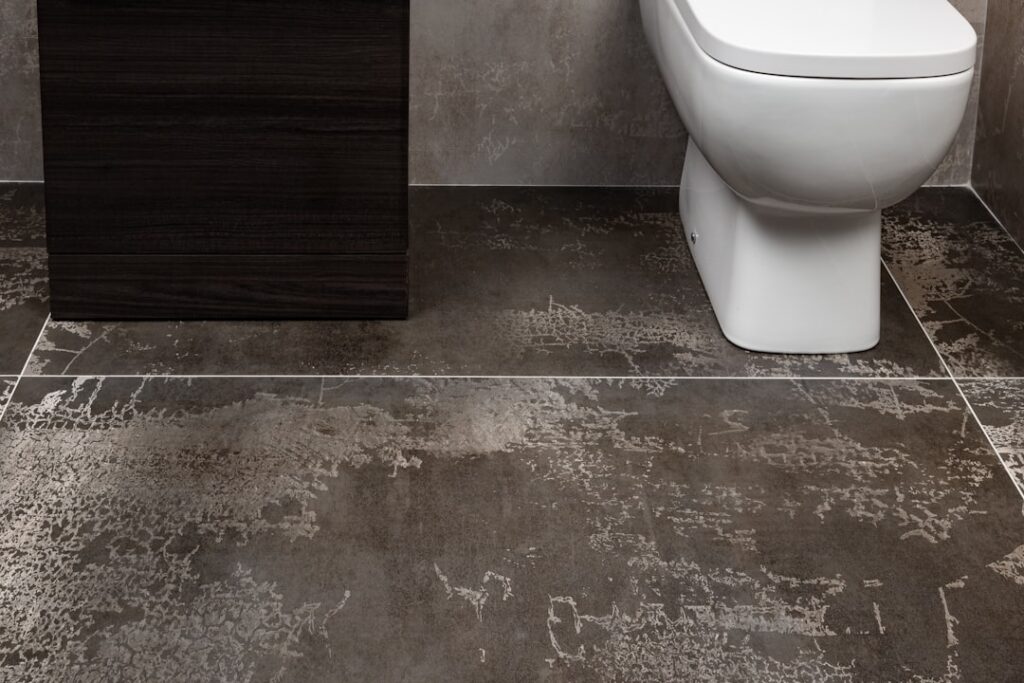
Tile remains the gold standard for bathrooms because it is genuinely waterproof and extremely durable. Porcelain is denser and absorbs less water than standard ceramic, which makes it the stronger choice for floors and showers. Look for a slip-resistance rating; in a wet room, a textured or matte finish with a higher coefficient of friction is far safer than glossy tile. Tile is the most labor-intensive option to install, since it requires thinset, spacers, grout, and sealing, but the result lasts decades. The main downsides are cold underfoot in winter and a harder surface that is unforgiving of dropped objects.
Luxury Vinyl Plank and Tile
LVP and LVT have become the most popular DIY bathroom flooring because they pair real waterproof performance with a warmer, more comfortable feel than ceramic. Most rigid-core products click together in a floating installation, so a confident homeowner can finish a small bathroom in a weekend. Wood-look planks and stone-look tiles let you get the appearance of natural materials without the maintenance. For bathrooms, choose a waterproof rigid-core (SPC) product rather than a flexible glue-down, and confirm the manufacturer rates it for wet areas. A 20-mil wear layer holds up well to grit tracked in from a shower.
Sheet Vinyl
If budget is the priority, sheet vinyl is hard to beat. It comes in wide rolls that cover a small bathroom with few or no seams, which limits the paths water can take to reach the subfloor. Modern sheet vinyl mimics tile and wood convincingly and is soft and quiet underfoot. The tradeoffs are a less premium feel, the difficulty of patching damage, and a lower impact on resale value than tile. For a rental, a kid’s bathroom, or a quick refresh, it is a practical and very affordable choice.
How to Choose Between Them
Match the material to how the room is used and how long you plan to keep it:
- Full bath or shower-heavy room: porcelain tile or waterproof rigid-core LVP.
- Powder room or low-use bath: LVP or sheet vinyl for cost and speed.
- DIY install: click-lock LVP is the most forgiving; tile demands skill and tools.
- Resale priority: porcelain tile reads as the most premium to buyers.
- Comfort and warmth: vinyl options feel better on bare feet than tile.
Budgeting the Project
Costs vary by product and region, and prices change, so always confirm current pricing in-store or online and pull a written estimate. As a general planning range, basic ceramic tile material often starts around $1 to $3 per square foot, with porcelain and designer tile climbing higher. LVP commonly falls in the $2 to $5 range, and sheet vinyl is frequently the cheapest per square foot. Remember that installation, underlayment, thinset, grout, and removal of the old floor all add to the total. For tile especially, professional labor can equal or exceed the material cost. Get multiple quotes if you are hiring out the work.
Installation and Subfloor Basics
No bathroom floor performs well over a bad subfloor. Make sure the subfloor is solid, flat, and dry before anything goes down. Tile typically needs a cement backer board or an uncoupling membrane to prevent cracking. LVP needs a flat surface within about 3/16 inch over 10 feet and a 1/4-inch expansion gap at the walls. Around toilets, tubs, and vanities, seal the perimeter and any penetrations with caulk so water cannot wick underneath. Cutting these corners is the most common reason a bathroom floor fails early.
Maintenance by Material
How much upkeep each option demands should factor into your choice, especially in a high-use bathroom:
- Porcelain and ceramic tile: very low maintenance on the tile itself; the grout needs periodic cleaning and resealing to stay stain-free.
- Luxury vinyl: the easiest to maintain, needing only sweeping and a damp mop; no sealing required.
- Sheet vinyl: equally low-maintenance, though damage is hard to patch and usually means replacing the whole sheet.
Avoid harsh abrasive cleaners on vinyl, which can dull the finish, and skip steam mops on any floating floor, since forced moisture can work into the seams.
Common Bathroom Flooring Mistakes
A few avoidable errors account for most bathroom floor failures. Choosing a glossy tile for safety reasons is the most common; in a wet room, a textured, slip-resistant finish is far safer than a polished one. Installing flooring over a soft or uneven subfloor leads to cracked tile and lifting vinyl, so prep the base first. Skipping caulk around the toilet, tub, and vanity lets water wick underneath and rot the subfloor. And selecting solid hardwood or carpet for a full bathroom invites moisture and mildew problems. Plan around these pitfalls and your floor will outlast the rest of the bathroom.
The Bottom Line
Lowes bathroom flooring spans the three categories that actually belong in a wet room: porcelain or ceramic tile for ultimate durability, waterproof luxury vinyl for the best balance of comfort and ease, and sheet vinyl for the tightest budget. Decide based on usage, DIY skill, comfort, and resale goals, then confirm current pricing and gather quotes before you commit. Pair the right material with proper subfloor prep and sealing, and your new bathroom floor will shrug off years of moisture without complaint.
Prefer to explore on your own?
See how new flooring looks in your actual room in seconds — free, no signup.
Try the free Floor Studio →