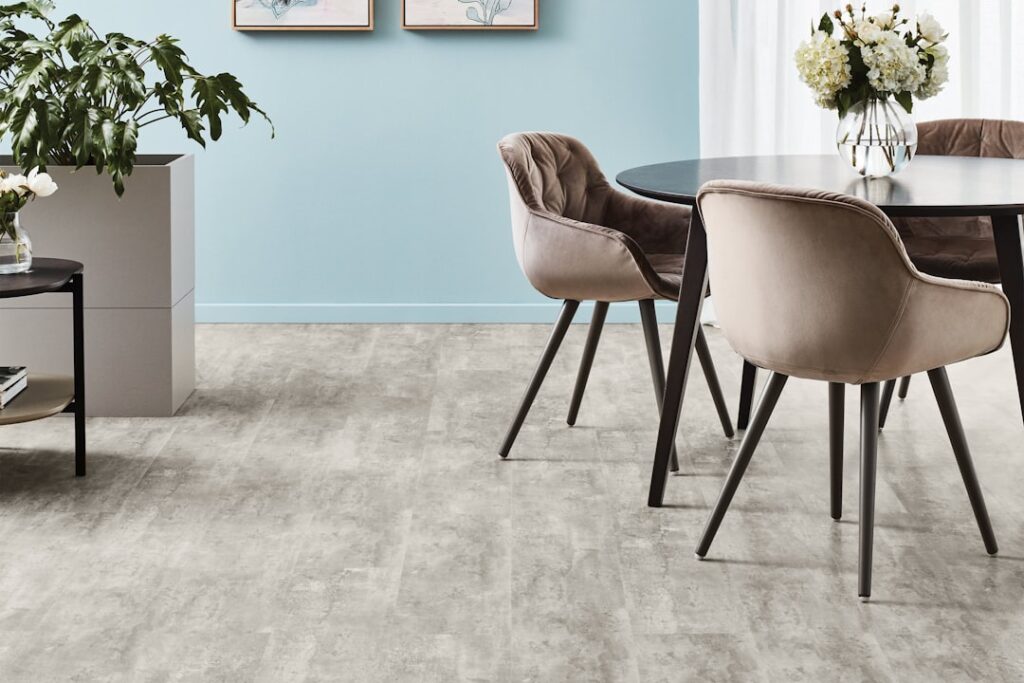
Walk across a modern kitchen floor and there’s a good chance the “porcelain” underfoot is actually vinyl. Luxury vinyl flooring that looks like tile has closed the visual gap with real ceramic and stone so convincingly that most people can’t tell the difference standing up. The trick is in the printed photographic layer, the embossed texture, and — on the best products — grout-line grooves that catch shadow the same way a real grout joint does. What you gain is a warmer, quieter, more forgiving floor that installs in a weekend and shrugs off a dropped skillet.
This guide breaks down the formats, the construction that matters, realistic pricing, and how to install a tile-look vinyl floor that holds up for 20 years.
Why Tile-Look Vinyl Instead of Real Tile?
Real porcelain is beautiful, but it’s cold, hard, and loud. Drop a wine glass on it and the glass loses; drop it on vinyl and you often just wipe up the spill. Tile-look luxury vinyl gives you the same visual — travertine, marble, slate, cement, hexagon mosaics — with a softer, warmer surface that’s easier on your feet and your dishes.
The other big win is installation. Porcelain tile demands mortar, a notched trowel, spacers, a wet saw, 24 hours of cure time, and then grouting and sealing. A tile-look vinyl floor clicks together as a floating floor over almost any flat subfloor and is walkable the same day. For DIYers, that difference alone is worth hundreds of dollars in labor.
The Main Formats You’ll See
Not all tile-look vinyl is built the same way. Understanding the format tells you how it installs and how durable it will be.
- LVT (luxury vinyl tile): Cut into square or rectangular tiles — 12×12, 12×24, 18×18, or 16×32 inches. These read most like real tile because the proportions match ceramic.
- SPC rigid core planks/tiles: A stone-plastic composite core makes these dead flat and dimensionally stable, so they hide minor subfloor imperfections and won’t telegraph seams in summer heat.
- WPC rigid core: A wood-plastic composite core is slightly softer and warmer underfoot than SPC, with a bit more give.
- Glue-down LVT: Thin tiles (often 2 to 3 mm) bonded directly to the subfloor with pressure-sensitive adhesive — the most tile-realistic option and the flattest.
- Groutable LVT: Tiles spaced with real grout joints you fill with acrylic or urethane grout. This is the format nobody can tell from ceramic.
The Grout Question
The single feature that sells the tile illusion is the grout line. Basic peel-and-stick or click LVT prints a fake grout line right onto the tile surface — fine from a few feet away, but flat to the touch. Better products use a painted or beveled micro-bevel edge that creates a real shadow gap when tiles meet.
Groutable luxury vinyl goes all the way. You lay the tiles with 1/8-inch or 1/4-inch spacers, then apply a flexible vinyl-tile grout between them. The result has genuine texture, genuine depth, and — since the grout is flexible acrylic rather than cement — it won’t crack when the floor flexes. Expect to add about $0.50 to $1.00 per square foot in grout material and a few extra hours of labor for this look.
Construction That Actually Matters
Ignore the marketing photos for a minute and look at the spec sheet. Two numbers separate a floor that lasts from one that scuffs in a year.
Wear Layer Thickness
The wear layer is the clear protective top coat measured in mils (thousandths of an inch). It’s the only thing standing between your tile pattern and your dog’s toenails.
- 6 mil: Light residential — guest bath, low-traffic bedroom.
- 12 mil: The residential sweet spot for kitchens and entryways.
- 20 to 22 mil: Heavy residential and light commercial — the tier to buy if you have kids, pets, and a busy household.
- 28 mil and up: True commercial traffic.
For a tile-look floor in a kitchen or mudroom, 20 mil is the number I steer homeowners toward. It costs a little more up front and saves the whole floor.
Overall Thickness and Core
Total plank thickness usually runs 4 to 8 mm. A 5 mm SPC tile with a 20 mil wear layer and an attached IXPE or cork pad is a genuinely premium build. The rigid SPC core is what lets tile-look vinyl float without an underlayment showing through as hollow spots, and it’s why these floors handle temperature swings in sunrooms without buckling.
What It Costs
Tile-look luxury vinyl spans a wide price range depending on wear layer and format.
- Budget click LVT (6 mil): $1.50 to $2.50 per sq ft material.
- Mid-grade SPC tile (12 to 20 mil): $3.00 to $5.00 per sq ft material.
- Premium groutable / thick wear layer: $5.00 to $8.00 per sq ft material.
- Professional installation: $2.00 to $5.00 per sq ft depending on format — glue-down and groutable cost more than click.
All in, a professionally installed tile-look vinyl floor typically lands between $5 and $12 per square foot. Real porcelain installed usually runs $10 to $20 per square foot, so the vinyl saves real money while cutting the mess.
Installation Basics
Click-together rigid core is the most DIY-friendly. Here’s the short version of a clean install:
- Acclimate the boxes flat in the room for 48 hours at normal living temperature.
- Check the subfloor for flatness — no more than 3/16 inch of deviation over 10 feet. Grind high spots and fill lows with self-leveling compound.
- Vacuum thoroughly. Even a small pebble under a rigid tile creates a rocking spot.
- Lay tiles from the longest wall, leaving a 1/4-inch expansion gap at every wall and vertical obstacle.
- Stagger seams and cut with a sharp utility knife (score and snap) or a jigsaw for curves — no wet saw needed.
- For groutable systems, set your spacers, let the field set, then work the flexible grout into the joints and wipe the haze before it dries.
Glue-down LVT needs a clean, fully cured, and moisture-tested subfloor plus the correct pressure-sensitive adhesive, so it’s a step up in skill. If your subfloor is questionable, floating SPC is the safer choice.
Where It Works Best
Tile-look vinyl shines in exactly the rooms where real tile is most miserable to stand on. Kitchens, entryways, mudrooms, laundry rooms, and basements all benefit from a waterproof surface that’s warmer and quieter than ceramic. In a basement, the rigid SPC core over a slab is a smart, moisture-tolerant choice that won’t crack if the slab shifts slightly.
Pair it with radiant heat only if the manufacturer approves it — most rigid core products handle in-floor heat up to about 85°F surface temperature, but always confirm the spec before you install over a heated slab.
Frequently Asked Questions
Can you tell luxury vinyl from real tile?
From a standing position, most people can’t — especially with a beveled or groutable product. Kneel down and touch it and you’ll feel that vinyl is warmer and slightly softer than fired ceramic, which is exactly why homeowners choose it.
Is tile-look vinyl fully waterproof?
Rigid core SPC and WPC products are 100% waterproof through the plank, making them safe for bathrooms and kitchens. Standing water can still reach the subfloor through the perimeter expansion gap, so wipe up major spills — the floor itself won’t swell.
Does it need to be sealed like real grout?
No. Even groutable vinyl uses flexible acrylic or urethane grout that never needs the annual resealing that cement grout demands. That’s one of the quiet maintenance wins over real tile.
How long does it last?
A quality 20 mil floor carries a 20-to-25-year residential warranty and realistically lasts that long in a home with normal traffic. Cheaper 6 mil products may start showing wear in 5 to 7 years in a busy kitchen.
Can it be installed over existing tile?
Yes — floating rigid core can go right over old ceramic as long as the tile is well-bonded and the grout lines aren’t deep enough to telegraph. Wide or deep grout lines should be skim-filled first so the new floor stays flat.
For the look of stone and ceramic without the cold, the noise, or the weekend of mortar, tile-look luxury vinyl is one of the best value upgrades in flooring today. Buy a 20 mil wear layer, prep your subfloor flat, and you’ll have a floor that fools guests and outlasts the trend that inspired it.
Prefer to explore on your own?
See how new flooring looks in your actual room in seconds — free, no signup.
Try the free Floor Studio →