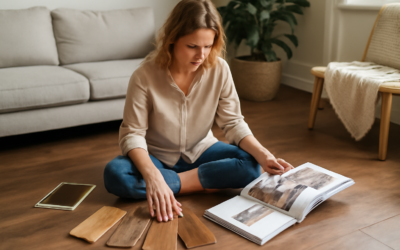
LVP flooring in kitchen installations has surpassed tile, hardwood, and laminate to become the most popular kitchen floor choice in 2026. The combination of waterproof performance, realistic wood and stone visuals, comfortable underfoot feel, and budget-friendly pricing makes luxury vinyl plank the obvious pick for a room that takes constant punishment from spills, drops, and foot traffic.
This guide covers everything you need to know about choosing, installing, and maintaining LVP flooring in your kitchen — from SPC core requirements and best brands to under-cabinet installation details and long-term cost analysis.
- Why LVP Dominates Kitchen Flooring in 2026
- SPC Core: The Only Core You Should Use in Kitchens
- Best LVP Brands for Kitchens
- Wood-Look vs Stone-Look LVP for Kitchens
- Installation Considerations for Kitchens
- Dishwasher and Appliance Concerns
- Spill and Moisture Performance
- LVP Kitchen Flooring Cost
- LVP vs Other Kitchen Floors
- Frequently Asked Questions
While you’re upgrading the kitchen floor, it might be a good time to rethink the seating too. Swapping out old bar stools is one of those small changes that makes the whole room feel more pulled together.
We may earn a commission when you purchase through our links.
Why LVP Dominates Kitchen Flooring in 2026
The kitchen is the hardest room on a floor. Daily spills, heavy foot traffic, dropped utensils, pet water bowls, and constant moisture from the sink and dishwasher demand a floor that handles abuse without complaining. LVP flooring checks every box.
- 100% waterproof core. Unlike hardwood and laminate, SPC vinyl plank will not swell, warp, or delaminate from water exposure — critical in a room where spills are inevitable.
- Realistic visuals. Modern LVP uses embossed-in-register (EIR) technology that aligns the texture with the printed pattern, creating wood and stone looks that fool visitors at first glance.
- Comfortable underfoot. Vinyl is warmer and softer than tile or stone, reducing foot fatigue during long cooking sessions. Attached underlayment adds cushion and sound absorption.
- Easy maintenance. Sweep and damp mop — that is the entire cleaning routine. No sealing, no refinishing, no grout scrubbing.
- Budget friendly. Installed LVP costs $4 to $9 per square foot compared to $10 to $20+ for hardwood or natural stone tile.
- DIY friendly. Click-lock floating installation requires no glue, no nails, and no special tools beyond a utility knife and tape measure.
SPC Core: The Only Core You Should Use in Kitchens
Not all LVP is created equal. The core material determines how the floor handles moisture, heat, dents, and heavy appliances — all critical factors in kitchen flooring.
| Feature | SPC (Stone Polymer Composite) | WPC (Wood Polymer Composite) |
|---|---|---|
| Core composition | Limestone + PVC | Wood dust + PVC |
| Density | Very high | Moderate |
| Dent resistance | Excellent (resists heavy appliances) | Good (can dent under concentrated weight) |
| Temperature stability | Excellent (minimal expansion) | Good (slightly more expansion) |
| Comfort underfoot | Firmer | Softer, more cushion |
| Waterproof | Yes | Yes |
| Best use | Kitchens, bathrooms, basements | Bedrooms, living rooms |
| Typical thickness | 4 – 6 mm | 5 – 8 mm |
Bottom line: For kitchens, always choose SPC core LVP. Its rigid, dense construction resists indentation from refrigerators, dishwashers, and kitchen islands, and its minimal thermal expansion prevents gapping near ovens and dishwashers that generate heat.
Best LVP Brands for Kitchens
These brands consistently earn top marks for kitchen-specific performance in 2026.
| Brand / Line | Core Type | Wear Layer | Warranty | Price (per sq ft) |
|---|---|---|---|---|
| COREtec Pro Plus | SPC | 20 mil | Lifetime residential | $3.50 – $5.00 |
| Shaw Floorte Elite | SPC | 20 mil | Lifetime residential | $3.00 – $4.50 |
| Mohawk Solidtech | SPC | 20 mil | Lifetime residential | $3.00 – $4.50 |
| MSI Everlife | SPC | 12 – 20 mil | Lifetime residential | $2.50 – $4.00 |
| Karndean Korlok | SPC | 20 mil | Lifetime residential | $4.00 – $6.00 |
For kitchens, prioritize a 20-mil wear layer. The kitchen floor endures more scratches, scuffs, and abrasion than any other room, and a thicker wear layer directly extends the floor’s lifespan. A 12-mil wear layer is the absolute minimum for kitchens; anything less belongs in low-traffic areas only.
Wood-Look vs Stone-Look LVP for Kitchens
Both wood-look and stone-look LVP work beautifully in kitchens, but each creates a different aesthetic and comes with different practical considerations.
| Factor | Wood-Look LVP | Stone-Look LVP |
|---|---|---|
| Plank size | Longer, narrower (7″ x 48″ typical) | Wider, sometimes square (12″ x 24″ or 18″ x 36″) |
| Texture | Grain, wire-brushed, hand-scraped | Slate, marble, travertine texture |
| Kitchen style match | Farmhouse, transitional, modern warm | Contemporary, Mediterranean, industrial |
| Shows dirt | Less visible on medium-tone wood grains | Light stone colors show crumbs and dirt more |
| Grout lines | No | Optional grouted or groutless look |
| Trending in 2026 | Wide-plank European oak look, warm tones | Concrete look, large-format marble |
Design tip: Medium-tone wood-look LVP (greige, warm oak, natural walnut) is the most practical choice for kitchens. It hides crumbs, water spots, and pet hair better than very light or very dark options.
Installation Considerations for Kitchens
Kitchen installation requires more planning than bedroom or living room installations because of cabinets, appliances, and island placement.
Under-Cabinet Installation
The biggest question for LVP in kitchens is whether to install under cabinets or around them.
- New construction or full remodel: Install LVP across the entire subfloor first, then place cabinets on top. This provides a seamless look and allows the floor to float freely with a continuous plane of expansion.
- Existing cabinets: Install LVP up to the cabinets and cover the expansion gap with quarter-round or shoe molding. Use a multi-tool to undercut cabinet toe kicks for a clean finish.
Critical rule: Never pin a floating LVP floor under cabinets and heavy islands simultaneously. The weight restricts the floor’s ability to expand and contract, leading to buckling. If cabinets are installed on top, the floor should not also be pinned under an island — one or the other must sit on top of the subfloor, not on top of the floating floor.
Expansion Gaps
Leave a minimum 1/4-inch expansion gap at all walls, cabinets, islands, and transitions. Kitchens experience more temperature variation from ovens and dishwashers than other rooms, so some installers recommend a 3/8-inch gap for added safety.
Dishwasher and Appliance Concerns
Dishwasher leaks are the number-one cause of kitchen floor damage. SPC-core LVP handles this better than any other flooring except tile.
- Small leaks and splashes: SPC vinyl is 100% waterproof at the plank level. Water sitting on the surface or in seams will not damage the core.
- Major leaks: If water penetrates beneath the floating floor through seams, it can pool on the subfloor. The LVP itself will not be damaged, but the subfloor may need drying. Most click-lock floors can be disassembled, dried, and reinstalled.
- Refrigerator weight: Use appliance pads or furniture coasters under the feet of heavy refrigerators to distribute weight and prevent indentation — even on rigid SPC core.
- Stove heat: SPC core handles temperature fluctuations far better than WPC, but place a heat-resistant mat under any appliance that vents downward.
Spill and Moisture Performance
Kitchens see more liquid contact than any other room. Here is how LVP kitchen flooring handles common spill scenarios.
| Spill Type | Risk Level | Action Required |
|---|---|---|
| Water splashes (sink, cooking) | None | Wipe when convenient |
| Cooking oil | Low | Wipe promptly to prevent slipping |
| Red wine / juice | Low | Wipe within an hour — will not stain |
| Standing water (leak) | Low for SPC | Mop up, check subfloor if prolonged |
| Hot grease splatter | Low | Let cool, wipe — will not damage surface |
| Bleach / harsh cleaners | Moderate | Avoid prolonged contact, rinse quickly |
LVP Kitchen Flooring Cost
The total cost of LVP flooring in a kitchen depends on the product quality, kitchen size, and whether you hire a professional or install it yourself.
| Cost Component | Price Range |
|---|---|
| SPC LVP material (per sq ft) | $2.50 – $6.00 |
| Underlayment (if not attached) | $0.25 – $0.75 per sq ft |
| Professional installation | $1.50 – $3.00 per sq ft |
| Transitions and moldings | $50 – $150 total |
| Total installed (average 150 sq ft kitchen) | $600 – $1,400 |
| DIY total (materials only) | $400 – $1,000 |
Compared to tile ($1,500–$3,000 installed) or hardwood ($2,000–$4,000 installed) for a 150 square foot kitchen, LVP delivers significant savings while matching or exceeding durability in wet conditions.
LVP vs Other Kitchen Floors
| Feature | LVP (SPC) | Ceramic/Porcelain Tile | Hardwood | Laminate |
|---|---|---|---|---|
| Waterproof | Yes | Yes | No | No (most) |
| Comfort underfoot | Good | Hard and cold | Moderate | Moderate |
| Installed cost (per sq ft) | $4 – $9 | $8 – $15 | $10 – $20 | $4 – $8 |
| DIY friendly | Very | Moderate | Difficult | Very |
| Maintenance | Sweep + mop | Sweep + mop + grout cleaning | Sweep + special cleaner + refinish | Sweep + damp mop |
| Lifespan | 15 – 25 years | 25 – 50 years | 25 – 100 years | 10 – 20 years |
| Dropped dish risk | Dish may survive | Dish shatters, tile may crack | Dish may survive, floor may dent | Dish may survive |
Frequently Asked Questions
Is LVP good for kitchens?
Yes. LVP with an SPC core is one of the best kitchen flooring options available. It is 100% waterproof, handles heavy foot traffic, resists stains, and costs significantly less than tile or hardwood. In 2026, LVP is the most-installed kitchen floor in the United States.
Does LVP hold up under a dishwasher?
SPC-core LVP handles dishwasher moisture well. The planks themselves are waterproof, so small leaks will not cause swelling. For major leaks, the floating floor can be disassembled, the subfloor dried, and the planks reinstalled without replacement.
Can you put LVP under kitchen cabinets?
In a new build or full remodel, yes — install LVP first and place cabinets on top. For existing kitchens, install LVP up to the cabinets with expansion gaps hidden by toe kicks or shoe molding. Never pin a floating floor under both cabinets and a heavy island.
How long does LVP last in a kitchen?
With a 20-mil wear layer and proper care, SPC-core LVP flooring lasts 15 to 25 years in a kitchen. Thinner wear layers (6–12 mil) may show wear in high-traffic areas within 8 to 12 years.
What is the best LVP color for a kitchen?
Medium-tone wood looks (natural oak, warm greige, light walnut) are the most practical. They hide crumbs, dust, and water spots better than very light or very dark colors. In 2026, warm-toned European oak patterns lead kitchen design trends.
Is LVP slippery in the kitchen?
Textured LVP (embossed, wire-brushed, hand-scraped finishes) provides good traction even when wet. Smooth, high-gloss finishes can be slippery — avoid them in kitchens. Look for products with a slip-resistance rating of R10 or higher.
Prefer to explore on your own?
See how new flooring looks in your actual room in seconds — free, no signup.
Try the free Floor Studio →