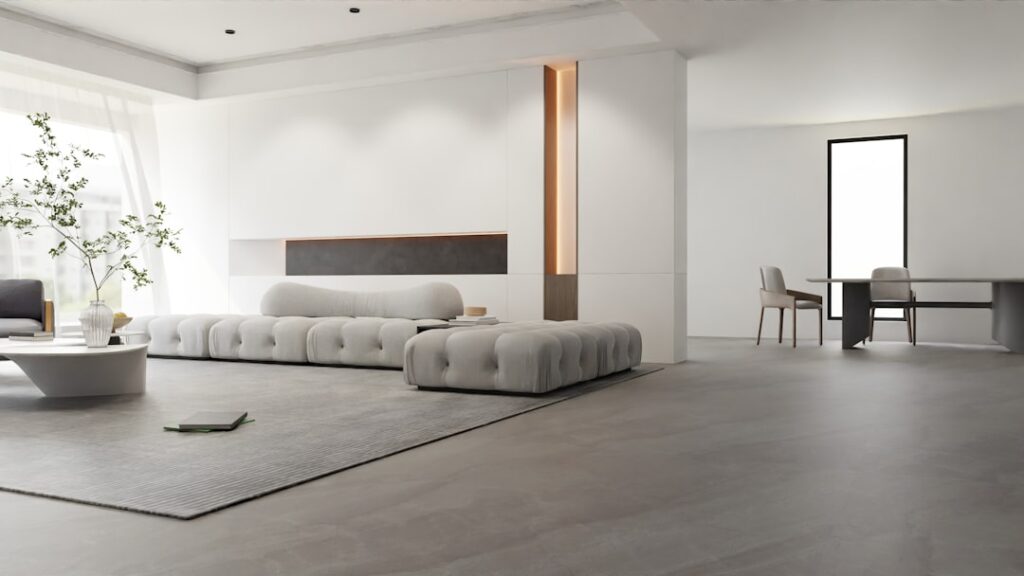
Luxury vinyl plank has become the most popular new flooring in American homes, and for good reason: it’s waterproof, durable, affordable, and looks remarkably like real wood. If you’ve been researching lvp florring (luxury vinyl plank flooring), this guide walks you through everything that matters, from wear layers and core types to installation and cost, so you can choose a floor that holds up to real family life.
Get the specifications right and LVP delivers years of low-maintenance performance in nearly every room of the house.
What Is LVP Flooring?
Luxury vinyl plank is a multilayer synthetic flooring built to mimic hardwood. Each plank stacks a backing layer, a rigid or flexible core, a printed photographic design layer, and a clear protective wear layer on top. The result is a plank that looks like wood, feels solid underfoot, and resists the water and scratches that damage real timber.
Most LVP installs as a floating click-lock floor, meaning the planks snap together and rest over the subfloor without glue or nails.
Understanding the Wear Layer
The wear layer is the single most important spec because it determines how well the floor resists scratches and scuffs. It’s measured in mils:
- 6 to 12 mil: light residential use, low-traffic rooms
- 12 to 20 mil: general residential use with kids and moderate traffic
- 20 mil and up: homes with pets, heavy traffic, or light commercial use
For most households, 20 mil is the sweet spot. Skimping here is the top reason budget LVP looks worn within a couple of years.
SPC vs WPC Cores
The core is the backbone of the plank, and the two main types behave differently:
- SPC (stone plastic composite): a dense, rigid core that resists dents, handles temperature swings, and feels firm. Best for high-traffic areas and rooms with big windows or temperature changes.
- WPC (wood plastic composite): a slightly thicker, softer-feeling core that’s warmer and quieter underfoot, though a bit less dent-resistant.
Both are fully waterproof. SPC has become the more popular choice for its durability and stability.
Cost of LVP Flooring
LVP offers strong value. Expect these general ranges:
- Material only: $2 to $5 per square foot
- Professional installation: $1 to $4 per square foot in labor
- Installed total: roughly $4 to $9 per square foot
Because the click-lock system is DIY-friendly, handy homeowners can save the labor cost on simple rectangular rooms.
How to Install LVP
- Acclimate the planks in the room for 48 hours at 65°F to 85°F.
- Ensure the subfloor is clean, dry, and flat within 3/16 inch over 10 feet.
- Add underlayment if it isn’t already attached to the planks.
- Leave a 1/4-inch expansion gap around the room’s perimeter.
- Stagger end joints by at least 6 inches for strength and a natural look.
- Use a tapping block and pull bar to lock seams tightly without damaging edges.
Common LVP Installation Mistakes to Avoid
Most LVP problems trace back to installation shortcuts rather than the product itself. Steering clear of these mistakes makes the difference between a floor that lasts decades and one that fails early:
- Skipping acclimation: planks need 48 hours in the room to adjust, or they may expand and gap later.
- Ignoring an uneven subfloor: dips and bumps over 3/16 inch in 10 feet cause flexing, hollow spots, and seam failures.
- No expansion gap: without a 1/4-inch perimeter gap, the floor can buckle as it expands.
- Poorly staggered seams: end joints closer than 6 inches weaken the floor and look unnatural.
- Forcing locked seams: hammering planks directly damages the locking edges; always use a tapping block.
How Long Does LVP Last?
With proper installation and basic care, quality luxury vinyl plank typically lasts 15 to 25 years in a residential setting. The wear layer is the single biggest factor in longevity: a 20-mil or thicker layer holds up to busy households and pets far longer than a thin 6-mil layer that dulls within a few years. Many manufacturers back their premium lines with residential warranties of 20 to 30 years, though the real-world lifespan depends on traffic, sunlight exposure, and how well you protect the surface with felt pads and prompt spill cleanup.
Maintenance and Care
LVP is among the easiest floors to maintain. Sweep or vacuum regularly, and damp-mop with a manufacturer-approved cleaner. Avoid steam mops, abrasive pads, and wax, which can damage the wear layer. Place felt pads under furniture legs and use floor protectors under rolling chairs to prevent scratches.
LVP vs Other Flooring Types
Understanding how LVP stacks up against the alternatives clarifies why it’s so popular:
- LVP vs laminate: both float and look like wood, but LVP is fully waterproof while standard laminate is only water-resistant. LVP wins in kitchens and baths.
- LVP vs hardwood: hardwood offers natural beauty and resale value, but LVP costs less, resists water, and never needs refinishing.
- LVP vs tile: both handle moisture, but LVP is warmer and softer underfoot and far easier to install.
- LVP vs sheet vinyl: sheet vinyl is cheaper but looks less realistic and is harder to repair than individual planks.
Where to Use LVP in Your Home
One of LVP’s biggest strengths is versatility. Because it’s waterproof and dimensionally stable, you can run the same product through nearly the entire house for a seamless look. It excels in kitchens, where spills are constant, and in bathrooms and laundry rooms that defeat hardwood and laminate. Basements are another ideal spot, since rigid SPC cores tolerate concrete subfloors and minor moisture. The only places to think twice are sunrooms with extreme heat swings, where you should confirm the product’s temperature rating, and outdoor spaces, which require materials made specifically for exterior use.
Is LVP Right for Your Home?
For most homeowners, luxury vinyl plank is a smart, versatile choice that works in kitchens, bathrooms, basements, and living areas alike. Choose a 20-mil wear layer and an SPC core for the best mix of durability and stability, look for a FloorScore certification to confirm healthy indoor air, and install it over a flat, dry subfloor. Get those basics right and your LVP floor will look great and perform for well over a decade.
Prefer to explore on your own?
See how new flooring looks in your actual room in seconds — free, no signup.
Try the free Floor Studio →