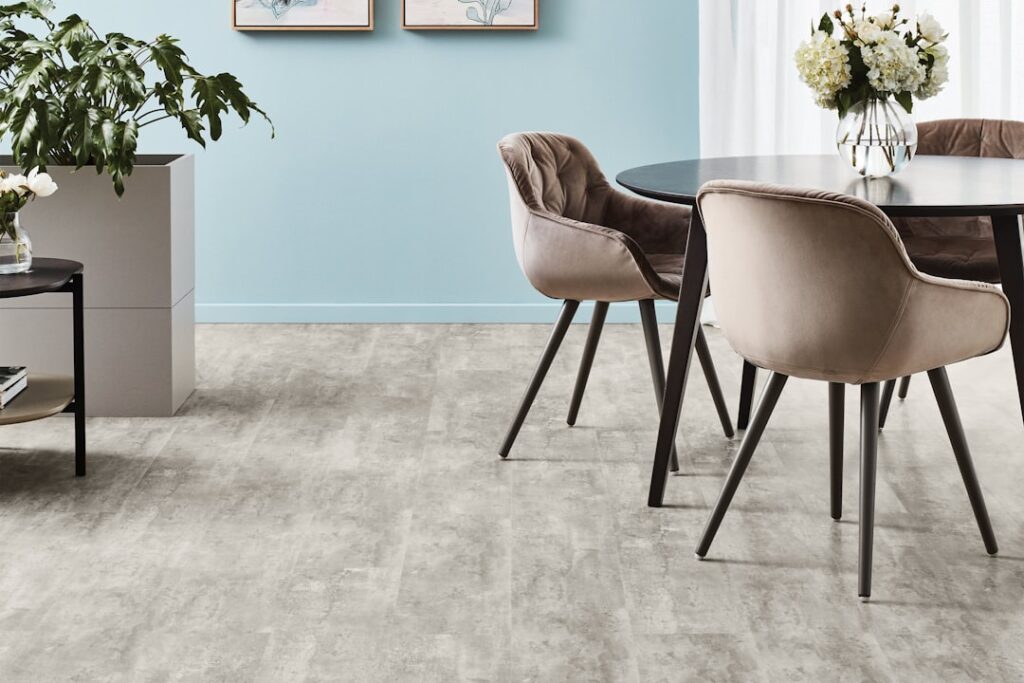
Walk into any flooring showroom and you will hear the abbreviation LVT thrown around like everyone already knows what it stands for. The actual LVT meaning is luxury vinyl tile, a multi-layer synthetic flooring product designed to mimic stone, ceramic, or concrete tile at a fraction of the price. The “tile” part refers to the shape of each piece, typically 12 by 12 inches or 18 by 18 inches square, not the material itself. Understanding what LVT actually is helps you compare it fairly against ceramic, porcelain, and other vinyl formats like LVP and SPC.
The Layered Construction That Defines LVT
Every LVT product shares a similar four to six layer construction that gives it durability and realistic looks. The layers from top to bottom are a urethane wear layer, a printed design film, a rigid PVC core, and sometimes an attached backing pad for sound and warmth. The wear layer thickness in mils determines how well the floor handles foot traffic, with 12 mil minimum for residential and 20 mil or higher for commercial spaces.
The printed design film is where realism happens. Modern LVT uses high-resolution photography of actual stone slabs and tile, which means a 30 dollar per square foot Carrara marble effect is now achievable for under 5 dollars per square foot. Quality manufacturers use 40 or more unique pattern variations per box to avoid the obvious repeating look that plagued early vinyl flooring.
How LVT Differs From LVP, SPC, and WPC
The vinyl flooring category is full of acronyms that confuse shoppers. Here is what each one really means:
- LVT: Luxury vinyl tile, square shapes that look like stone or ceramic
- LVP: Luxury vinyl plank, rectangular shapes that look like wood
- SPC: Stone plastic composite, rigid core vinyl in either tile or plank shape
- WPC: Wood plastic composite, slightly softer rigid core also in tile or plank
The lines blur because manufacturers use the labels inconsistently. An SPC product can be tile-shaped and marketed as LVT. A flexible glue-down LVT lacks the rigid core that defines SPC. Always check the actual product spec sheet rather than relying on the abbreviation alone.
Where LVT Performs Best in a Home
LVT shines in moisture-prone areas where real stone or ceramic feels too cold or expensive. Bathrooms, kitchens, mudrooms, and laundry rooms are the obvious choices. The waterproof construction means spills and standing water cause no swelling or damage when installed correctly. Basement installations also work well since most LVT handles concrete subfloors without the warping risk that plagues hardwood.
Commercial spaces lean heavily on LVT because of the wear layer durability and easy replacement of individual tiles if one gets damaged. Schools, retail stores, and medical offices often choose 28 mil or 40 mil wear layer products that hold up to rolling carts, chair scrapes, and constant foot traffic for 15 plus years.
Installation Methods Compared
LVT comes in three installation styles, each with tradeoffs:
- Glue-down: Most permanent, best for high-traffic and large areas, hardest to remove
- Click-lock: Floating installation, fastest DIY option, can shift over very large rooms
- Loose lay: No adhesive or locking, relies on weight and friction, easiest to replace tiles
Glue-down installation runs about $2 to $4 per square foot in labor on top of material costs. Click-lock LVT costs less to install since DIY is realistic, with experienced homeowners completing 200 square feet in a weekend. Loose lay typically only works for areas under 600 square feet without a transition strip.
Real Costs You Can Expect to Pay
Material pricing for LVT in 2026 ranges from about $1.50 per square foot at the budget end to $8 per square foot for premium products with 40 mil wear layers and embossed-in-register textures. Mid-range products from brands like Shaw, Mohawk, Karndean, and COREtec sit between $3 and $5 per square foot.
Installed costs typically run $5 to $12 per square foot total. Add 10 to 15 percent overage for cuts and waste. Subfloor preparation can add another $1 to $3 per square foot if your existing floor needs leveling, patching, or moisture mitigation. Always get quotes that itemize material, labor, and prep separately.
Maintenance and Real-World Lifespan
LVT requires almost no specialized maintenance. Sweep or vacuum daily and damp mop weekly with a pH-neutral cleaner. Avoid steam mops, which can damage the wear layer and lift the edges over time. Skip wax-based polishes since they leave residue that dulls the surface.
Realistic lifespan ranges from 10 years for thin residential products to 25 years for thick commercial-grade LVT. Sun exposure can fade darker colors near south-facing windows, so use UV-blocking window film or rugs in heavily sunlit rooms. Replace damaged individual tiles by warming them with a heat gun and prying gently to lift without disturbing surrounding pieces.
The Drawbacks Worth Knowing
LVT is not perfect. The product does not add resale value the way real stone or hardwood does. Heavy furniture can dent thinner products without proper floor protectors. Manufacturing quality varies wildly between brands, and cheap LVT often fails within five years from edge curling, pattern wear, or adhesive failure.
The environmental footprint of vinyl flooring also concerns some buyers. PVC manufacturing releases compounds that some consumers prefer to avoid. Look for FloorScore or GreenGuard Gold certified products if low-VOC indoor air quality matters to your household.
Frequently Asked Questions
Is LVT the same as luxury vinyl plank?
No. LVT refers specifically to tile-shaped pieces meant to look like stone or ceramic. Luxury vinyl plank or LVP refers to rectangular pieces meant to look like wood. Both fall under the broader luxury vinyl flooring category.
Can LVT be installed over existing tile?
Yes, in most cases. The existing tile must be flat, well-bonded, and free of cracks. Fill grout lines with self-leveling compound first to prevent telegraphing through the new floor. Click-lock LVT works best for this kind of installation.
How thick should LVT be?
Total thickness of 5mm or higher with a wear layer of at least 12 mil is the residential minimum. Commercial spaces should specify 6mm to 8mm total with a 20 to 40 mil wear layer for proper longevity.
Does LVT work with radiant floor heating?
Most LVT products work with hydronic and electric radiant heating up to about 85 degrees Fahrenheit. Always verify the manufacturer’s maximum temperature rating before installation, since exceeding it can cause adhesive failure or warping.
Can LVT be refinished?
No. LVT cannot be sanded or refinished like hardwood. When the wear layer eventually fails, the only option is replacement. This is the main drawback compared to real wood floors that can be refinished multiple times.
Prefer to explore on your own?
See how new flooring looks in your actual room in seconds — free, no signup.
Try the free Floor Studio →