
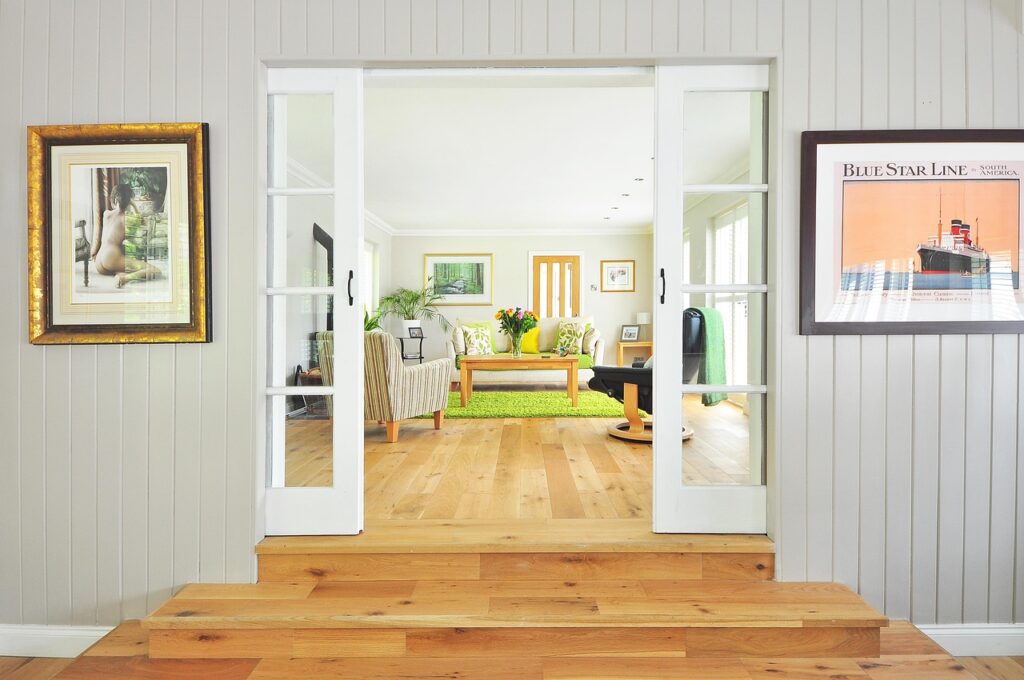
In my 20+ years of flooring experience, magnesite is the flooring material that sparks the most confused looks when I mention it. Most homeowners have never heard of it, yet if you live in an older apartment building or a mid-century home — particularly in urban areas of the United States, Europe, or Australia — there is a good chance you are walking on magnesite every day without knowing it.
Magnesite flooring was hugely popular from the 1920s through the 1960s, especially in apartment buildings, commercial spaces, and institutional buildings. It offered a seamless, durable, fire-resistant surface that could be installed quickly and inexpensively over concrete or timber subfloors. Today, original magnesite floors are experiencing a design renaissance, and new magnesite installations are gaining traction among homeowners who appreciate its unique industrial-meets-organic aesthetic.
What Is Magnesite Flooring?
Magnesite flooring — also called magnesia flooring, magnesium oxychloride flooring, or Sorel cement flooring — is a seamless, poured flooring system made from magnesium oxide (magnesia) combined with magnesium chloride solution. The resulting mixture, known as Sorel cement (named after French engineer Stanislas Sorel who developed it in 1867), is mixed with various fillers and aggregates — sawdust, wood flour, marble dust, quartz, or cork — and troweled over a subfloor in a thin layer, typically 10 to 25mm thick.
When the mixture cures, it forms a hard, seamless surface that bonds directly to the subfloor. The result is a monolithic floor with no joints, seams, or grout lines — a completely continuous surface that can span an entire room.
How It Differs from Concrete
Magnesite is often confused with concrete or polished concrete, but they are fundamentally different materials. Concrete uses Portland cement (calcium-based) as its binder. Magnesite uses magnesium oxychloride (magnesium-based). The practical differences are significant:
- Magnesite is lighter than concrete
- Magnesite bonds to wood subfloors; concrete does not adhere well to timber
- Magnesite has better acoustic insulation properties
- Magnesite is more flexible and less prone to cracking under minor structural movement
- Magnesite is more susceptible to water damage than concrete
History and Where You Find It
The Golden Age of Magnesite
Magnesite flooring reached peak popularity between 1920 and 1960. It was favored by builders of apartment buildings because it could be installed quickly over timber-framed floors, provided excellent fire resistance (a major concern in multi-story timber buildings), offered good sound insulation between floors, and was significantly lighter than concrete.
In Australian cities like Sydney and Melbourne, magnesite is found in the majority of apartment buildings built before 1970. In Europe, it was widely used in Germany, Austria, Switzerland, and Scandinavia. In the United States, it appeared in apartment buildings, hospitals, schools, and commercial buildings in major cities.
The Decline
Magnesite fell out of favor in the 1960s and 1970s as concrete technology improved, carpet became the dominant residential flooring choice, and concerns about magnesite’s moisture sensitivity made it less attractive to builders. Many existing magnesite floors were covered with carpet, vinyl, or tile and forgotten.
The Revival
Starting in the 2010s, interest in magnesite flooring surged as the industrial and mid-century modern design movements gained momentum. Homeowners renovating older apartments began pulling up carpet to discover beautiful original magnesite floors. The material’s seamless, raw aesthetic appealed to contemporary tastes, and a cottage industry of magnesite restoration specialists emerged.
Composition and How It Works
Base Components
- Magnesium oxide (MgO): The primary binder, derived from magnesite ore
- Magnesium chloride solution: The activator that reacts with MgO to form the cement
- Fillers and aggregates: Wood flour, sawdust, cork granules, marble dust, or quartz sand — these provide bulk, reduce cost, and modify the floor’s properties
- Pigments: Iron oxides or other mineral pigments added for color
The Chemistry
When magnesium oxide is mixed with magnesium chloride solution, an exothermic chemical reaction occurs, forming magnesium oxychloride cement. This reaction produces a strong, rigid crystal structure that binds the filler materials into a dense, hard matrix. The curing process takes several days to complete, during which the floor must be protected from moisture and foot traffic.
Properties of Cured Magnesite
- Compressive strength: 4,000 to 9,000 PSI (comparable to or exceeding standard concrete)
- Fire resistance: Naturally non-combustible with excellent fire ratings
- Sound insulation: Superior to concrete, reducing impact noise between floors
- Thermal insulation: Warmer underfoot than concrete
- Weight: Approximately 25 to 35% lighter than an equivalent thickness of concrete
Appearance and Aesthetics
Magnesite flooring has a distinctive look that sets it apart from both concrete and traditional flooring materials. The surface is typically smooth to semi-smooth with a subtle organic texture that comes from the filler materials. Depending on the formulation and age, magnesite can display:
- Color: Natural magnesite ranges from warm gray to tan to soft brown. Pigmented versions can be red, green, black, or various earth tones. Aged magnesite often develops a warm patina.
- Texture: Smooth and slightly matte when sealed, with a warmth and softness underfoot that concrete cannot match
- Surface character: Older magnesite floors may show crazing (fine surface cracks), wear patterns, and color variations that many people find charming and authentic
- Seamless appearance: The monolithic surface with no joints or grout lines creates a clean, uninterrupted visual flow
Design Possibilities
New magnesite installations can incorporate:
- Custom colors mixed into the material before pouring
- Scored or incised patterns creating faux tile or geometric designs
- Embedded materials like brass strips, stone chips, or recycled glass
- Multiple colors poured in sections to create borders or zones
- Terrazzo-style finishes using marble or stone aggregate exposed by grinding
Magnesite Flooring Cost
New Installation
- Material costs: $4 to $8 per square foot
- Professional installation: $6 to $15 per square foot
- Grinding and polishing: $3 to $6 per square foot
- Sealing: $1 to $3 per square foot
- Total installed: $12 to $25 per square foot
Restoration of Existing Floors
- Light restoration (clean, seal, minor repairs): $3 to $6 per square foot
- Moderate restoration (grind, repair, seal): $6 to $12 per square foot
- Heavy restoration (significant repairs, re-topping, grinding): $10 to $20 per square foot
Cost Context
For a 500-square-foot apartment living area:
- New magnesite installation: $6,000 to $12,500
- Restoring existing magnesite: $1,500 to $6,000
- Polished concrete (for comparison): $4,000 to $10,000
- Hardwood installation (for comparison): $4,000 to $8,000
Installation Process
Subfloor Preparation
Magnesite can be installed over timber, concrete, or existing magnesite subfloors. The surface must be clean, structurally sound, and free of loose material. Over timber, a layer of building paper or mesh is typically laid first to control cracking. Over concrete, the surface must be roughened to ensure adhesion.
Mixing
The magnesium oxide powder is mixed with magnesium chloride solution and filler materials in precise ratios. Getting the mix right is critical — too much chloride causes surface sweating, too little results in weak bonding. This is emphatically not a DIY material. The mixing process requires experience and specialized knowledge.
Pouring and Troweling
The mixed magnesite is poured onto the prepared subfloor and spread using trowels to a consistent thickness (typically 10 to 25mm). The material begins to set within 30 to 60 minutes, so the installer must work quickly and efficiently. Large areas are poured in sections, with careful blending at the joints to maintain the seamless appearance.
Curing
Magnesite requires 3 to 7 days to fully cure. During this period, the floor must be protected from moisture, foot traffic, and temperature extremes. The curing process is exothermic — the floor generates heat as it sets — and adequate ventilation helps manage moisture evaporation.
Finishing
Once cured, the surface can be left as-troweled for a rustic look, or it can be ground smooth with diamond grinding equipment for a polished finish. Grinding exposes the aggregate particles within the matrix, creating a terrazzo-like effect depending on the filler materials used. Multiple grits of grinding (from coarse to fine) produce progressively smoother finishes.
Sealing
Sealing is essential for magnesite floors. A penetrating sealer is applied first to consolidate the surface, followed by one or two coats of a topical sealer (polyurethane or acrylic) for protection. The sealer provides water resistance, stain protection, and the desired sheen level.
Restoring Existing Magnesite Floors
If you have discovered magnesite beneath carpet or other floor coverings in an older building, restoration is often a rewarding option. Here is the process I follow:
Assessment
- Check for structural integrity — tap the surface to find hollow or delaminated areas
- Identify moisture damage — soft, crumbly areas indicate water infiltration
- Assess adhesive residue from previous floor coverings
- Check for asbestos content — some mid-century magnesite formulations included asbestos fibers (get tested before disturbing)
- Determine overall condition — isolated damage is easily repaired; widespread deterioration may not be restorable
Repair
- Remove loose or deteriorated material and clean to sound substrate
- Fill voids and damaged areas with new magnesite mix matched to the existing floor
- Patch minor cracks with flexible filler
- Re-bond any delaminated sections using specialized adhesives
Grinding and Polishing
Diamond grinding removes old adhesive, evens out patches, and creates a consistent surface. Starting with coarse grits (30-50) and progressing to fine (200-400) produces a smooth, semi-polished surface. The grinding process reveals the internal aggregate structure, often producing a beautiful mottled appearance.
Sealing and Finishing
Apply a penetrating consolidator to strengthen the surface, followed by two to three coats of topical sealer. The sealer protects against moisture and staining while providing the desired sheen — matte, satin, or gloss.
Pros and Cons
Advantages
- Seamless finish: No joints, grout lines, or seams — a completely monolithic surface
- Unique aesthetic: A warm, organic look that differs from both concrete and traditional flooring
- Fire resistant: Excellent fire rating — a significant safety advantage
- Sound insulation: Superior acoustic properties compared to concrete or tile
- Warm underfoot: Noticeably warmer than concrete due to the organic filler content
- Lightweight: Can be installed over timber-framed floors without structural concerns
- Customizable: Colors, textures, and finishes can be tailored to design preferences
- Eco-friendly: Lower embodied energy than Portland cement; natural, non-toxic ingredients
- Heritage value: Restoring original magnesite preserves architectural character
Disadvantages
- Water sensitive: Magnesite deteriorates when exposed to prolonged moisture — not suitable for wet areas without significant sealing
- Specialist installation: Very few contractors have experience with magnesite — finding qualified installers can be challenging
- Cracking potential: Structural movement or poor mixing can cause cracking, especially in new installations
- Limited availability: Materials and expertise are harder to source than standard flooring products
- Not DIY-friendly: The mixing chemistry and application technique require professional knowledge
- Sensitive to humidity: In very humid environments, improperly sealed magnesite can absorb moisture and become soft
- Potential asbestos content: Historical installations may contain asbestos and require testing before any disturbance
Magnesite vs Alternatives
Magnesite vs Polished Concrete
Polished concrete is more widely available, more moisture-resistant, and generally easier to maintain. However, magnesite is warmer underfoot, has better acoustic properties, can be installed over timber subfloors, and has a more organic, less industrial appearance. Polished concrete is the better choice for ground-level rooms over concrete slabs; magnesite is the better choice for upper-level rooms over timber frames.
Magnesite vs Epoxy
Epoxy flooring offers superior chemical and moisture resistance and is available in a wider range of colors and effects. However, epoxy can be slippery, has a distinctly synthetic appearance, and does not have the warm, natural character of magnesite. Magnesite is the better choice for residential spaces where aesthetics and comfort matter; epoxy is better for garages, workshops, and commercial kitchens.
Magnesite vs Microcement
Microcement is the closest modern alternative to magnesite in appearance and application. Both are applied as thin, seamless coatings over existing subfloors. Microcement is more moisture-resistant and has a wider range of finishes, but it does not have the same acoustic or thermal insulation properties as magnesite. For a seamless floor in a wet area, microcement is the better choice; for general living areas, magnesite offers a warmer, more characterful result.
Maintenance and Care
- Keep it dry: Wipe up spills immediately — standing water is magnesite’s biggest enemy
- Sweep or vacuum regularly to remove grit that can scratch the sealed surface
- Damp mop with a pH-neutral cleaner — avoid excessive water
- Do not use acidic or alkaline cleaners — they can damage both the sealer and the magnesite beneath
- Re-seal every 2 to 5 years depending on traffic and wear — the sealer is the floor’s primary protection against moisture
- Use furniture pads to prevent scratching and indentation
- Maintain consistent humidity in the room — extreme dryness can cause shrinkage cracking, while high humidity can soften the surface
Frequently Asked Questions
Is magnesite flooring safe?
Modern magnesite flooring is safe and non-toxic. The magnesium oxide and chloride components are naturally occurring minerals, and the organic fillers (wood flour, cork) are benign. However, magnesite floors installed before the 1980s may contain asbestos fibers, which are hazardous if disturbed. Before grinding, sanding, or removing old magnesite, have a sample tested by a certified laboratory. If asbestos is present, hire a licensed abatement professional for any work that will disturb the material.
Can magnesite flooring be used in bathrooms?
I generally advise against magnesite in full bathrooms due to its moisture sensitivity. While a well-sealed magnesite floor can handle occasional splashes, the sustained humidity and water exposure typical in bathrooms will eventually compromise the material. For powder rooms or half-bathrooms with only a sink, magnesite can work if sealed meticulously and maintained carefully. For full bathrooms with showers or tubs, choose a more moisture-resistant material.
How do I know if my apartment has magnesite flooring?
If your apartment building was constructed between the 1920s and 1960s, there is a good chance the subfloor beneath your carpet or vinyl is magnesite. Look at the floor edges near walls or in closets where you might see the original surface. Magnesite has a distinctive warm gray, tan, or brown color with a smooth, cementitious texture that is noticeably different from concrete. It is lighter in weight and warmer to the touch than concrete. If you are unsure, a flooring professional or building inspector can confirm the material.
Can damaged magnesite flooring be repaired?
Yes, in most cases. Small cracks can be filled with flexible filler or fresh magnesite mix. Larger damaged areas can be cut out and replaced with new material, which is then ground flush with the surrounding floor. Delaminated sections can be re-bonded with specialized adhesives. The key is finding a contractor who has specific magnesite experience — general concrete or flooring contractors may not understand the material’s unique properties and requirements.
How long does magnesite flooring last?
When properly installed and maintained, magnesite flooring can last 50 to 100+ years. Many apartment buildings still have their original magnesite floors from the 1930s and 1940s in serviceable condition. The primary threats to longevity are moisture damage and physical abuse (heavy impact or abrasion). Regular re-sealing is the most important maintenance action for extending the floor’s lifespan, as the sealer provides the critical moisture barrier that keeps the magnesite stable.
Prefer to explore on your own?
See how new flooring looks in your actual room in seconds — free, no signup.
Try the free Floor Studio →

