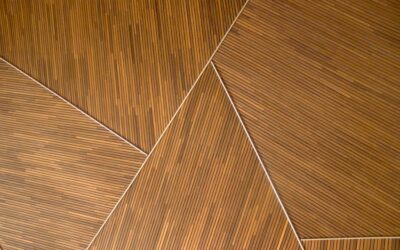
Walk into a 1920s library and chances are the floor under your feet is mahogany — and still flat after a century. Mahogany hardwood flooring earns its reputation through a Janka hardness between 800 and 2,200 (depending on species), a deep reddish-brown color that matures into burgundy, and dimensional stability that resists the cupping problems plaguing many tropical woods. The catch is price and the species confusion that trips up most buyers.
The Three Species Sold as “Mahogany”
Genuine Honduran mahogany (Swietenia macrophylla) is now CITES-restricted and runs $14 to $22 per square foot when you can find it. Most “mahogany” floors at retail are actually Santos mahogany (Myroxylon balsamum), African mahogany (Khaya), or Cambara — each with different hardness ratings and price points.
- Santos mahogany: Janka 2,200; $7-$10/sq ft; deep red-brown with dark streaks.
- African mahogany (Khaya): Janka 1,070; $6-$9/sq ft; lighter pinkish-red, darkens fast.
- Cambara: Janka 1,700; $5-$7/sq ft; budget alternative with similar look.
Color and Grain Behavior
All mahogany species photosensitize — meaning they darken with UV exposure. A freshly installed Santos floor looks salmon-pink for the first month, then deepens to a deep brick red over six to twelve months. Areas covered by rugs stay lighter, so plan to rotate furniture every few months for the first year.
Grain runs straight to slightly interlocked. The interlock causes a subtle ribbon figure under raking light, especially on quarter-sawn boards. If you want a uniform look, ask for plain-sawn or rift-sawn cuts.
Pros of Mahogany Hardwood Flooring
Hardness is the headline. At 2,200 Janka, Santos mahogany shrugs off the dropped pots, dog claws, and stiletto heels that dent oak (1,290) and ash (1,320). It also resists rot and insects naturally, making it a strong choice for sunrooms or homes in humid coastal climates.
Dimensional stability is the second win. Quality kiln-dried mahogany hardwood flooring moves 20 to 30 percent less with humidity swings than red oak. That means tighter seams in winter and less cupping in summer — a real benefit in the South or Northeast where indoor humidity ranges from 25 percent in January to 65 percent in July.
Cons and Trade-offs
Cost is the obvious one. Even Cambara runs higher than domestic red oak ($4-$7), and Santos can hit $10 installed. The interlocked grain also makes refinishing tricky — sanding can tear out grain and leave a fuzzy surface unless the sander uses 80-grit cuts followed by progressively finer grits to 120.
The deep color also locks you into a design palette. Mahogany pairs beautifully with cream walls, brass fixtures, and traditional or transitional furniture, but it fights modern minimalist or coastal-white aesthetics. Replacing it costs $8 to $14 per square foot in tear-out and reinstall.
Solid vs. Engineered Mahogany
Solid mahogany planks come 3/4-inch thick in widths from 3 to 5 inches. They install via nail-down on plywood subfloors above grade and cost $7 to $12 per square foot for materials. Engineered mahogany layers a 1/8 to 3/16-inch wear layer over a multi-ply core. Engineered runs $5 to $9 per square foot, glues or floats over concrete, and works below grade — solid does not.
For basements, condos with concrete slabs, or homes with radiant heat, engineered is the only sensible choice. For above-grade installations where you want decades of refinishing potential, solid wins.
Finishes and Maintenance
Most pre-finished mahogany ships with 7 to 10 coats of aluminum oxide urethane, which carries 25 to 50-year wear warranties. Site-finished floors take oil-based polyurethane (warm amber tone, 24-hour cure between coats) or water-based (clearer, 4-hour recoat).
Day-to-day care needs only a soft broom and a damp microfiber mop with pH-neutral cleaner like Bona. Avoid steam mops, vinegar, and ammonia — all three strip urethane and dull the finish. Recoat every 8 to 12 years; full sand-and-refinish runs $4 to $6 per square foot and resets the wear layer.
Where Mahogany Works Best
- Living rooms and dining rooms with traditional or formal styling
- Home offices and libraries
- High-traffic hallways where the hardness pays off
- Sunrooms and screened porches (with finish rated for UV)
Skip mahogany in bathrooms, laundry rooms, and slab basements. The species handles humidity better than most, but no hardwood survives standing water or daily steam from a shower.
Cost to Install
Material costs swing widely by species and grade, but installed totals for an average-sized home tell a clearer story:
- Cambara solid 3/4 inch: $7-$10/sq ft installed
- African mahogany engineered: $8-$12/sq ft installed
- Santos mahogany solid: $11-$16/sq ft installed
- Genuine Honduran (when available): $20-$28/sq ft installed
Add $1.50 to $3 per sq ft for premium underlayments on engineered floating installs, and $2 to $4 per sq ft if your subfloor needs leveling compound.
Buying Tips
Order 10 percent overage for waste and future repairs — mahogany lots vary batch to batch, and matching boards five years later is nearly impossible. Verify FSC or Lacey Act compliance on the invoice; reputable suppliers like Lumber Liquidators (now LL Flooring), Hosking Hardwood, and Build Direct document chain of custody. Acclimate planks 5 to 7 days in the install space before laying them, and aim for 35 to 55 percent indoor relative humidity.
Mahogany hardwood flooring is not the cheapest option, but for a 50-year floor with a look that grows richer every season, it is one of the most rewarding upgrades you can make to a traditional home. Plan the install for a season when indoor humidity sits in the middle of the year-round range — typically late spring or early fall — to give the boards their best long-term stability.
Prefer to explore on your own?
See how new flooring looks in your actual room in seconds — free, no signup.
Try the free Floor Studio →