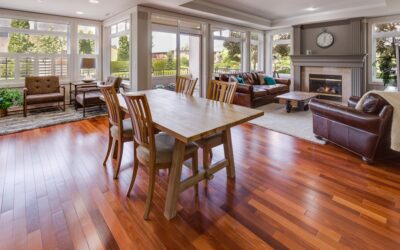
White oak hardwood flooring has become the most specified, most installed, and most requested hardwood species in residential design — and that dominance shows no signs of slowing down in 2026. Designers, builders, and homeowners consistently choose white oak for its versatile color palette, closed-pore grain structure, compatibility with modern finishes, and ability to work in virtually every interior style from Scandinavian minimalism to rustic farmhouse.
This guide is dedicated entirely to white oak hardwood flooring — why it leads the market, the difference between European and American white oak, sawing methods, the wide-plank trend, fumed and smoked finishes, realistic cost expectations, and long-term care.
Why White Oak Is #1 in 2026
White oak hardwood flooring did not reach the top of the market by accident. Several specific characteristics make it the most versatile hardwood species available.
Neutral color palette. White oak’s natural color is a warm brown with amber and olive undertones — neutral enough to complement any color scheme without imposing a dominant hue. Unlike red oak, which carries a pronounced pink-red undertone, white oak plays well with both cool grays and warm earth tones.
Closed-pore structure. White oak contains tyloses — balloon-like growths that seal the pores of the heartwood. This closed-pore structure makes white oak naturally more water-resistant than red oak and enables it to accept stains more evenly. It also makes white oak suitable for fuming and smoking treatments that react with the wood’s natural tannin content.
Design versatility. From Scandinavian whitewash to dark fumed espresso, from ultra-modern matte to traditional high-gloss, white oak accepts every finish and suits every style. No other species offers this range.
Durability. With a Janka hardness of 1,360 lbf, white oak is harder than red oak (1,290), walnut (1,010), and most domestic species except maple (1,450) and hickory (1,820). It strikes the ideal balance between hardness and workability — hard enough for high-traffic areas, soft enough to sand and refinish without difficulty.
Trend-proof staying power. While some species rise and fall with fashion (Brazilian cherry, anyone?), white oak has remained consistently popular for over a decade and shows no signs of declining. Choosing white oak in 2026 is both a design-forward and a future-proof decision.
European vs American White Oak
Not all white oak hardwood flooring comes from the same trees. European and American white oak differ in subtle but meaningful ways.
American white oak (Quercus alba) is the domestic standard. It is abundant across the eastern United States, relatively affordable, and available from numerous manufacturers. American white oak has a warm brown tone, prominent ray fleck (especially in quarter-sawn cuts), and a Janka hardness of 1,360 lbf. The vast majority of white oak flooring sold in the U.S. is American.
European white oak (primarily Quercus robur and Quercus petraea) is imported from France, Germany, Austria, and other European countries. European oak tends to have a slightly cooler, more uniform base color with less yellow undertone than American white oak. The grain is often tighter with more subtle figuring. European oak is the standard in high-end European-manufactured flooring and is associated with premium pricing.
| Feature | American White Oak | European White Oak |
|---|---|---|
| Species | Quercus alba | Quercus robur / Q. petraea |
| Base color | Warm brown, amber/olive tones | Slightly cooler, more uniform |
| Grain pattern | Moderate figure, prominent ray fleck | Tighter grain, subtler figure |
| Janka hardness | 1,360 lbf | 1,290 – 1,360 lbf (varies by species) |
| Availability | Abundant (domestic) | Imported (premium pricing) |
| Typical use | Standard to premium residential | Premium and luxury residential |
| Material cost | $4 – $10/sq ft | $8 – $18/sq ft |
For most homeowners, American white oak delivers excellent quality and appearance at a significantly lower cost. European white oak is the choice for luxury projects where the cooler tone, tighter grain, and premium provenance are priorities.
Rift-Sawn vs Quarter-Sawn vs Plain-Sawn
The way a white oak log is cut determines the grain pattern, dimensional stability, and price of the resulting flooring.
Plain-sawn (flat-sawn) is the most common and least expensive cutting method. The log is sliced in parallel passes, producing boards with a mix of grain orientations. Plain-sawn white oak features cathedral arches and moderate grain variation. It is the standard for most residential flooring projects. However, plain-sawn boards are more susceptible to cupping and crowning because the growth rings run at various angles to the face.
Quarter-sawn cuts the log into quarters first, then slices each quarter perpendicular to the growth rings. The result is a straight, linear grain pattern with prominent medullary ray fleck — a shimmering, reflective pattern unique to quarter-sawn oak. Quarter-sawn boards are more dimensionally stable than plain-sawn (less expansion and contraction across the width), making them excellent for wide planks and radiant heat installations. They cost 20% to 40% more than plain-sawn due to lower yield from the log.
Rift-sawn is the most selective cutting method. Each board is cut radially from the log, perpendicular to the growth rings, producing the straightest, most linear grain with minimal ray fleck. Rift-sawn white oak has a clean, modern appearance favored in contemporary and minimalist interiors. It is the most dimensionally stable cut but also the most expensive (30% to 50% premium) and the lowest yield — a significant portion of each log is wasted.
Rift and quarter-sawn (R&Q) is a common market designation that combines boards from both cutting methods. It offers a predominantly straight grain with some ray fleck at a moderate premium over plain-sawn.
| Cut | Grain Pattern | Stability | Ray Fleck | Cost Premium |
|---|---|---|---|---|
| Plain-sawn | Cathedral arches, varied | Moderate | Minimal | Baseline |
| Quarter-sawn | Straight, linear | High | Prominent | +20% to +40% |
| Rift-sawn | Very straight, uniform | Highest | Minimal | +30% to +50% |
| Rift & quarter (R&Q) | Mostly straight, some fleck | High | Moderate | +15% to +30% |
The Wide Plank Trend
Wide plank flooring — boards 7 inches to 10+ inches wide — is the defining aesthetic trend in white oak hardwood flooring for 2026. Wide planks showcase more of the wood’s natural grain, reduce the number of seam lines on the floor, and create an open, modern feel that narrow strip flooring cannot match.
White oak is ideally suited to the wide plank format. Its closed-pore structure and moderate density mean it machines and finishes cleanly at wider widths. Quarter-sawn and rift-sawn cuts provide the dimensional stability needed to prevent cupping and gapping in wide boards.
Important note: Solid white oak planks wider than 5 inches are prone to significant seasonal movement. For widths above 5 inches, engineered construction is strongly recommended. A quality engineered wide-plank white oak floor — with a 4mm to 6mm wear layer on a cross-laminated plywood core — delivers the look of wide solid planks with far superior dimensional stability.
Popular wide-plank specifications in 2026 include 7-1/2″ x 72″ planks with a wire-brushed, matte finish and 9-1/2″ x random-length planks with a natural oil finish. Longer planks (60 to 86 inches) are increasingly popular because they reduce end joints and create more visual flow.
Fumed and Smoked Finishes
Fuming (also called smoking) is a coloring technique that produces some of the most beautiful and unique tones possible on white oak hardwood flooring — and it is only possible with white oak due to the species’ high tannin content.
How fuming works: White oak planks are placed in an airtight chamber with open containers of ammonia (ammonium hydroxide). The ammonia gas reacts chemically with the tannins (tannic acid) in the wood, darkening the oak from the inside out. The longer the exposure, the darker the result — from light golden brown (a few hours) to deep espresso (several days).
Why fuming is different from staining: Stain sits on the surface and colors the wood uniformly. Fuming penetrates the wood and reacts differently with varying tannin concentrations in each grain line, creating rich depth, variation, and a three-dimensional quality that stain cannot replicate. When a fumed floor is sanded for refinishing, the darkened color goes deeper than a stain — though eventual refinishing will lighten the tone somewhat.
Fumed colors: Fumed white oak ranges from warm golden brown (light fume) to chocolate brown (medium fume) to near-black (heavy fume). The natural grain variation creates subtle lighter and darker areas within each plank, giving the floor an organic, antique character that is impossible with applied stain.
Red oak cannot be fumed because it contains significantly less tannin than white oak. The ammonia reaction is minimal, producing only a slight yellowing rather than the deep, rich darkening achieved with white oak. This is one of the key reasons white oak has overtaken red oak in popularity.
Other Popular Finishes
Beyond fuming, white oak hardwood flooring pairs beautifully with these finish options.
Hardwax oil: A penetrating oil finish that soaks into the wood fibers and hardens, leaving the surface feeling like bare wood rather than a coated surface. Hardwax oil is the preferred finish for European white oak and is standard in Scandinavian design. It is easy to spot-repair (sand and re-oil individual areas without refinishing the whole floor) but requires more frequent maintenance than polyurethane.
Matte polyurethane: A surface-applied film finish with very low sheen. Matte poly provides the protective durability of polyurethane with a modern, natural look. It is easier to maintain than hardwax oil and hides scratches better than gloss or semi-gloss finishes.
Wire-brushed texture: A physical process that removes the softer spring growth between the harder grain lines, creating a lightly textured, tactile surface. Wire-brushing enhances the natural grain pattern and provides subtle slip resistance. It also hides minor scratches and dents.
Whitewashed / limed: A lime or white pigment wash applied to white oak creates a bleached, coastal appearance. The white pigment fills the open grain lines while the surface wood remains its natural color, creating a two-toned effect. Popular in beach house, Scandinavian, and modern farmhouse interiors.
Natural / clear coat: Letting white oak’s natural color shine with only a clear protective finish. The warm brown tones with amber and olive undertones are beautiful on their own. Natural-finish white oak has been the number-one finish choice for three consecutive years.
White Oak Hardwood Flooring Cost
The cost of white oak hardwood flooring varies significantly based on cut, width, origin, and finish.
| Product | Material Cost (per sq ft) | Installed Cost (per sq ft) |
|---|---|---|
| Solid white oak (3-5″ plain-sawn) | $4.50 – $8.00 | $8.00 – $13.00 |
| Solid white oak (quarter-sawn) | $6.00 – $12.00 | $10.00 – $17.00 |
| Engineered white oak (standard) | $5.00 – $10.00 | $9.00 – $15.00 |
| Engineered wide plank (7″+) | $7.00 – $15.00 | $12.00 – $20.00 |
| European white oak (engineered) | $10.00 – $20.00 | $15.00 – $25.00 |
| Fumed / smoked white oak | $8.00 – $18.00 | $13.00 – $23.00 |
| Site sanding + finishing | $2.00 – $4.00 | — |
For a 500-square-foot living area, budget $4,000 to $7,500 for standard American white oak or $7,500 to $12,500 for premium wide-plank, quarter-sawn, or European white oak with a custom finish.
Compare these prices against hardwood flooring options across species and white oak vs red oak cost differences.
Solid vs Engineered White Oak
Both constructions use real white oak on the surface. The choice between them depends on your subfloor, environment, and long-term expectations.
Solid white oak (3/4″ thick) is milled from a single piece. It can be refinished 5 to 8 times over its 75-to-100-year lifespan. It must be nail-down installed over plywood subfloors and is not suitable for basements, concrete slabs, or radiant heat. Limit plank widths to 5 inches to avoid excessive seasonal movement.
Engineered white oak features a real white oak wear layer (2mm to 6mm) bonded to a cross-laminated plywood core. The layered construction resists expansion and contraction, making it suitable for concrete slabs, basements, radiant heat, and wide-plank formats. Thick wear layers (4mm+) can be refinished 2 to 3 times.
For wide plank (7″+) and any installation over concrete or with radiant heat, engineered white oak is the clear choice. For traditional nail-down installations on plywood subfloors where maximum refinishing potential is valued, solid white oak remains the gold standard.
Care and Maintenance
Proper care keeps white oak hardwood flooring looking beautiful for decades.
Daily: Sweep or vacuum with a hardwood-safe attachment (no beater bar). Place felt pads under all furniture legs. Use entry mats at exterior doors to trap grit.
Weekly: Damp-mop with a hardwood-specific cleaner (Bona, Pallmann, or manufacturer-recommended). Never use a wet mop, steam mop, vinegar, or Murphy’s Oil Soap — all of these can damage the finish over time.
Quarterly: Inspect high-traffic areas for wear. For hardwax-oil finishes, apply a maintenance coat in high-traffic zones every 6 to 12 months. For polyurethane finishes, no quarterly maintenance is required.
Humidity control: Maintain indoor relative humidity between 35% and 55% year-round. This is the single most important maintenance practice for oak flooring. A whole-house humidifier in winter and air conditioning or dehumidifier in summer prevents the expansion and contraction that causes gapping, cupping, and crowning.
Refinishing: Plan for a full screen-and-recoat every 5 to 7 years and a full sand-and-refinish every 15 to 25 years, depending on traffic. White oak refinishes beautifully — you can change stain color, sheen level, or both during each refinishing cycle.
Pros and Cons
| Pros | Cons |
|---|---|
| Neutral, versatile color palette | More expensive than red oak ($1 – $5/sq ft premium) |
| Closed pores — better water resistance | Premium cuts (rift/quarter) significantly pricier |
| Accepts fuming, stain, and oil finishes beautifully | Solid boards limited to 5″ width |
| Janka 1,360 — excellent durability | Requires humidity control (35 – 55% RH) |
| Compatible with every design style | Fumed finishes may lighten slightly with refinishing |
| Strong resale value — #1 buyer preference | European white oak carries a luxury price tag |
| Refinishable multiple times | Scratches visible on dark-stained finishes |
Frequently Asked Questions
Why is white oak so popular for flooring?
White oak’s neutral color, closed-pore structure, compatibility with modern finishes (fuming, hardwax oil, matte poly), and ability to work with every design style make it the most versatile hardwood species. It has been the number-one choice among designers and homeowners for several consecutive years.
Is white oak harder than red oak?
Yes. White oak has a Janka hardness of 1,360 lbf compared to red oak’s 1,290 lbf. The difference is modest but gives white oak a slight edge in scratch and dent resistance.
What is fumed white oak?
Fumed (smoked) white oak is darkened through exposure to ammonia gas, which reacts with the wood’s natural tannins to create deep, rich brown tones. Fuming colors the wood from the inside, creating depth and variation that surface-applied stain cannot match. Only white oak has enough tannin for effective fuming.
Is European white oak better than American?
Not inherently. European white oak has a slightly cooler tone and tighter grain, while American white oak is warmer with more pronounced figuring. European oak is more expensive due to import costs and is associated with luxury products. Both are excellent flooring materials.
How much does white oak hardwood flooring cost?
Materials range from $4.50 to $20 per square foot depending on cut, width, and origin. Fully installed, expect $8 to $25 per square foot. A 500-square-foot room typically costs $4,000 to $12,500.
Should I choose rift-sawn or quarter-sawn white oak?
Quarter-sawn has a straight grain with visible ray fleck (a shimmering, reflective pattern). Rift-sawn has the straightest grain with minimal ray fleck — cleaner and more modern. Both are more dimensionally stable than plain-sawn. Choose based on whether you want the ray fleck character (quarter) or a smoother, more uniform look (rift).
Can white oak be used in bathrooms?
White oak’s closed-pore structure makes it more water-resistant than other hardwoods, but it is still not waterproof. Engineered white oak with a waterproof finish can work in powder rooms and half-baths with careful maintenance. For full bathrooms with showers, tile or LVP is a safer choice.
Prefer to explore on your own?
See how new flooring looks in your actual room in seconds — free, no signup.
Try the free Floor Studio →