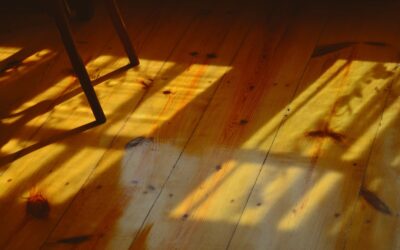
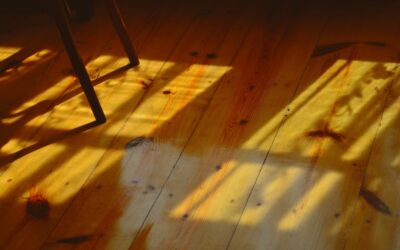
The hardwood floor in your favorite Restoration Hardware photo is almost certainly not red oak strip. It is 9 inch wide European white oak in a 1/3 offset plank layout, sometimes called wide-plank, with a hand-scraped or wire-brushed texture and a matte UV oil finish. Hardwood floor styles have shifted dramatically over the last 15 years, and the differences between strip, plank, parquet, herringbone, and chevron drive design impact more than the species itself. Knowing the styles, what each costs, and where each works lets you specify a floor that defines the room rather than just covering it.
- Strip Hardwood: The Traditional American Floor
- Plank Hardwood: The Modern Standard
- Wide-Plank Hardwood: The Trend That Stuck
- Parquet: The Geometric Comeback
- Herringbone and Chevron: The Statement Patterns
- Hand-Scraped and Wire-Brushed Textures
- Finish Options and What Each Delivers
- Species Selection by Style
- Brand Spotlight: Stuga European Oak Wide Plank
- Matching Style to Home Architecture
- Who Should Buy What
Strip Hardwood: The Traditional American Floor
Strip hardwood measures less than 3 inches wide, typically 2 1/4 or 2 1/2 inches. Lengths range from 12 to 84 inches in solid 3/4 inch construction. Strip floors dominated American homes from the 1920s through the 1980s and remain the most affordable solid hardwood format. Red oak strip in the #1 Common grade runs $3.50 to $5.50 per square foot in the material. White oak strip costs $0.50 to $1.50 per square foot more. Maple, hickory, and ash are also widely available in strip.
Strip floors visually shrink rooms because the higher number of joint lines reads as busy. They suit cottages, period restorations, and traditional homes where the floor should be a neutral backdrop rather than a design statement.
Plank Hardwood: The Modern Standard
Plank widths from 3 to 8 inches define the current mainstream. The 5 inch and 6 1/4 inch widths are the most common in new residential installations. Wider planks visually expand a room and reduce the number of joint lines.
Solid hardwood plank costs $4 to $9 per square foot for domestic species. Engineered plank with 3 to 4 mm wear layers runs $5 to $9 per square foot. Both formats install nail-down, glue-down, or floating depending on construction and subfloor.
Wide-Plank Hardwood: The Trend That Stuck
Wide-plank floors run 7 to 12 inches wide in lengths up to 12 feet. European white oak dominates this category because the slower-grown species delivers tighter grain than American white oak and longer plank lengths from larger trees. Brands like Stuga, Carlisle, Madera, and Chateau Living offer wide-plank engineered floors at $9 to $25 per square foot.
Wide planks demand subfloor flatness within 1/8 inch over 10 feet to avoid cupping and crowning. They also require longer acclimation periods of 7 to 14 days. The visual reward is dramatic, especially in open-plan layouts where the long planks create flow between rooms.
Parquet: The Geometric Comeback
Parquet floors use small wood pieces arranged in geometric patterns: basket weave, brick, Versailles, Chantilly, and dozens of historical variations. Parquet was the dominant high-end floor in 18th and 19th century European homes. After fading in the 1980s, it has returned in modern interpretations using factory-assembled tiles.
Mid-tier parquet panels from Mannington and Bruce sell for $5 to $9 per square foot. Premium European parquet from Junckers, Kahrs, and Listone Giordano reaches $15 to $40 per square foot. Installation is more complex than plank, requiring tight tolerances and often a glue-down method.
Herringbone and Chevron: The Statement Patterns
Herringbone arranges planks in a 90-degree zig-zag, with one plank end meeting the side of the next. Chevron meets at a 45 or 60 degree angle, producing a cleaner V-shape. Both styles add 15 to 25 percent to installation labor cost because of the precise cuts and layout planning required.
Herringbone planks typically measure 5 by 24 inches or 6 by 30 inches. Pricing for the material runs $7 to $18 per square foot. Chevron requires factory-mitered ends and costs $9 to $25 per square foot.
The patterns work best in large open rooms where the geometry can develop. Small rooms read as cluttered with herringbone. Plan the field direction so that the planks lead the eye toward a focal point like a fireplace or window.
Hand-Scraped and Wire-Brushed Textures
Texture has become as important as plank width in modern hardwood. Hand-scraped textures use mechanical or hand tools to create undulating scoops along the plank surface. The effect mimics centuries-old wood that has worn unevenly.
Wire-brushed textures use stiff steel brushes to remove softer spring-wood between harder growth rings, leaving a raised-grain finish that hides minor scratches. Both textures hide everyday wear better than smooth finishes and have largely replaced high-gloss polyurethane in upscale residential design.
Finish Options and What Each Delivers
Aluminum-oxide urethane factory finishes deliver the longest residential warranties (25 to 50 years) and require the least maintenance. Bona Traffic HD and Bona Mega ONE are go-to professional finishes for site-finished floors, with 7 to 10 day cure to full hardness.
UV oil finishes from Rubio Monocoat, WOCA, and Pallmann produce the matte, natural look that defines current premium hardwood. The oil penetrates rather than building a film, so spot-repairs blend invisibly. Re-oiling every 3 to 7 years is part of the maintenance budget.
Hardwax oil from Loba Oil 2K and Osmo Polyx-Oil combines penetrating oil with a wax topcoat for a low-sheen, natural feel that suits modern interiors.
Species Selection by Style
- Red oak: $3.50 to $6.00 per sq ft, Janka 1290, widely available in strip and plank
- White oak: $4.50 to $9.00 per sq ft, Janka 1360, dominant in current wide-plank trends
- Hickory: $5.00 to $9.00 per sq ft, Janka 1820, strong character grain, very durable
- Hard maple: $5.50 to $9.00 per sq ft, Janka 1450, tight uniform grain
- American walnut: $7.00 to $12.00 per sq ft, Janka 1010, rich brown tones
- American cherry: $6.50 to $11.00 per sq ft, Janka 950, develops patina
Brand Spotlight: Stuga European Oak Wide Plank
Stuga is one of the strongest examples of the modern wide-plank category. Manufactured in Sweden from sustainably forested European white oak, the planks measure 7 1/2 inches wide by up to 87 inches long with a 4 mm sawn-face veneer over a Baltic birch plywood core. Pricing runs $11 to $14 per square foot with hardwax oil finish. The 12 inch wide planks in the Stuga Studio collection reach $16 to $20 per square foot. Each plank shows authentic European oak grain with natural variation that mass-market American product cannot match.
Matching Style to Home Architecture
Traditional homes (Colonial, Cape Cod, Craftsman) suit strip or narrow-plank red oak with satin urethane finish. Transitional homes (1990s to present builds) suit 5 to 7 inch white oak plank in a wire-brushed or smooth matte finish. Modern open-plan homes suit wide-plank white oak with hardwax oil. Period restorations of pre-1920 homes often call for parquet or herringbone in the formal rooms with strip in service areas.
Who Should Buy What
If budget is the primary driver, red oak strip in #1 Common grade with satin urethane finish at $5 to $7 per square foot installed remains the best value. If the floor needs to make a design statement in an open-plan home, 7 to 9 inch European white oak wide-plank with hardwax oil at $13 to $20 per square foot installed delivers the look that defines current high-end residential design. For historic homes, match the original style and species to preserve character and resale value.
Prefer to explore on your own?
See how new flooring looks in your actual room in seconds — free, no signup.
Try the free Floor Studio →