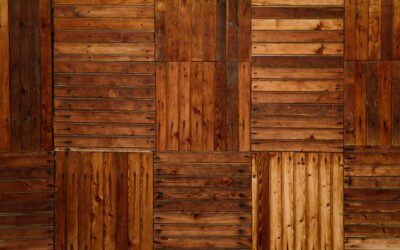
Most homeowners hear “hardwood” and picture long planks running the length of a room, but tiled wood formats have been a flooring staple in Europe for centuries and are quietly making a comeback in upscale American renovations. Hardwood tiles include traditional parquet squares, modern end-grain blocks, herringbone modules, and engineered hardwood in tile-shaped formats. Each comes with different installation requirements, durability characteristics, and price tags. This guide walks through what each format offers and where it fits best in a modern home.
Part of our Tile & Grout guide — explore the full guide →
What Hardwood Tiles Actually Are
Hardwood tiles describe any wood flooring sold in square or geometric units rather than long planks. The most common formats include 12 by 12-inch parquet squares assembled from smaller slats, end-grain blocks ranging from 3 by 3 to 6 by 6 inches, engineered tiles in 24 by 24 or 36 by 36 sizes, and pre-assembled herringbone modules in roughly 18 by 36-inch panels.
The defining feature is the geometric pattern visible across the floor surface. A traditional Versailles panel, for example, creates an intricate basketweave pattern from a single 36-inch square tile. Parquet de Versailles flooring in 18th-century French chateaus used the same format.
Pros of Hardwood Tiles
Visual impact is the obvious win. A parquet or herringbone floor adds genuine architectural character that long planks cannot match. Real estate listings consistently highlight parquet floors as premium features, and design publications continue to feature herringbone in high-end residential projects.
End-grain wood tiles also offer extreme durability. Because foot traffic hits the end of the wood fibers rather than the side grain, dents and scratches are dramatically less visible. End-grain mesquite or oak floors in commercial settings routinely last 50 to 100 years with refinishing.
Cons and Practical Limits
Installation complexity is the main drawback. A standard plank floor can be installed by a skilled DIYer over a weekend. Parquet and herringbone require careful layout planning, frequent dry-fitting, and precise cuts at borders. Most homeowners hire specialists, and labor rates run 30 to 60 percent higher than plank installation.
Refinishing is also trickier. Sanding direction changes constantly across a parquet pattern, requiring multi-directional passes and finer grits to avoid scratch marks. Many refinishing contractors charge an extra $0.75 to $1.50 per sq ft for parquet versus plank.
Traditional Parquet Squares
Parquet squares typically measure 9 by 9, 12 by 12, or 19 by 19 inches and arrive as factory-assembled units with multiple wood slats glued or splined together. The classic finger-block parquet popular in 1960s and 1970s American homes used red oak or walnut in 9-inch squares.
Modern parquet ranges from $5 to $14 per sq ft for material. Installation typically requires glue-down over a flat subfloor with no more than 1/8-inch variation per 10 feet. Skip the subfloor prep and individual squares lift or cup within a year.
Herringbone and Chevron Modules
Pre-assembled herringbone panels eliminate the labor cost of laying individual planks at 45-degree angles. Brands like Mirage, Lauzon, and Carlisle offer 18 by 36 or 24 by 48-inch panels that snap together with click-lock edges. Installed cost typically runs $12 to $22 per sq ft.
True herringbone uses rectangular planks placed at 90 degrees to each other. Chevron uses planks cut at 45 degrees to meet point-to-point. Chevron looks more formal and costs roughly 15 to 25 percent more due to the extra cutting waste and labor.
End-Grain Wood Tiles
End-grain tiles expose the cross-section of the wood, showing growth rings as the visible surface. These are typically 3 by 3 to 6 by 6 inches and 1/2 to 5/8 inch thick. Mesquite, oak, hickory, and reclaimed Douglas fir are common species.
Material cost runs $14 to $28 per sq ft. End-grain tiles install with adhesive over concrete or wood subfloors and finish with penetrating oil or hardwax. The look reads as rustic and industrial, fitting modern lofts and farmhouse-style homes equally well.
Engineered Hardwood in Tile Formats
A newer category, engineered hardwood tiles in 24 by 24 or 36 by 36-inch formats, gives the look of a clean wood surface without long-plank installation. The cross-grain engineered core resists movement, allowing larger tile sizes than solid wood could support.
Brands like Kahrs, Hakwood, and Heritage Hardwoods produce these formats at $9 to $18 per sq ft. Installation typically uses glue-down or click-lock floating systems. The visual is unique. A 36-inch wood square floor reads modern and minimalist in a way that planks never can.
Installation Considerations
Subfloor flatness matters more for hardwood tiles than for floating plank floors. Aim for no more than 3/16-inch variation per 10 feet. Self-leveling underlayment adds $1.50 to $3 per sq ft but is worth every dollar on concrete or older wood subfloors.
Use a urethane wood flooring adhesive like Bostik Best or Mapei Ultrabond for glue-down parquet and end-grain installations. Avoid water-based mastics, which cause swelling and pop individual tiles loose. Allow 7 days for adhesive cure before heavy furniture returns.
Cost Comparison Summary
Material pricing per sq ft as of 2026 lands roughly as follows. Standard parquet squares run $5 to $14. Pre-assembled herringbone runs $9 to $18. End-grain tiles run $14 to $28. Engineered hardwood tiles run $9 to $18. Custom Versailles panels in walnut or white oak run $30 to $60.
Add $4 to $9 per sq ft for installation labor depending on pattern complexity and subfloor prep. A 600 sq ft installation of mid-grade herringbone all-in typically lands between $9,000 and $16,000.
Prefer to explore on your own?
See how new flooring looks in your actual room in seconds — free, no signup.
Try the free Floor Studio →