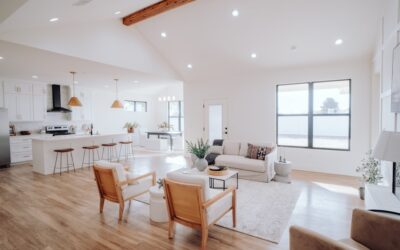
The same oak floor in two different layouts can read as 1985 builder-grade or 2026 designer — the wood is identical, only the pattern changes. Hardwood floor designs shape every other choice in a room, from area rug placement to ceiling treatments. After installing herringbone, chevron, parquet, and wide-plank floors across hundreds of homes, I have a clear sense of which patterns earn their installation premium and which are pure trend. This guide walks through the major designs, their costs, and where each one shines.
Why the Pattern Matters
A simple straight-plank install costs $4 to $8 per square foot in labor. The same wood in herringbone runs $9 to $15 per square foot. The premium buys two things — visual depth and timeless appeal. Herringbone floors from 1920s buildings still look current. Straight-plank from the same era often looks dated.
Pattern also affects perceived room size. Wide planks make small rooms feel bigger; narrow strip floors make large rooms feel tighter and more formal. Diagonal layouts blur boundaries; rigid grids reinforce them.
Wide-Plank Hardwood (Most Popular)
Wide-plank floors use boards 5 to 12 inches wide, often in random lengths from 2 to 10 feet. They became the default modern pattern over the last decade because they showcase grain detail and feel substantial underfoot.
European white oak in 7-to-9-inch widths is the current standard. Expect $7 to $14 per square foot for prefinished material plus $4 to $7 for installation. Custom site-finished wide-plank can hit $20 per square foot installed.
Use wide-plank in rooms over 200 square feet — small spaces feel awkward when planks span half the width.
Herringbone Pattern
Herringbone uses rectangular planks set at 90-degree angles to form an interlocking V-shape. It is one of the oldest hardwood patterns — French royalty installed it in the 1600s — and it has never gone out of style.
Herringbone runs $12 to $25 per square foot installed depending on plank size. Smaller planks (2×12 or 3×18) cost more in labor; larger planks (4×24 or 5×30) install faster but require precise subfloor flatness.
The pattern works in entries, dining rooms, and primary suites. It can read busy in small bedrooms or kitchens with lots of cabinet edges.
Chevron Pattern
Chevron is herringbone’s cousin — planks meet at clean 45-degree miter cuts to form a continuous V. Chevron is more formal, more contemporary, and roughly 20 percent more expensive than herringbone due to the angled cuts.
Expect $15 to $30 per square foot installed. The pattern shines in galleries, hallways, and large open-concept spaces where it creates a strong directional flow.
Parquet and Block Designs
Parquet uses small wood pieces arranged in geometric blocks — typically 6-by-6 inch or 9-by-9 inch squares. Mid-century parquet has a bad reputation, but modern reinterpretations using wider, thicker pieces look high-end.
Parquet runs $9 to $20 per square foot installed. Versailles parquet (the most ornate version, with woven squares) hits $40 per square foot at the top end.
Reserve parquet for foyers, libraries, or formal dining rooms where the pattern reads as architectural detail.
Mixed-Width Plank
Mixed-width designs combine two or three plank widths in a repeating or random sequence — for example, 4-inch, 6-inch, and 8-inch boards alternating across the room. This look originated in colonial-era homes and reads warm and lived-in.
Cost is similar to wide-plank ($8 to $14 per square foot installed). The pattern works best in farmhouse, craftsman, and traditional interiors. Skip it in strict modern designs where the variation reads as accidental.
Diagonal Plank Layout
Running planks at a 45-degree angle to the walls is the cheapest way to add visual interest without a special pattern. Labor adds $1 to $2 per square foot due to extra cuts and waste.
Diagonal layouts make narrow rooms feel wider and add motion to square rooms. Avoid in rooms with lots of corners and obstacles — every wall break creates a visible cut that disrupts the diagonal flow.
Border and Inlay Designs
A contrasting wood border around the perimeter of a room — often walnut or wenge against an oak field — adds custom character. Inlays at thresholds or compass points elevate a room dramatically.
Borders cost $10 to $25 per linear foot installed. Custom inlays start at $200 per piece for simple medallions and climb above $2,000 for elaborate compass roses.
Use borders sparingly — one major room with a distinctive border outperforms five rooms with subtle borders that nobody notices.
Plank Direction Choices
Even within a straight-lay floor, the direction matters:
- Parallel to the longest wall — most common, makes the room feel cohesive
- Perpendicular to the longest wall — makes narrow rooms feel wider
- Toward the main entrance — draws the eye in, common in foyers
- Following floor joists — best for stability and prevents sagging
If you have a choice, run planks parallel to the longest wall and perpendicular to floor joists — most homes naturally allow this combination.
Wood Species and Their Visual Impact
Pattern interacts with species:
- White oak — versatile, takes any stain, works in any pattern
- Red oak — pinkish undertone, traditional, best in straight-lay
- Maple — clean grain, modern, best in wide-plank or chevron
- Hickory — high contrast, rustic, best in mixed-width or wide-plank
- Walnut — rich, dramatic, best in borders or chevron accents
Combine species sparingly. A walnut border on an oak field reads as intentional. Three contrasting species in one room reads as chaotic.
Subfloor and Installation Considerations
Complex patterns demand flat subfloors. Herringbone and chevron tolerate no more than 1/8-inch deviation over 6 feet — twice as flat as straight-plank specs. Self-leveling compound (Henry 555 or LevelQuik RS) is almost always required for pattern installs.
Hire installers who specifically advertise pattern experience. A general hardwood installer can lay straight planks; only specialists deliver clean herringbone joints and crisp chevron miters.
FAQ
What hardwood pattern adds the most value?
Wide-plank European white oak in a straight or random layout has the broadest buyer appeal. Herringbone and chevron add value in higher-end markets but can polarize buyers in middle-tier homes.
Is herringbone hardwood out of style?
No — it is a classic pattern that has been popular for 400 years. It looks current today and will continue to in 20 years.
What is the cheapest hardwood floor design?
Straight-lay planks running parallel to the longest wall cost the least in labor. Diagonal adds about 15 percent; herringbone adds 60 to 100 percent.
Can I install a hardwood pattern myself?
Straight-lay yes, with patience. Herringbone, chevron, and parquet require professional skill — DIY attempts almost always show visible alignment errors.
Prefer to explore on your own?
See how new flooring looks in your actual room in seconds — free, no signup.
Try the free Floor Studio →