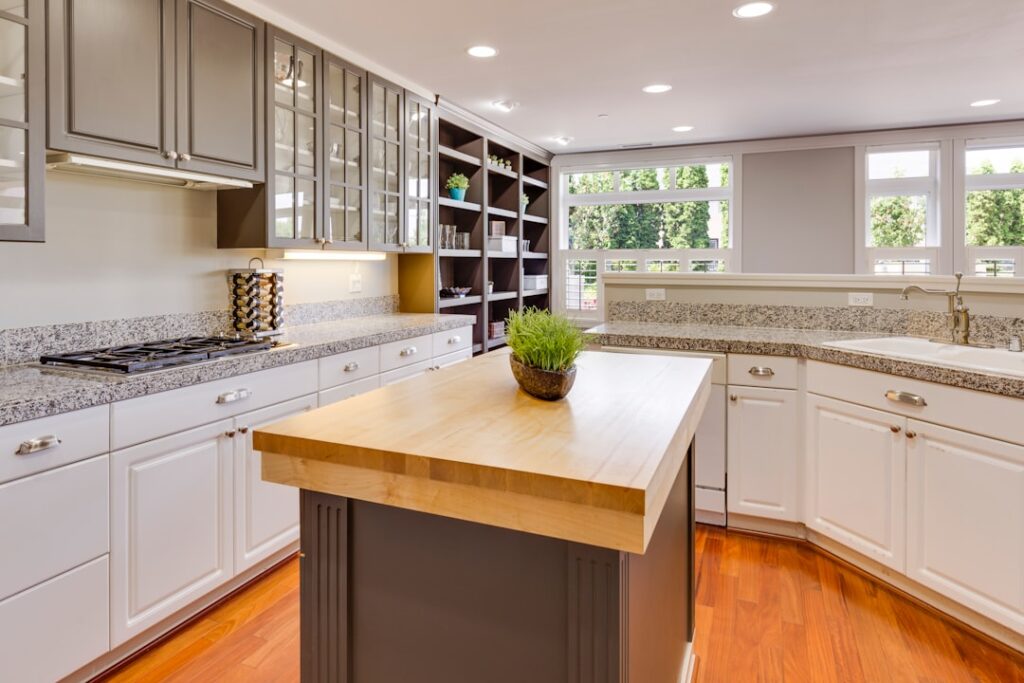
Stone and quartz dominate kitchen showrooms, but there is a reason wood keeps coming back into fashion. Hardwood countertops bring a warmth and tactile softness that cold stone simply cannot match, and unlike almost any other surface, they can be sanded and refinished decades later to look brand new. Whether you want a butcher-block island for daily chopping or a rich walnut run of counter that anchors a farmhouse kitchen, wood offers a natural, repairable, and surprisingly affordable alternative to stone.
Part of our Countertops guide — explore the full guide →
Why Choose Wood for a Countertop
The appeal starts with looks and feel. Wood adds instant warmth, grain, and character that reads as inviting rather than clinical, and it pairs beautifully with both traditional and modern cabinetry. It is also forgiving on dishes and glassware; drop a wine glass on granite and it shatters, while wood has enough give to save it. For bakers and cooks, a butcher-block section doubles as a built-in cutting surface you can knead, chop, and roll on directly.
The other big draw is renewability. A scratched, stained, or scorched stone counter is stuck that way, but hardwood countertops can be sanded flat and re-oiled to erase years of wear. That repairability makes wood a genuinely long-term surface despite its reputation for being high-maintenance. Handled correctly, a wood counter can serve a kitchen for 20 years or more and be refreshed several times along the way.
Best Wood Species for Countertops
The species you choose sets the durability, color, and price. Harder, tighter-grained woods resist dents and moisture better, which matters in a working kitchen.
- Hard maple: the classic butcher-block wood, pale, extremely hard, and budget-friendly at the lower end of the range.
- Walnut: rich chocolate tones and a luxurious look, softer than maple but stunning, at a premium price.
- Oak: strong, prominent grain, widely available, and moderately priced.
- Cherry: warm reddish hue that deepens with age, prized for its elegant color.
- Teak and iroko: naturally oily and water-resistant, excellent near sinks and for those wanting minimal sealing.
For a hardworking surface, maple and oak give the best value and durability. If appearance leads your decision and the counter will not take daily knife abuse, walnut and cherry deliver a showpiece look. Near sinks and wet zones, naturally oily species like teak resist water intrusion better than most.
Grain Construction: Edge, Face, and End Grain
How the wood pieces are oriented dramatically changes both the look and the performance. This is a detail many buyers overlook, and it is worth understanding before you order.
Edge-grain tops, the most common, glue narrow strips on edge so you see long, linear grain lines. They are strong, stable, and cost-effective, and they suit most countertop runs. Face-grain, or plank-style, shows the wide flat face of the boards for the most dramatic grain figure, making it the choice for display surfaces you will not cut on directly. End-grain, the true chef’s butcher block, stands the wood fibers vertically so knife edges slip between them; this is the most knife-friendly and self-healing surface, and also the most expensive and the most sensitive to moisture swings.
What Hardwood Countertops Cost
Price varies widely with species and construction. Basic maple or oak edge-grain butcher block from a home center runs $30 to $60 per square foot, making wood one of the more affordable counter surfaces on the market. Premium walnut, cherry, or custom end-grain tops from a specialty fabricator climb to $70 to $200 per square foot, competing with high-end stone.
For a typical kitchen with 30 square feet of counter, expect $900 to $1,800 for standard butcher block and $2,000 to $6,000 for custom premium wood. Installation is simpler than stone because wood is lighter and can often be cut and fitted on site with standard woodworking tools, which keeps labor costs modest and makes a partial DIY installation realistic for handy homeowners.
Sealing and Finishing Options
Your finish choice defines how you will use and maintain the counter, so decide up front. There are two philosophies, and they do not mix on the same surface.
A penetrating oil finish, using food-safe mineral oil or a mineral-oil-and-beeswax blend, soaks into the wood and leaves a natural, matte surface you can cut on directly. It is easy to renew, just wipe on more oil, but it needs reapplication every few weeks to monthly and offers less protection against standing water. A film finish, such as a hard-wax oil or a marine-grade polyurethane, forms a durable water-resistant barrier that requires little upkeep but cannot be used as a cutting board and must be fully sanded off to refinish. Choose oil for a working butcher block, film finish for a low-maintenance display counter.
Where Wood Works and Where to Avoid It
Smart placement is the key to a wood counter you love rather than one you fight. Islands and baking centers are ideal, giving you a warm, knife-friendly work surface away from the constant moisture of the sink. A wood counter also shines on a coffee bar, a breakfast peninsula, or as a butcher-block section set into an otherwise stone kitchen, mixing materials for both function and visual warmth. Many homeowners get the best of both worlds by running durable stone or quartz around the sink and cooktop and reserving a stretch of wood for prep and serving.
The areas to approach with caution are the wettest and hottest zones. Wood directly beside a sink needs diligent sealing and prompt wiping, or it will darken and eventually rot at the seams. Never set a hot pan straight onto an oiled wood counter, since the heat can scorch the surface and break down the finish; always use a trivet. And in a household that will not keep up with re-oiling or wiping spills quickly, a film-finished wood or a different material near the sink may simply be the more realistic choice. Match the counter to your habits and the wood will reward you.
Daily Care and Longevity
Wood rewards a little routine attention. Wipe up standing water and spills promptly, since prolonged moisture is the main enemy of any wood counter, especially around the sink. Clean with mild soap and water rather than harsh chemicals, and disinfect the occasional raw-meat surface with a diluted vinegar or a light salt-and-lemon scrub. Re-oil an oiled top whenever water stops beading and starts soaking in, a simple ten-minute job.
Sand out deep scratches or dark water stains with fine-grit paper and re-oil the spot, and once a decade or so, sand the entire surface to erase accumulated wear. Treated this way, hardwood countertops age into a warm, lived-in patina that only improves with time, giving you a kitchen surface that is as practical and repairable as it is beautiful.