A custom butcher block countertop brings a warmth and character to a kitchen that stone and quartz simply can’t match, and going custom means you get the exact wood species, dimensions, edge profile, and finish that fit your space instead of settling for a stock slab. Wood counters have surged back into style for good reason, since they’re beautiful, repairable, budget-friendly compared to stone, and genuinely functional to work on. But wood is a living material, and a custom counter is an investment worth understanding before you order.
Part of our Countertops guide — explore the full guide →
This guide covers the wood species and grain styles you can choose from, what a custom butcher block actually costs, the finish options that determine how you’ll use it, and the care routine that keeps it looking rich for decades. With the right choices up front, a wood counter becomes the heart of the kitchen.
Choosing the Wood Species
Species is the decision that most affects both looks and durability. Hard maple is the traditional workhorse of butcher block, prized for its light, creamy color, tight grain, and hardness that resists knife marks and dents. It’s the classic choice and a safe one. Walnut sits at the premium end with a rich, dark chocolate color that makes a dramatic statement, though it’s slightly softer than maple.
Oak brings a pronounced grain and a warm tone at a moderate price, while cherry deepens beautifully to a reddish patina over time. Exotic species like teak offer natural water resistance thanks to their oils, which makes teak a strong pick around sinks. Harder species dent less and stand up better to heavy use, so if you cook seriously and want to chop directly on the surface, lean toward maple or another dense hardwood. For a piece that’s more about looks than daily knife work, the softer, richer woods are fair game.
Grain Style: Edge, Face, or End Grain
The way the wood strips are oriented changes both the appearance and the performance of the counter. Edge grain, where long strips are joined on their narrow edges, is the most common style; it shows clean, linear grain lines, is strong and stable, and offers the best value. It’s the go-to for most kitchen counters.
Face grain shows the widest, most decorative grain patterns since the boards are laid flat, giving a smooth, furniture-like look, but it’s the softest of the three and best for surfaces you won’t chop on. End grain, the true “butcher block” with the wood fibers standing vertically in a checkerboard pattern, is the toughest and most knife-friendly because the fibers absorb the blade and self-heal, which is why professional cutting boards use it. End grain is also the most expensive and heaviest. Choose based on how you’ll use the counter: end grain for a genuine chopping surface, edge grain for everyday kitchens, face grain for showpiece areas.
What a Custom Butcher Block Costs
Pricing depends heavily on species, grain style, size, and finish. As a general range, custom butcher block countertops run from roughly $40 to $150 per square foot installed, with plenty of variation on either side. Edge-grain maple sits at the affordable end, while end-grain construction and premium species like walnut or teak climb toward the top of the range and beyond.
Compared to natural stone and quartz, which often run $60 to $120-plus per square foot installed, butcher block is competitive and frequently cheaper, especially in maple. Custom fabrication adds cost for things like sink cutouts, custom edge profiles, and non-standard dimensions, but it also lets you get exactly what you want. Factor in the finishing products and the modest ongoing maintenance, and wood remains one of the better values in high-end-looking counters.
Finish Options and How They Change Use
The finish you choose fundamentally determines how the counter functions, so decide based on use. A food-safe penetrating oil finish, like mineral oil or a specialized cutting-board oil-and-wax blend, soaks into the wood and lets you chop directly on the surface and treat it as a true work counter. The tradeoff is that oil finishes need regular reapplication and offer less protection against water and stains, so they suit homeowners who don’t mind the maintenance ritual.
A film-forming finish, such as a durable food-safe polyurethane or a hard-wax oil, seals the surface against water and stains and requires far less upkeep, making it ideal around sinks and for people who want low maintenance. The catch is you shouldn’t cut directly on a film finish, since knives will scratch it, so you use a cutting board on top. Many homeowners split the difference by oiling a dedicated chopping section and sealing the rest. Decide honestly how you’ll live with the counter, because the finish makes that choice for you.
Caring for Your Wood Counter
Butcher block care is simple but ongoing. For oil-finished counters, wipe up spills promptly, clean with mild soap and water rather than soaking the wood, and re-oil regularly, monthly at first and then as needed when the wood starts to look dry. Dry patches and lightening are the counter telling you it’s thirsty. A periodic wipe of oil keeps the wood conditioned and water-resistant.
Avoid standing water, especially around sinks and dishwashers, since prolonged moisture is wood’s main enemy and can cause warping or dark spots. Use trivets for hot pots, as extreme heat can scorch or crack the finish. The best part of wood is that it’s repairable: light scratches, knife marks, and stains sand out with fine sandpaper followed by re-oiling, restoring the surface to like-new in a way stone never allows. Treat it with a little regular attention, and a custom butcher block countertop only grows more beautiful, developing a warm patina that makes the whole kitchen feel inviting.
Design Ideas and Where to Use Wood Counters
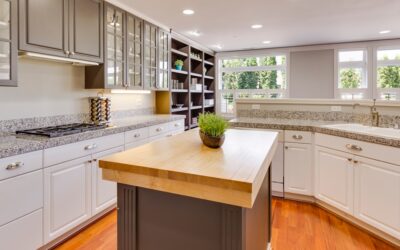
Part of the appeal of going custom is tailoring where and how the wood shows up in your kitchen. A popular approach is a mixed-material layout, running durable quartz or granite along the main cooking and prep zones while using butcher block on an island or a coffee bar, which gives you the warmth of wood as a focal point without putting it in the path of every hot pan and knife stroke. This combination is both practical and visually striking, letting the wood become an intentional design accent.
Custom fabrication also opens up details that stock slabs can’t offer. You can specify a live edge for a rustic, organic look, a waterfall end where the grain wraps down the side of an island, or a built-in drainboard and sink cutout tailored to your fixtures. Species choice reinforces the style, with light maple reading clean and Scandinavian, walnut feeling rich and modern, and oak leaning warm and traditional. Wood counters also suit bar tops, kitchen peninsulas, and even office or laundry-room work surfaces where you want warmth underhand. Because you’re commissioning exactly the piece you want, take the time to match the species, grain, finish, and edge to how you’ll actually use each surface, and the finished custom butcher block countertop becomes a genuine centerpiece rather than just another counter.