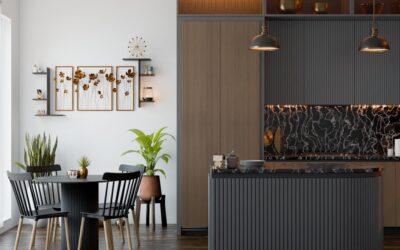
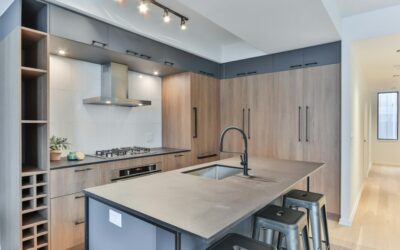
Few pairings feel as inevitable as warm wood counters in a farmhouse kitchen — the style practically demands them. Designing a farmhouse kitchen with butcher block countertops is less about whether the combination works (it always does) and more about the dozens of choices around it: which wood species, what cabinet color, which sink, and how to keep the room from tipping into either sterile modern-farmhouse cliché or cluttered country kitsch. This guide walks through the design decisions that make the look cohesive, with real pairings that photograph as well as they live.
Part of our Countertops guide — explore the full guide →
- Why Butcher Block Belongs in Farmhouse Design
- Choosing the Right Wood Species and Grain
- Cabinet Colors That Pair Beautifully
- The Sink Decision: Apron-Front and Beyond
- Backsplash and Flooring Pairings
- Finish Choice: The Decision That Shapes Daily Life
- Styling the Room Without Overdoing It
- Living With Wood Counters, Honestly
Why Butcher Block Belongs in Farmhouse Design
Farmhouse style is rooted in working kitchens — rooms built for canning, baking, and feeding a crowd. Butcher block reads as honest and functional in a way polished stone never quite does. It brings visible grain, warm tone, and a surface that improves with a little wear, which suits a style that celebrates patina over perfection. Wood also softens the hard elements farmhouse kitchens accumulate: apron-front sinks, iron hardware, shiplap, and brick.
There is a practical argument too. At roughly $35 to $100 per square foot installed (and as low as $20 to $40 per square foot for DIY slabs from IKEA or Lumber Liquidators), butcher block costs a fraction of quartz or soapstone, freeing budget for the range or the sink that anchors the room.
Choosing the Right Wood Species and Grain
Species drives the whole color story of the kitchen, so decide this first.
- Maple: the classic — pale, creamy, tight-grained. It keeps white kitchens bright and suits Scandinavian-leaning modern farmhouse.
- Birch: similar blond tone to maple at a lower price; the common species in ready-made slabs.
- Oak: pronounced grain and a golden cast that leans traditional; white oak reads more current than red oak.
- Walnut: deep chocolate brown, the most dramatic choice, stunning against white or sage cabinets — and the priciest, often $75 to $150 per square foot installed.
- Acacia and hevea: budget-friendly imports with lively, variegated grain that suits rustic and eclectic farmhouse rooms.
Grain construction matters visually as well. Edge-grain block shows long parallel rails and looks clean and linear. End-grain — the checkerboard butcher’s classic — is beautiful and knife-friendly but expensive, so many homeowners reserve it for an island. Face-grain (wide plank) shows the most natural figure and feels the most “farm table.”
Cabinet Colors That Pair Beautifully
Wood counters are forgiving — they flatter nearly every cabinet color — but some combinations define the farmhouse look. Crisp white shaker cabinets under maple or birch block is the timeless default, bright and unfussy. Sage green or muted olive with walnut has become the signature modern-farmhouse pairing of the past few years, and it ages gracefully. Navy or charcoal lowers grounded by lighter oak block give a more tailored, urban-farmhouse feel. And for true country character, warm gray or cream painted cabinets with glazed or distressed finishes let acacia’s wild grain do the talking.
A reliable formula for two-tone kitchens: painted perimeter cabinets with stone or quartz counters, then a butcher block island in a contrasting stain. You get the warmth and the workspace without committing every wet zone to wood.
The Sink Decision: Apron-Front and Beyond
Nothing says farmhouse like a white fireclay apron-front sink, and butcher block frames one beautifully. It is also the highest-risk joint in the room — the seam where wood meets sink sees constant water. Choose an undermount or apron install only if you are committed to sealing maintenance; otherwise a drop-in sink with a generous silicone bead is the pragmatic call. Copper and hammered-nickel farmhouse sinks warm the palette further and hide water spots better than white fireclay.
Whatever sink you pick, detail the counter joint properly: ease the cut edge, seal the exposed end grain around the cutout with several coats of finish, and run 100 percent silicone at the rim. A bridge or gooseneck faucet in aged brass, matte black, or polished nickel completes the vignette.
Backsplash and Flooring Pairings
With wood on the counter, the backsplash is where you add texture without competing. White 3×6 subway tile with warm gray grout is the safe classic. Handmade-look zellige tile adds the irregular shimmer that current farmhouse design favors. Beadboard painted the cabinet color is the budget-friendly country option, and a single course of shiplap works in low-splash zones. Skip busy multicolor mosaics — they fight the grain.
On the floor, wide-plank oak or hickory in a matte finish is the natural partner, but do not fear mixing woods; just separate the tones so they read intentional (light floor, walnut counters, for instance). Wood-look porcelain tile and warm-toned luxury vinyl plank both give the look with better water resistance in hardworking kitchens. Brick-look and slate floors suit older farmhouses and hide mud season admirably.
Finish Choice: The Decision That Shapes Daily Life
How you finish the block determines both its look and your maintenance routine. Food-safe mineral oil (or an oil-wax blend like a board butter) keeps the wood matte, natural, and cuttable — the true working-surface approach — but requires reapplication every few weeks and offers modest stain protection. Film finishes such as Waterlox (a tung-oil resin) or a waterborne polyurethane seal the surface against water rings and wine, deepen the color slightly, and need almost no upkeep, but you should cut on a board, not the counter. Many farmhouse kitchens split the difference: oiled end-grain island for prep, film-finished perimeter around the sink.
Styling the Room Without Overdoing It
Farmhouse kitchens go wrong through accumulation, so edit. Open shelving in the same wood as the counters ties the room together — two shelves styled with white ironstone and everyday glasses beat five shelves of props. Add one aged element (a vintage runner, a flea-market bread board collection, an antique scale) rather than ten. Black or aged-brass cup pulls and knobs, a plaster or matte-white range hood, and woven pendants over the island round out the palette. Let the wood counters be the texture; everything else supports them.
Living With Wood Counters, Honestly
Butcher block asks a little more of you than quartz. Wipe standing water promptly, use trivets under hot pans, and expect a few dings — then remember that unlike stone, wood forgives. Scratches and stains sand out in an afternoon with 120- and 220-grit paper and a fresh coat of oil or finish, and a decade-old top can be restored to new. That renewability is the quiet genius of a farmhouse kitchen with butcher block countertops: the surface is not pretending to be indestructible, it is designed to be renewed, which is about as farmhouse as a philosophy gets.