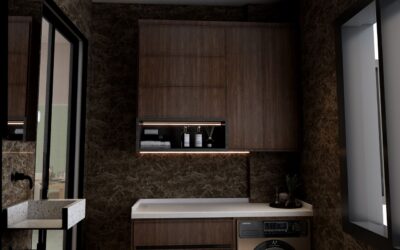
Nothing warms up a utilitarian laundry space like a run of wood counter across the top of the washer and dryer. A butcher block laundry room counter gives you a folding surface, a place to set detergent and baskets, and a shot of natural warmth that fights the cold, boxy feel of appliances and cabinets. It is one of the most popular and affordable laundry upgrades, and for good reason.
Part of our Countertops guide — explore the full guide →
The one thing that trips people up with a butcher block laundry room counter is moisture. A laundry room sees water, steam, and the occasional spilled detergent, so the wood must be sealed correctly, or it will stain and swell around the sink and appliances. Handled right, wood holds up beautifully for years.
- Why Butcher Block Suits a Laundry Room
- Choosing the Right Wood Species
- Sealing for a Wet Environment
- Installing Over Washer and Dryer
- What It Costs
- Ongoing Care and Maintenance
- Cutting and Fitting the Counter
- Adding a Laundry Sink
- Styling the Laundry Room
- Butcher Block vs. Other Laundry Counters
- Is It the Right Choice for You
Why Butcher Block Suits a Laundry Room
Laundry rooms are workspaces, and butcher block is warm, forgiving, and easy to work on. It gives you a continuous counter for folding clothes, hides the gap between a front-load washer and dryer, and costs far less than stone. A wood surface also dampens the vibration and noise of a spinning washer better than a hard slab.
Because the laundry room is lower-traffic than a kitchen, the wood sees less abuse, which means a well-sealed butcher block can look pristine for a long time. It photographs beautifully against white cabinets and open shelving, which is part of why it dominates laundry-room inspiration boards.
Choosing the Right Wood Species
Species affects durability, look, and price. For a laundry room, hardness matters less than in a kitchen, so you can prioritize appearance and budget.
- Maple: pale, tight-grained, affordable, the classic choice
- Birch: similar to maple, budget-friendly, light tone
- Oak: visible grain, warm, very durable
- Acacia: rich color variation, hard, moderate cost
- Walnut: deep brown, premium look, higher price
Maple and birch are the value leaders and take stain well if you want a darker look. Acacia and walnut cost more but bring dramatic grain that reads high-end against simple cabinetry.
Sealing for a Wet Environment
This is the step that determines success or failure. In a laundry room, you want a film-forming, waterproof finish rather than a food-safe oil, because you are not preparing food on it and you need maximum moisture protection.
- Polyurethane (water-based): hard, waterproof film; best for laundry durability
- Tung oil or Danish oil: penetrating, natural look, but needs frequent reapplication
- Marine-grade spar varnish: maximum water resistance for the wettest rooms
- Mineral oil/wax: food-safe but not durable enough for wet zones
Apply at least three coats of a quality water-based polyurethane, sanding lightly between coats with 220-grit, and seal every edge and the underside too. Water attacks unsealed end grain and undersides first, so do not skip them. Around a laundry sink, run a generous bead of clear silicone to keep water out of the seam.
Installing Over Washer and Dryer
Mounting a counter above front-load appliances requires a support system since you cannot screw into the machines. Build a frame or use wall cleats and side supports so the counter clears the appliance tops with a small gap for airflow and vibration.
- Confirm your front-load units fit under the planned counter height; standard machines are about 38 to 39 inches tall.
- Leave 1 to 2 inches of clearance above the appliances so they can be serviced and vibrate freely.
- Mount a ledger board to the wall studs at the back and support the front with side cabinets or brackets.
- Set the butcher block on the supports and secure it with figure-8 fasteners or brackets that allow the wood to expand.
Never rigidly screw wood down at both edges; it moves with humidity and will crack or cup if pinned. Slotted brackets or figure-8 clips let the slab breathe.
What It Costs
Butcher block is one of the cheaper counter materials, which adds to its laundry-room appeal. Pre-made maple or birch counters from a home center run roughly $10 to $30 per square foot, while premium species like walnut or acacia climb to $30 to $60 per square foot.
For a typical laundry counter spanning two appliances, about 6 to 8 feet long and 25 inches deep, expect $150 to $500 in material for maple or birch, plus finish and hardware. Compared to quartz or granite at $50 to $120 per square foot installed, the savings are substantial.
Ongoing Care and Maintenance
Maintenance depends on your finish. A polyurethane-sealed counter needs little more than wiping with a damp cloth and mild soap, and you should wipe up standing water promptly rather than letting it sit. Every few years, lightly sand and add a fresh topcoat to high-wear areas.
Oil-finished counters need reoiling every one to three months to stay protected, which is why film finishes win for laundry use. Keep a trivet or mat under anything that drips, and address any bubbling or peeling finish quickly before water reaches the raw wood beneath.
Cutting and Fitting the Counter
Fitting a butcher block counter to a laundry room takes basic woodworking but rewards patience. Measure the run carefully, accounting for any wall that is out of square, since old houses rarely have true 90-degree corners. Cut the slab with a circular saw fitted with a fine-tooth finish blade, and clamp a straightedge as a guide so the cut stays dead straight. Cutting from the underside or scoring the top first prevents tear-out on the visible face.
If the counter meets a wall that is not straight, scribe the back edge: hold the slab in place, run a compass along the wall to transfer the contour onto the wood, then sand or plane to the line for a tight fit. Sand all cut edges to 180-grit before finishing. For a sink or a stackable-unit cutout, drill a starter hole and finish with a jigsaw, then seal every raw edge of the cutout thoroughly since those edges see the most moisture.
Adding a Laundry Sink
Many homeowners pair a butcher block laundry counter with an undermount or drop-in utility sink, which raises the stakes on waterproofing. An undermount sink gives a clean look and lets you wipe water straight into the basin, but the exposed wood edge around the cutout must be sealed with several coats of waterproof finish and a generous bead of clear silicone at the seam. A drop-in sink is more forgiving because its rim covers the cut edge.
Whichever you choose, seal the cutout before installing the sink, not after, so no raw wood is ever exposed to splashes. Run silicone continuously around the sink-to-wood joint and inspect it yearly, refreshing it at the first sign of a gap. This single detail is the most common failure point on a wood laundry counter, and getting it right keeps water out of the vulnerable end grain.
Styling the Laundry Room
Beyond function, butcher block sets a warm, designed tone that transforms a utilitarian room. Pair the wood counter with white or soft-gray cabinets and open shelving to keep the space feeling light, and let the wood be the warm focal point. A tile or beadboard backsplash behind the counter protects the wall and adds texture without competing with the grain.
Accessorize with practical items that also look good: woven baskets for sorting, glass jars for detergent pods, and a wall-mounted drying rack that folds flat. A pendant light or a pair of sconces over the counter gives you task lighting for treating stains and folding. The result is a laundry room that feels like an intentional part of the home rather than an afterthought, which is exactly why butcher block has become such a popular choice for this space.
Butcher Block vs. Other Laundry Counters
It helps to weigh butcher block against the alternatives before you commit. Laminate is the cheapest option at roughly $10 to $30 per square foot installed and shrugs off water, but it looks flat and cannot be refinished if it chips. Quartz and granite are the most durable and waterproof at $50 to $120 per square foot, though they cost several times more and lack the warmth wood brings to a utilitarian room.
Butcher block splits the difference. It costs about the same as laminate for basic maple, delivers real warmth and character that no printed surface matches, and can be sanded and refinished when it wears, something laminate cannot do. Its trade-off is the sealing and cleanup discipline it demands around water. If you want the cheapest, most carefree surface, laminate or quartz wins; if you want warmth and a hands-on, renewable counter at a modest price, butcher block is the standout choice for a laundry room.
Is It the Right Choice for You
If you want warmth, a functional folding surface, and a budget-friendly counter, a butcher block laundry room upgrade is hard to beat. The only real commitment is proper sealing and prompt cleanup of spills. Choose a durable water-based polyurethane or spar varnish, seal every surface including the underside, support it correctly over your appliances, and you will have a warm, practical counter that stands up to laundry duty for many years while making the whole room feel less like a utility closet and more like a designed space.