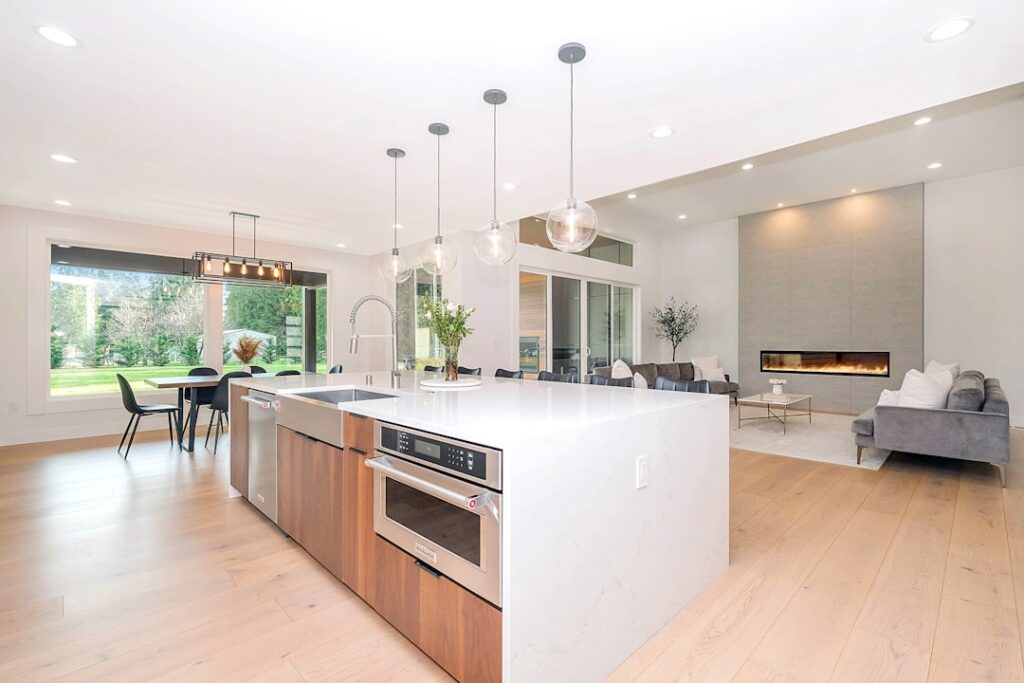
Adding a counter over the washer and dryer is one of the smartest upgrades a small laundry room can get, and choosing among the many laundry room countertop options comes down to balancing durability, moisture resistance, looks, and cost. A laundry counter gives you a flat surface for folding clothes, sorting, and storing baskets and supplies, instantly making the space more functional. But this is a hardworking, humid environment, so the material you pick matters more than it would in a guest bath. Here is how the leading options stack up.
Part of our Countertops guide — explore the full guide →
- What Makes a Good Laundry Countertop
- Laminate: The Budget Favorite
- Quartz: The Durable Upgrade
- Butcher Block: Warm and Affordable
- Other Options Worth Considering
- Quick Comparison
- Installation Tips for Counters Over Appliances
- Matching the Countertop to Your Laundry Room
- Adding a Sink or Backsplash
- Final Thoughts
What Makes a Good Laundry Countertop
Before comparing materials, know what you are asking the surface to handle:
- Moisture and humidity from washing and drying.
- Occasional spills of detergent, bleach, and stain treatments.
- Weight from laundry baskets, supplies, and folded loads.
- Vibration from the appliances below.
A laundry counter spanning a washer and dryer also needs proper support, either side cabinets, wall cleats, or a back ledger, because you cannot anchor it to the appliances themselves. Plan support before you choose a material, since heavier stone needs sturdier framing.
Laminate: The Budget Favorite
Laminate is the most popular laundry countertop for good reason. It is inexpensive (often $10 to $40 per square foot installed), comes in hundreds of colors and stone-look patterns, and resists moisture well when the edges are sealed. It is light, so it is easier to span over appliances with minimal support.
The downsides: laminate can scratch, scorch, and chip, and once water gets into a damaged seam the particleboard core can swell. For a laundry room, where appearance is secondary to function, laminate is a sensible, wallet-friendly pick that looks far better than its price suggests.
Quartz: The Durable Upgrade
Engineered quartz is the premium choice and arguably the best performer for a laundry room. It is nonporous, so it shrugs off moisture, detergent, and most stains without sealing. It resists scratches and chips far better than laminate and offers a clean, modern look that elevates the whole room.
The trade-offs are cost and weight. Quartz typically runs $50 to $120 per square foot installed and is heavy, so spanning it over a washer and dryer requires solid support on both ends and possibly a center brace. Avoid setting hot items directly on it, and skip harsh solvents. For homeowners who want their laundry room to feel like an extension of the kitchen, quartz is hard to beat.
Butcher Block: Warm and Affordable
Wood butcher block brings warmth and a custom, organic feel that hard surfaces lack, usually at a mid-range price of roughly $20 to $60 per square foot. It is comfortable to work on and easy to cut to size for a span over appliances.
Wood and water, though, are natural rivals. Butcher block must be sealed thoroughly and resealed periodically, with extra attention around the sink and any spill-prone zones. A penetrating oil or, better for moisture, a film-forming polyurethane finish protects it. With consistent maintenance it holds up well; neglected, it can stain, warp, or harbor mildew. Choose it if you love the look and will commit to upkeep.
Other Options Worth Considering
- Granite: very durable and heat-resistant but needs periodic sealing and is heavy and pricier than laminate.
- Solid surface (acrylic): seamless, nonporous, repairable, and moderately priced, a strong middle-ground choice.
- Stainless steel: hygienic, waterproof, and modern, though it shows scratches and fingerprints.
- Tile: inexpensive and customizable, but grout lines collect grime and need sealing.
Quick Comparison
- Lowest cost: laminate and tile.
- Best moisture resistance: quartz, solid surface, stainless steel.
- Warmest look: butcher block.
- Most durable overall: quartz and granite.
- Lightest for spanning appliances: laminate and solid surface.
Installation Tips for Counters Over Appliances
A countertop bridging a washer and dryer needs careful planning. Leave a small clearance above the appliances so they can be pulled out for service, and account for the height of front-loaders with the door open if you stack accessories. Anchor the counter to the side cabinets or walls, never to the machines, and add a center support if the span is wide or the material is heavy. Seal all edges and the backsplash gap against splashing water, and confirm the counter does not block the appliances’ vibration or airflow.
Matching the Countertop to Your Laundry Room
Your room’s size, budget, and design goals should steer the choice. In a compact laundry closet where the counter is purely functional, laminate or a solid-surface remnant delivers the most value with minimal fuss. In a large, finished laundry room that doubles as a mudroom or craft space, quartz or granite elevates the room and stands up to heavy, varied use. If your laundry room is styled in a farmhouse or transitional look, butcher block adds the warmth and character the design calls for.
Consider coordination with the rest of your home, too. Many homeowners match the laundry counter to their kitchen or bathroom surfaces for a cohesive feel, sometimes using leftover material from a previous project to save money. A remnant of quartz or granite from a fabricator is often large enough for a laundry counter and can be had at a steep discount compared to a full slab.
Adding a Sink or Backsplash
If your laundry counter includes a utility sink, material choice matters even more, because the area around a sink takes the most water exposure. Nonporous quartz and solid surface excel here, while butcher block and laminate need careful sealing and edge protection right around the basin. Undermount sinks pair best with quartz and granite, which can support the sink and present a clean, wipeable edge; laminate generally requires a drop-in sink to protect the exposed core.
A backsplash is a worthwhile addition behind any laundry counter, protecting the wall from splashes and detergent spray. Tile, a matching slab backsplash, or even a simple painted and sealed surface all work. Whatever you choose, seal the seam where the counter meets the wall so water cannot seep behind it, the same principle that keeps the rest of the installation durable.
Final Thoughts
The right laundry room countertop depends on your budget and how hard you will use the space. Laminate delivers great looks for the lowest price, quartz offers the best durability and moisture resistance for a premium, and butcher block adds warmth if you are willing to maintain it. Whatever you choose, plan solid support for the span over your appliances and seal against moisture, and you will gain a folding-and-sorting surface that makes laundry day noticeably easier.