Choosing kitchen countertop materials is one of the most consequential design decisions in any kitchen renovation. The countertop is where you chop vegetables, roll dough, set hot pans, spill wine, and stack dishes — it needs to look beautiful and survive daily punishment for 15 to 30 years.
This guide compares the seven most popular kitchen countertop materials in 2026 — granite, quartz, marble, butcher block, concrete, laminate, and solid surface — with kitchen-specific pros and cons, cost breakdowns, and style pairings to help you choose the right surface for your kitchen.
Quick Comparison Overview
| Material | Heat Resistance | Stain Resistance | Food Safety | Maintenance | Installed Cost (per sq ft) |
|---|---|---|---|---|---|
| Quartz | Good (use trivets) | Excellent | Non-porous, food-safe | Very low | $50 – $150 |
| Granite | Excellent | Good (sealed) | Safe when sealed | Low (annual sealing) | $40 – $100 |
| Marble | Good | Poor (porous, etches) | Safe when sealed | High | $50 – $150 |
| Butcher block | Poor | Poor (porous) | Excellent (natural antibacterial) | High (regular oiling) | $30 – $80 |
| Concrete | Excellent | Moderate (sealed) | Safe when sealed | Moderate | $65 – $135 |
| Laminate | Poor | Good | Non-porous, food-safe | Very low | $10 – $40 |
| Solid surface | Poor | Good | Non-porous, food-safe | Low | $40 – $100 |
Quartz Countertops
Quartz is the most popular countertop material in 2026 for good reason — it combines the beauty of natural stone with the low maintenance of an engineered product. Made from approximately 90% ground natural quartz bound with polymer resins, quartz is non-porous, stain-resistant, and available in hundreds of colors and patterns.
Kitchen-Specific Pros
- Non-porous surface — bacteria, wine, coffee, and cooking oils cannot penetrate. No sealing required, ever.
- Consistent appearance — unlike natural stone, each slab matches the sample. No surprises at installation.
- Huge design range — from marble-look veining to solid colors to concrete-look finishes.
- Extremely durable — resists chips, scratches, and cracks better than most natural stones.
Kitchen-Specific Cons
- Heat sensitivity — hot pans placed directly on quartz can cause discoloration or cracking of the resin. Always use trivets.
- Not suitable for outdoor kitchens — UV exposure causes yellowing and fading over time.
- Visible seams — in large kitchens, seams between slabs may be noticeable, especially with veined patterns.
Granite Countertops
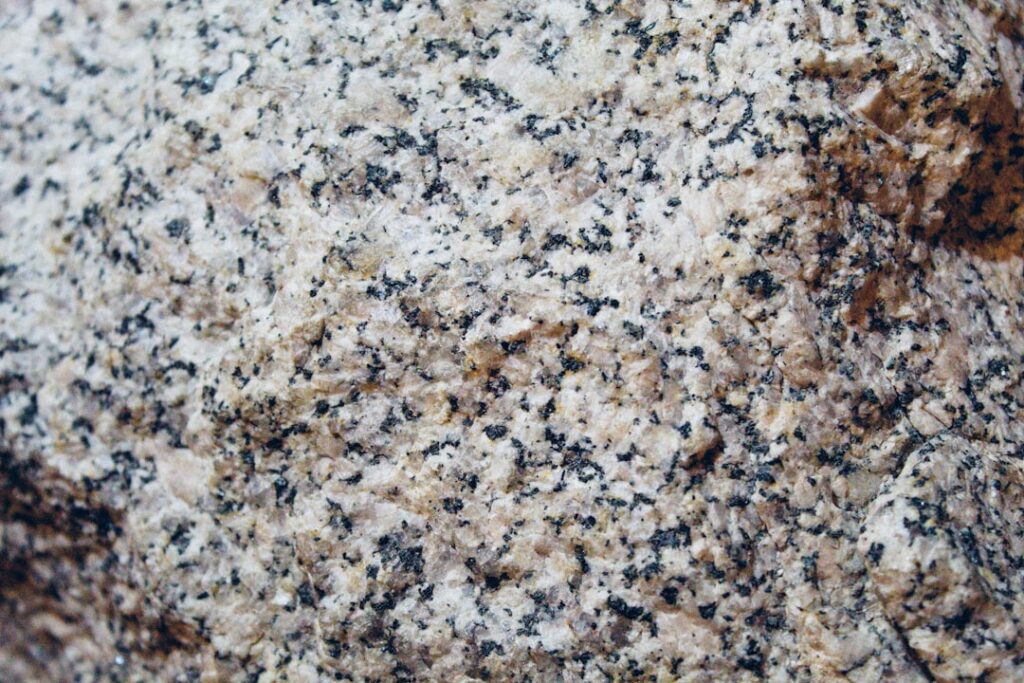
Granite remains a kitchen classic. Each slab is unique, naturally formed, and extraordinarily hard. Granite handles the demands of a busy kitchen better than most materials — it resists heat, scratches, and chips.
Kitchen-Specific Pros
- Excellent heat resistance — you can set hot pots directly on granite without damage (though thermal shock from extreme temperature swings can crack thinner areas).
- Unique character — every slab has different patterns, veining, and mineral deposits. No two kitchens look the same.
- Extremely hard — rates 6 to 7 on the Mohs scale, resisting scratches from knives and utensils.
- Adds resale value — granite countertops remain a desirable feature for homebuyers.
Kitchen-Specific Cons
- Requires sealing — granite is porous and needs annual sealing to prevent stains from wine, oil, and acidic foods.
- Can harbor bacteria in pores — if the seal wears down, unsealed granite can absorb food liquids.
- Heavy — cabinets may need reinforcement, especially for thick 3cm slabs.
Marble Countertops
Marble is the luxury choice — timeless, elegant, and immediately recognizable. However, marble in a kitchen requires a specific mindset: you must accept that it will develop a patina of etching and character over time.
Kitchen-Specific Pros
- Naturally cool surface — ideal for pastry work and dough rolling.
- Unmatched beauty — the veining and depth of natural marble cannot be replicated by any engineered material.
- Timeless value — marble kitchens never go out of style.
Kitchen-Specific Cons
- Etches easily — lemon juice, tomato sauce, vinegar, and any acidic food leaves dull marks (etching) on the surface. This is a chemical reaction, not a stain — sealing does not prevent it.
- Stains readily — red wine, beet juice, and cooking oil can penetrate the porous surface if not wiped immediately.
- High maintenance — requires sealing every 3 to 6 months in a kitchen environment.
- Soft — rates 3 on the Mohs scale, making it susceptible to scratches and chips.
Kitchen recommendation: If you love marble but want practicality, consider marble on the island only (for pastry work) and quartz on the perimeter countertops where the sink, stove, and daily prep happen.
Butcher Block Countertops
Butcher block brings warmth, texture, and a hands-on character that no stone or engineered surface can replicate. It is a functional food-prep surface that doubles as a design statement.
Kitchen-Specific Pros
- Food-safe prep surface — you can cut and chop directly on butcher block (though this is debated among purists).
- Natural antibacterial properties — wood fibers absorb and trap bacteria, where they die as the wood dries. Studies show wood surfaces can be more hygienic than plastic cutting boards.
- Warm and forgiving — dropped glasses are less likely to shatter on wood than on stone.
- Repairable — scratches and burns can be sanded out and re-oiled. No other countertop material is this easily restored.
Kitchen-Specific Cons
- Water damage — standing water causes warping, splitting, and black stains. Areas around the sink are particularly vulnerable.
- Burn risk — hot pans scorch the surface immediately.
- Regular maintenance — requires oiling with food-grade mineral oil every 2 to 4 weeks to maintain the seal and prevent drying.
- Not stain-proof — red wine, beets, and turmeric can permanently stain if not wiped quickly.
Kitchen recommendation: Butcher block works best on islands and prep areas away from the sink. Pair it with quartz or granite on the perimeter for a mixed-material kitchen that is both warm and practical.
Concrete Countertops
Concrete countertops offer industrial character and complete customization — any shape, any color, any edge profile. For the right kitchen style, nothing else compares.
Kitchen-Specific Pros
- Completely custom — cast to any shape, with integrated sinks, drainboards, or trivets possible.
- Heat resistant — handles hot pots and pans without damage.
- Unique character — each countertop develops its own patina over time.
- Pigment options — can be colored to match any design scheme, from bright white to charcoal to earth tones.
Kitchen-Specific Cons
- Requires sealing — unsealed concrete is extremely porous and stains instantly.
- Cracking potential — hairline cracks may develop over time, especially around sinks and cutouts.
- Heavy — concrete countertops weigh 20 to 25 pounds per square foot, requiring reinforced cabinets.
- Expensive — the labor-intensive casting and finishing process makes concrete more expensive than granite.
Laminate Countertops
Laminate has come a long way from the dated patterns of decades past. Modern laminate offers realistic stone, wood, and concrete patterns at a fraction of the cost of natural materials. For budget-conscious kitchen renovations, laminate delivers the most visual impact per dollar.
Kitchen-Specific Pros
- Budget champion — installed laminate costs 1/3 to 1/5 the price of quartz or granite.
- Huge variety — hundreds of colors and patterns, including convincing stone and wood looks.
- Non-porous — resists stains and bacteria without sealing.
- Easy replacement — if you tire of the look, replacing laminate is inexpensive.
Kitchen-Specific Cons
- Heat damage — hot pans cause permanent burn marks and can delaminate the surface layer.
- Scratches — knives cut into the surface easily. Always use a cutting board.
- Moisture vulnerability at seams — water penetrating seams causes the particleboard core to swell.
- Lower resale perception — buyers may perceive laminate as a downgrade compared to stone.
Solid Surface Countertops
Solid surface countertops (Corian, Wilsonart, LG Hi-Macs) are made from acrylic and polyester resins blended with minerals. The material is seamless, repairable, and available in hundreds of colors.
Kitchen-Specific Pros
- Seamless installation — pieces are chemically bonded, creating invisible seams. This is unique among countertop materials and eliminates bacteria-trapping joints.
- Integrated sinks — undermount and integrated solid-surface sinks create a continuous, easy-to-clean surface.
- Non-porous — resists stains and bacteria without sealing.
- Repairable — scratches and minor burns can be sanded out with fine-grit sandpaper.
Kitchen-Specific Cons
- Heat sensitivity — hot pans can scorch and discolor the surface. Always use trivets.
- Scratches easily — softer than stone, so knives and abrasive cleaners leave marks (though these can be sanded out).
- Professional installation required — seaming and fabrication require specialized tools and training.
Style Pairings With Cabinet Colors
| Cabinet Color | Best Countertop Material | Recommended Colors/Patterns | Kitchen Style |
|---|---|---|---|
| White/cream | Quartz, granite, marble | White marble-look, gray veining, black granite | Modern, transitional, farmhouse |
| Gray | Quartz, concrete | White quartz, warm wood butcher block, light concrete | Contemporary, industrial |
| Navy/dark blue | Quartz, marble, butcher block | White marble, brass-toned quartz, warm walnut block | Coastal, traditional, bold modern |
| Natural wood | Quartz, granite, concrete | White or light gray quartz, black granite, charcoal concrete | Scandinavian, modern organic |
| Black/dark | Quartz, marble, solid surface | White marble, light quartz, bright solid surface | High contrast, ultra-modern |
| Green (trending 2026) | Quartz, butcher block, marble | White marble, warm brass quartz, light walnut block | Eclectic, English country, modern farmhouse |
Cost Comparison
The following costs include materials, fabrication, and professional installation for a typical kitchen with 40 square feet of countertop space.
| Material | Cost Per Sq Ft (Installed) | 40 Sq Ft Kitchen Total | Lifespan |
|---|---|---|---|
| Laminate | $10 – $40 | $400 – $1,600 | 10 – 20 years |
| Butcher block | $30 – $80 | $1,200 – $3,200 | 20 – 40 years (with care) |
| Solid surface | $40 – $100 | $1,600 – $4,000 | 15 – 30 years |
| Granite | $40 – $100 | $1,600 – $4,000 | 25 – 50+ years |
| Quartz | $50 – $150 | $2,000 – $6,000 | 25 – 50+ years |
| Marble | $50 – $150 | $2,000 – $6,000 | 25 – 75+ years |
| Concrete | $65 – $135 | $2,600 – $5,400 | 25 – 50+ years |
Frequently Asked Questions
What is the most durable kitchen countertop material?
Granite and quartz are the most durable kitchen countertop materials. Granite offers superior heat resistance, while quartz offers superior stain resistance. Both last 25 to 50+ years with proper care.
What is the best low-maintenance countertop for kitchens?
Quartz is the lowest-maintenance countertop. It never needs sealing, resists stains naturally, and cleans with soap and water. Laminate is similarly low-maintenance but less durable.
Is marble a good choice for kitchen countertops?
Marble is a beautiful but high-maintenance kitchen countertop. It etches from acidic foods (lemon, tomato, vinegar) and stains from wine and oil. If you cook frequently and want a pristine surface, quartz or granite is more practical. If you embrace the patina, marble is stunning.
What countertop goes with white kitchen cabinets?
Almost anything pairs well with white cabinets. The most popular combinations in 2026 are white marble-look quartz with gray veining, dark granite for contrast, butcher block for warmth, and concrete for an industrial edge.
How much do new kitchen countertops cost?
For a typical kitchen with 40 square feet of countertop, expect to pay $400 to $1,600 for laminate, $1,600 to $4,000 for granite or solid surface, and $2,000 to $6,000 for quartz or marble. See our kitchen countertop cost guide for detailed breakdowns.
Can I install countertops myself?
Laminate and butcher block are DIY-friendly. Granite, quartz, marble, and concrete require professional fabrication and installation due to their weight, precise cutting requirements, and specialized tools. Solid surface also requires professional seaming.