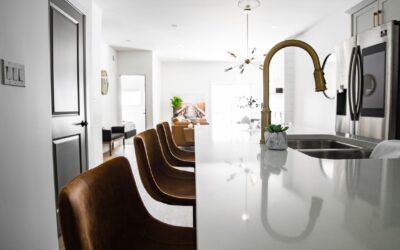
Few kitchen decisions carry as much visual and practical weight as your countertop choices. The countertop is a hardworking surface you touch every day and a defining design element that anchors the whole room. With materials ranging from budget-friendly laminate to luxurious natural stone, the options can feel overwhelming. This guide compares the most popular countertop materials head to head, covering costs, durability, maintenance, and ideal uses so you can choose the surface that best fits your kitchen, budget, and lifestyle.
Part of our Countertops guide — explore the full guide →
- Granite
- Quartz
- Marble
- Laminate
- Butcher Block and Wood
- Solid Surface and Other Options
- Comparing Cost, Durability, and Maintenance
- Matching Countertops to Your Kitchen
- Sealing and Long-Term Maintenance
- Mixing Materials in One Kitchen
- Edge Profiles and Thickness Options
- Getting Accurate Quotes
- Making the Best Countertop Decision
Granite
Granite is a natural stone prized for its unique patterns, durability, and timeless appeal. Every slab is one of a kind, quarried from the earth and polished to reveal rich mineral flecks and veining.
- Cost: $40 to $100 per square foot installed.
- Pros: Extremely heat- and scratch-resistant, adds resale value, unique natural beauty.
- Cons: Requires periodic sealing, can chip at edges, patterns vary so you should pick your slab in person.
Granite is a strong all-around choice for homeowners who want durability with natural character.
Quartz
Engineered quartz combines ground natural stone with resins to create a nonporous, consistent surface. It has become the best-selling premium countertop for good reason.
- Cost: $50 to $120 per square foot installed.
- Pros: Nonporous and stain-resistant, no sealing needed, consistent color, low maintenance, wide style range.
- Cons: Less heat-resistant than stone so use trivets, can fade in direct sunlight, higher cost.
Quartz suits busy families who want the look of stone with almost no upkeep.
Marble
Marble delivers unmatched elegance with its soft veining and luminous surface, making it a favorite for baking stations and statement kitchens.
- Cost: $60 to $150 per square foot installed.
- Pros: Luxurious classic beauty, naturally cool surface ideal for pastry, adds prestige.
- Cons: Soft and porous, stains and etches easily from acids, needs frequent sealing and careful use.
Marble rewards those who love its look and accept a patina of use over time.
Laminate
Laminate remains the budget champion, made of printed paper layers fused over particleboard. Modern laminates mimic stone and wood convincingly.
- Cost: $10 to $40 per square foot installed.
- Pros: Very affordable, huge range of colors and patterns, easy to clean, DIY-friendly.
- Cons: Can scratch, burn, and chip, seams show, cannot be repaired easily, less resale value.
Laminate is ideal for tight budgets, rentals, and quick refreshes.
Butcher Block and Wood
Wood countertops bring warmth and a natural, inviting feel that pairs beautifully with farmhouse and traditional kitchens.
- Cost: $30 to $90 per square foot installed.
- Pros: Warm look, good for chopping, can be sanded and refinished, DIY-friendly.
- Cons: Needs regular oiling, can scratch, dent, and stain, vulnerable to water damage near sinks.
Butcher block suits homeowners who love a natural, workable surface and do not mind maintenance.
Solid Surface and Other Options
Beyond the mainstream, several materials serve specific tastes. Solid surface, a seamless acrylic and mineral blend, runs $35 to $85 per square foot with integrated sinks and easy repairs but modest heat resistance. Stainless steel offers a hygienic, professional look at $75 to $150 per square foot but shows scratches and fingerprints. Concrete provides a custom industrial aesthetic at $65 to $135 per square foot but requires sealing and can crack. Porcelain slabs are an emerging ultra-durable, heat- and scratch-resistant option. Each fills a niche worth considering if the mainstream materials do not fit your vision.
Comparing Cost, Durability, and Maintenance
To weigh your countertop choices efficiently, think in terms of three trade-offs. For lowest maintenance, quartz leads since it needs no sealing. For maximum heat resistance, granite and porcelain excel. For tightest budget, laminate and butcher block win. For pure luxury, marble reigns. Consider your cooking habits too: heavy cooks benefit from heat-tolerant stone, while busy families favor stain-proof quartz. Also remember that durable stone often costs more upfront but lasts decades, potentially outvaluing a cheaper surface you replace sooner.
Matching Countertops to Your Kitchen
The right choice depends on how you use the space and the look you want:
- Busy family kitchens: Quartz for its stain resistance and zero upkeep.
- Serious home cooks: Granite or porcelain for heat tolerance.
- Budget renovations: Laminate or butcher block.
- Luxury and resale focus: Marble accents or premium quartz and granite.
- Rustic and farmhouse styles: Wood or honed granite.
Sealing and Long-Term Maintenance
Understanding upkeep is essential, since some countertops need ongoing care and others are nearly maintenance-free. Porous natural stones like granite and marble require periodic sealing, typically once a year, to protect against stains and moisture. A simple water test tells you when it is time: if water beads on the surface the seal is intact, but if it soaks in and darkens the stone, it is time to reseal. Engineered quartz and solid surface are nonporous and never need sealing, which is a major reason busy families favor them. Wood counters need regular oiling to stay water-resistant, and laminate needs no sealing but cannot be repaired if damaged. Factoring this ongoing effort into your decision prevents surprises, since the cheapest countertop to install is not always the cheapest or easiest to live with over the years.
Mixing Materials in One Kitchen
You do not have to choose a single countertop for the whole kitchen, and blending materials is a smart, increasingly popular strategy. Many homeowners pair a durable, low-maintenance quartz on the busy perimeter counters with a warm butcher block section for chopping, or a marble slab reserved just for a baking station. An island often becomes a design focal point with a contrasting material or a waterfall edge, while the surrounding counters stay practical. This approach lets you put each material where it performs best, balancing cost, function, and beauty:
- Quartz on high-use perimeter counters for stain resistance.
- Butcher block at a dedicated prep zone for chopping.
- Marble at a baking area for its cool surface.
- A statement stone on the island to anchor the room.
Edge Profiles and Thickness Options
Beyond the material itself, the edge profile and slab thickness shape the final look and feel of your countertop. Standard stone slabs come in two-centimeter and three-centimeter thicknesses, with the thicker option feeling more substantial and often preferred for kitchens, while the thinner one suits bathrooms or can be built up at the edge for a chunky look. Edge profiles range from simple to elaborate:
- Eased and pencil edges: Clean, understated, and usually included in the base price.
- Bullnose and rounded edges: Soft, safe, and classic, ideal for family kitchens.
- Beveled and mitered edges: Crisp and modern for contemporary designs.
- Ogee and waterfall edges: Decorative, luxurious profiles that add cost.
Choosing the right edge complements both your material and your overall design, and it affects everyday comfort and cleaning.
Getting Accurate Quotes
Because countertop pricing depends on so many variables, gathering detailed quotes is essential to comparing your countertop choices fairly. Provide fabricators with your square footage, chosen material and grade, edge profile, and number of cutouts for sinks and cooktops. A thorough quote should itemize material, fabrication, edge work, cutouts, delivery, and installation, plus removal of your old counters if needed. Watch for full-slab minimum charges and templating fees, which can surprise buyers. Get at least three quotes from local fabricators as well as retailers, since buying directly from a fabricator often removes a layer of markup. Viewing full slabs in person is especially important for natural stone, where patterns vary from piece to piece and the sample chip rarely represents the whole slab. Taking these steps ensures the price you pay matches the surface you actually want.
Making the Best Countertop Decision
The smartest way to navigate your countertop choices is to rank your priorities of budget, maintenance, durability, and style, then match them against how you truly use your kitchen. View full slabs and samples in your own lighting, and feel the surfaces in person before deciding. There is no single best countertop, only the best one for your household. By comparing each material’s real costs and trade-offs against your daily habits, you can confidently select a countertop that looks stunning, performs reliably, and brings lasting satisfaction to the heart of your home.