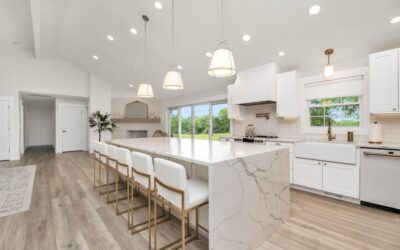
Walk into ten kitchens and you will likely see ten different work surfaces, because the right pick depends on budget, cooking habits, and how much maintenance you are willing to do. Sorting through the countertop options available today means weighing durability against price and looks against upkeep. Some materials shrug off a dropped cast-iron pan; others scratch if you cut directly on them. This guide breaks down the materials that actually hold up in real homes, what they cost, and where each one shines.
Part of our Countertops guide — explore the full guide →
- Quartz: The Low-Maintenance Favorite
- Granite: Natural Stone With Character
- Laminate: The Budget Workhorse
- Butcher Block and Solid Wood
- Solid Surface and Other Choices
- How to Choose the Right Surface
- Edge Profiles and Finishes
- Durability and Lifespan
- Resale Value Considerations
- Installation and Final Tips
Quartz: The Low-Maintenance Favorite
Engineered quartz has become the default choice for new kitchens, and for good reason. It is roughly 90 percent ground natural quartz bound with resin, which makes it nonporous and stain resistant without sealing. Spilled red wine or lemon juice wipes away with no lasting mark.
Expect to pay $50 to $120 per square foot installed, with brands like Caesarstone, Cambria, and Silestone at the upper end. The main weakness is heat: setting a 400°F pot directly on quartz can scorch or discolor the resin, so keep trivets handy. Quartz suits busy families who want a surface they can ignore.
Granite: Natural Stone With Character
Granite remains popular for homeowners who want a one-of-a-kind slab. Because it is quarried stone, no two pieces match, and the speckled patterns range from subtle grays to dramatic blues and golds. Granite handles heat better than quartz and resists scratches from knives.
Installed prices run $40 to $100 per square foot. The trade-off is sealing. Most granite needs resealing every one to three years to stay stain resistant; a simple water-bead test tells you when it is due. If water soaks in within a few minutes, it is time to reseal.
Laminate: The Budget Workhorse
Do not dismiss laminate. Modern versions from Formica and Wilsonart mimic stone and wood convincingly, and at $15 to $40 per square foot installed, nothing competes on price. Laminate is light, easy to fabricate, and comes in hundreds of patterns.
The limits are real, though. You cannot set hot pans on it, sharp knives will gouge the surface, and once the top layer chips, it cannot be refinished. For a rental, a starter home, or a laundry room, laminate is a smart value.
Butcher Block and Solid Wood
Wood counters bring warmth that stone cannot match, and they work beautifully on islands or as a baking station. Maple, walnut, and oak are common, priced at $40 to $100 per square foot. You can sand out scratches and burns, which is a real advantage over most surfaces.
Wood demands maintenance. Oil it monthly with food-safe mineral oil to prevent drying and cracking, and never let standing water sit near a sink. Many homeowners use a sealed wood island paired with a stone perimeter to balance warmth and waterproof function.
Solid Surface and Other Choices
Solid surface materials like Corian fall between laminate and stone in price, around $40 to $80 per square foot. They are seamless, repairable with light sanding, and allow integrated sinks. Stains and burns can be buffed out, but they scratch more easily than quartz.
- Marble: Stunning but soft and acid-sensitive; best for low-traffic baths or baking areas. $60 to $150 per square foot.
- Concrete: Fully custom and industrial-looking; $65 to $135 per square foot, and it must be sealed.
- Stainless steel: Heat- and bacteria-resistant pro-kitchen look; $80 to $225 per square foot, shows fingerprints and scratches.
- Tile: DIY-friendly and inexpensive at $10 to $40 per square foot, but grout lines need regular cleaning.
How to Choose the Right Surface
Start with your budget per square foot, then measure your counter area to get a realistic total. A typical 30-square-foot kitchen ranges from under $1,000 in laminate to $3,000 or more in premium quartz. Next, be honest about maintenance. If sealing or oiling sounds like a chore you will skip, lean toward quartz or solid surface.
Finally, match the material to how you cook. Bakers love cool marble or wood. Heavy-duty cooks who slide pans around appreciate granite or stainless. Mixing materials across zones is increasingly common and lets you put the right surface where it earns its keep.
Edge Profiles and Finishes
The edge profile is an easy detail to overlook, yet it shapes both the look and the feel of a counter. A simple eased or straight edge reads modern and costs the least. Bullnose and ogee edges feel more traditional and add fabrication cost, often $10 to $30 per linear foot extra. On stone, the finish matters too: a polished surface reflects light and shows fewer water spots, while a honed matte finish hides etching better on softer stones like marble but can absorb stains more readily if not sealed well.
Talk through these choices with your fabricator before the slab is cut, because edge work is difficult to change after installation. Bring a sample of your cabinet door and flooring so you can judge how the edge profile and finish read against the rest of the room.
Durability and Lifespan
How long a counter lasts depends on both the material and how you treat it. Quartz and granite routinely last 25 years or more and often outlive the cabinets beneath them. Solid surface and quality laminate can serve 10 to 20 years, while wood and concrete last decades with regular maintenance. The fastest way to shorten any counter’s life is neglecting care: skipping sealing on granite, setting hot pans on quartz or laminate, or cutting directly on a surface that scratches. A cutting board and a few trivets protect almost any countertop investment.
Resale Value Considerations
If you may sell your home in the next several years, factor in buyer expectations. In many markets, quartz and granite are seen as premium features that help a kitchen show well, while dated laminate can read as a project waiting to happen. That said, over-improving a modest home with the most expensive slab rarely returns its full cost. Aim for a material that matches your home’s price point and your neighborhood, and you will get both daily enjoyment and reasonable resale appeal.
Installation and Final Tips
Most stone and quartz counters should be templated and installed by professionals because the slabs are heavy and seams require skill. Laminate, tile, and some wood tops are DIY-friendly with basic tools. Always order a small extra allowance for cutouts and mistakes, and ask your fabricator to confirm edge profiles before cutting.
Whatever you choose, request a sample and live with it in your kitchen lighting for a few days. The right countertop balances how it looks on day one with how it performs for the next fifteen years.