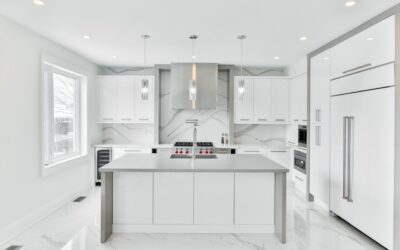
Walk into nearly any modern kitchen showroom and the countertop that dominates the floor is not natural stone at all. Engineered quartz has become the best-selling countertop material in the country because it combines the look of stone with toughness and consistency that nature cannot guarantee. If you are weighing it against granite or marble, understanding what engineered quartz actually is, and where it shines or falls short, will help you spend your remodel budget wisely.
Part of our Countertops guide — explore the full guide →
What Engineered Quartz Is
Engineered quartz is a man-made material composed of roughly 90 to 95 percent ground natural quartz crystals bound together with about 5 to 10 percent polymer resins and pigments. The mixture is molded under intense heat and pressure into dense, uniform slabs. The result looks like natural stone but is more consistent and far less porous.
This is the same material sold under many well-known brand names. Because the color and pattern are engineered rather than mined, you get predictable slabs without the surprises of natural stone variation.
How It Is Made
The manufacturing process is what gives engineered quartz its standout properties. Crushed quartz is blended with resin and pigment, poured into molds, then compacted under a vibrocompaction vacuum process and cured. This bonds the quartz particles into a single solid mass with virtually no pores.
That non-porous structure is the secret to its low maintenance. Unlike granite and marble, which have tiny pores that absorb liquids, engineered quartz resists staining and bacteria without ever needing to be sealed.
Key Advantages
Homeowners choose engineered quartz for a long list of practical reasons:
- No sealing required: The non-porous surface never needs the periodic sealing that natural stone demands.
- Stain resistant: Wine, coffee, and oil wipe away rather than soaking in.
- Consistent appearance: Slabs match closely, making it easy to plan a uniform kitchen.
- Durable and hard: The quartz content resists scratches and chips under normal use.
- Wide design range: Available in solid colors, stone looks, and convincing marble veining.
The Drawbacks to Know
Engineered quartz is not flawless. The resin binder makes it sensitive to heat, so setting a hot pan directly on the surface can scorch or discolor it; always use trivets. It is also not ideal for outdoor or sun-exposed installations, since prolonged UV can cause some colors to fade. The material is heavy and difficult to fabricate, so it requires professional installation. And while it mimics marble well, purists may still prefer the depth of genuine natural stone.
Engineered Quartz vs. Granite and Marble
Each material has a place. Granite is fully natural, heat resistant, and unique in every slab, but it is porous and needs periodic sealing. Marble offers unmatched classic beauty but is soft, etches with acids, and stains easily. Engineered quartz lands in a practical middle ground:
- vs. Granite: Quartz wins on stain resistance and maintenance; granite wins on heat tolerance and natural variation.
- vs. Marble: Quartz wins decisively on durability and care; marble wins on timeless natural elegance.
For busy kitchens where low maintenance matters most, engineered quartz is often the smartest choice.
Care and Maintenance
Keeping engineered quartz looking new is refreshingly simple. Wipe it down with mild soap and water or a gentle surface cleaner for everyday cleaning. Blot spills when you can, though staining is rare. Avoid harsh abrasive scrubbers and strong chemicals like bleach or oven cleaner, which can dull the finish over time. Most importantly, always use trivets and hot pads, since the resin cannot tolerate direct high heat.
Cost Expectations
Engineered quartz sits in the mid-to-premium price tier. Installed, it typically runs from about $50 to $150 per square foot, depending on the brand, color, edge profile, and your region. That generally puts it in the same range as granite and below high-end marble. Because installation is included in most fabricator quotes, confirm whether sink cutouts, edge work, and old-counter removal are part of the price when you compare bids.
Design Options and Finishes
One reason engineered quartz dominates remodels is the sheer breadth of looks available. Beyond solid colors, manufacturers have become remarkably good at replicating natural stone, offering convincing marble veining, granite speckle, and concrete and limestone looks. Because the pattern is engineered, you can find a marble look without the staining and etching that real marble suffers.
Finishes vary too. Polished surfaces are the most common, giving a glossy, reflective sheen. Honed and matte finishes provide a softer, more contemporary look, though they can show fingerprints and require a bit more wiping. Some brands offer textured or leathered finishes for a tactile, low-sheen surface. Request large samples and view them in your own kitchen lighting before committing, since color reads differently under different light.
Where Engineered Quartz Works Best
Engineered quartz is a strong choice for most interior horizontal and vertical surfaces. It excels on kitchen countertops, bathroom vanities, kitchen islands, and full-height backsplashes where its stain resistance and uniform look shine. It also makes a durable, low-maintenance surface for laundry rooms, bar tops, and desks.
Where it struggles is outdoors and in direct, prolonged sunlight, since UV exposure can fade some colors and heat can stress the resin. For an outdoor kitchen, natural granite or a UV-stable porcelain slab is the better pick. Indoors, away from sustained sun and direct flame, engineered quartz performs beautifully for decades.
Is Engineered Quartz Right for You?
Choose engineered quartz if you want the look of stone with minimal upkeep, strong stain resistance, and consistent color across your kitchen. It is ideal for high-use kitchens and bathrooms where sealing and staining would be a hassle. Just protect it from direct heat and intense sun, and budget for professional installation. For most homeowners, engineered quartz delivers durable, low-maintenance beauty that explains exactly why it has become the countertop of choice.
When you shop, compare quotes carefully and confirm what each includes. The same color from different fabricators can vary in installed price once you account for edge profiles, cutouts, and labor. Order large samples, view them under your own lighting, and ask whether the slab will be cut from a single piece or require seams, since seam placement affects the finished look. With a thoughtful selection and a reputable fabricator, engineered quartz rewards the investment with a surface that stays beautiful and worry-free through years of daily cooking, cleaning, and entertaining.