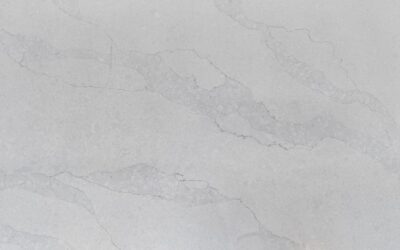
Walk into almost any newly renovated kitchen and there’s a good chance the counters aren’t natural stone at all. Synthetic quartz countertops, more accurately called engineered quartz, have overtaken granite as the most popular premium countertop in America, and for solid reasons. They’re made by binding roughly 90% to 93% crushed natural quartz with about 7% to 10% polymer resins and pigments, then compressing the mix into slabs. The result is a surface that keeps the hardness and beauty of stone while eliminating the porosity, sealing, and unpredictability of the real thing. If you’re comparing countertops, understanding how engineered quartz is made explains nearly everything about why it performs the way it does.
Part of our Countertops guide — explore the full guide →
What “Synthetic Quartz” Actually Means
The term can confuse buyers, so it’s worth clarifying. Synthetic or engineered quartz is not fully man-made, it’s mostly ground natural quartz, one of the hardest minerals on earth, held together by resin and colored with pigments. This is different from natural quartzite, which is a solid slab quarried from the ground. Because the raw material is crushed and remixed, manufacturers control the color and pattern precisely, which is why quartz comes in consistent, repeatable designs, including convincing marble and concrete looks, that natural stone can’t guarantee slab to slab.
How Engineered Quartz Is Made
The dominant manufacturing method is the Bretonstone process, licensed from the Italian company Breton and used by nearly every major brand. Crushed quartz is blended with resin and pigment, poured into a mold, and then vibro-compacted under vacuum, a process that squeezes out air pockets while high-frequency vibration settles the mix into a dense, void-free slab. The pressed slab is then cured in a kiln at roughly 185°F to harden the resin, cooled, and finally gauged and polished to a uniform thickness, typically 2 cm (about 3/4 inch) or 3 cm (about 1 1/4 inch). That controlled process is why quartz slabs arrive dead flat, uniform in thickness, and free of the natural fissures and soft spots that can appear in quarried stone. It also explains the price: the equipment is expensive and the raw quartz is engineered, not simply cut from the earth.
Key Benefits
Engineered quartz earns its popularity through everyday performance. Its standout advantages are:
- Non-porous surface: the resin seals the slab, so it never needs sealing and resists bacteria and staining
- Stain resistance: wine, coffee, and oil wipe up without soaking in, unlike unsealed granite or marble
- Consistent appearance: the slab you approve looks like the counter you get
- Hardness and durability: highly scratch- and chip-resistant under normal kitchen use
- Low maintenance: soap and water is the entire care routine
For busy family kitchens, that non-porous, no-seal quality is often the deciding factor over natural stone.
The Limitations to Know
Quartz isn’t invincible, and the same resin that makes it stain-proof creates its weaknesses. Heat is the big one: the polymer binder can scorch, discolor, or crack when a hot pan straight off the burner is set on it, so trivets are mandatory, not optional. Most manufacturers rate quartz safe only to about 150°F, well below a pot straight off a 400°F burner. Prolonged direct sunlight can fade some quartz over years, which makes it a questionable choice for outdoor kitchens, most manufacturers void warranties on exterior use. Quartz is also heavy and difficult to fabricate, so it’s not a DIY install. And while durable, a sharp impact on an edge or corner can still chip it.
Quartz vs. Granite, Marble, and Quartzite
Choosing between the premium surfaces comes down to trade-offs. Granite is heat-tolerant and each slab is unique, but it’s porous and needs periodic sealing, and its wild natural variation means the slab in the showroom may not match what’s in stock. Marble is unmatched for classic beauty but etches from anything acidic, lemon juice, wine, vinegar, and scratches more easily, so it demands real care. Natural quartzite is extremely hard and heat-resistant and mimics marble’s look, but like granite it’s porous and needs sealing, and it’s harder to fabricate. Engineered quartz splits the difference: you give up true heat resistance and get a slightly less “natural” look under close inspection, but you gain a maintenance-free, non-porous, perfectly consistent surface. For most indoor kitchens that value equation is exactly why quartz wins.
Popular Brands and Colors
The market is led by a handful of major manufacturers, including Caesarstone, Cambria, Silestone, MSI Q Quartz, and LG Viatera. Cambria is notable as a US-made, family-owned brand, while Silestone and Caesarstone are long-established international names. Across these lines you’ll find everything from solid whites and grays to bold movement that mimics Calacatta and Carrara marble. If you love the marble look but not the etching and staining, a quartz marble-look slab gives you the veining with none of the acid sensitivity, which is why it dominates modern white kitchens.
What It Costs
Engineered quartz sits in the mid-to-upper price tier. Installed, it typically runs $50 to $100 per square foot, with premium designer patterns and thick edges pushing to $120 or more. For an average kitchen with around 40 to 50 square feet of counter, total installed cost commonly lands between $2,500 and $5,000. That’s competitive with granite and generally less than natural marble or quartzite. The price includes the slab, fabrication (cutting the sink and cooktop openings, shaping edges), and professional installation, since these slabs are far too heavy and precise for a homeowner to set alone.
Care and Maintenance
This is where quartz shines and where the routine is refreshingly simple. Wipe daily spills with warm water and a mild dish soap or a pH-neutral cleaner. Skip abrasive scouring pads and harsh chemicals like bleach, oven cleaner, or high-pH degreasers, which can dull the finish over time. Never cut directly on the surface, use a board to protect both the counter and your knives. Most importantly, always use trivets or hot pads under pots, pans, and countertop appliances; heat protection is the single habit that keeps quartz looking new for decades. Do that, and the surface needs nothing else, no sealing, no polishing, ever. For a stubborn dried spill, a plastic putty knife lifts it without scratching, and a dab of adhesive remover such as Goo Gone handles gum, grease, or sticker residue before you rinse with plain water. Keep permanent markers, nail polish, and paint strippers away from the surface, and blot any accidental contact immediately rather than letting it sit.
Is Synthetic Quartz Right for You?
Engineered quartz is the practical choice for homeowners who want stone looks with minimal fuss. Choose it if you value stain resistance, a consistent appearance, and a zero-sealing lifestyle, and if your kitchen sees the kind of daily cooking and cleanup where a forgiving surface earns its keep. Look elsewhere, toward granite, soapstone, or porcelain, if you frequently set down scorching cookware and can’t commit to trivets, or if the counter will live in direct sun outdoors. For the vast majority of indoor kitchens, though, synthetic quartz countertops deliver the best balance of beauty, durability, and easy living on the market, which is exactly why they’ve become the default in remodels across the country.