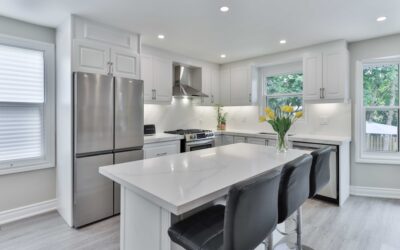
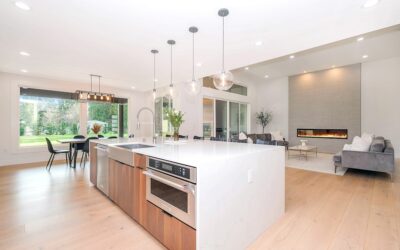
Walk into any showroom and the slabs look strikingly similar — but the price tags are not. The quartz vs quartzite cost question hinges on whether you are buying engineered material with predictable pricing or natural stone with wild variability based on rarity. Engineered quartz typically runs $50 to $100 per square foot installed. Natural quartzite runs $70 to $150 per square foot installed, with rare slabs touching $200. Here is exactly where the money goes.
What You Are Actually Buying
Engineered quartz is roughly 90 to 95 percent ground natural quartz crystal mixed with 5 to 10 percent polymer resin and pigment, then heat-cured into slabs. Brands like Caesarstone, Silestone, MSI Q, and Cambria dominate the market. Color and pattern are uniform within a slab and consistent between slabs of the same SKU.
Quartzite is a 100 percent natural metamorphic stone formed when sandstone fuses under heat and pressure. No two slabs are identical, and supply depends on what quarries in Brazil, India, and Italy are producing in any given year. Popular varieties like Taj Mahal, Sea Pearl, and Calacatta Macaubas command premium prices because of limited availability.
Material Cost Breakdown
Material alone, before fabrication and installation, varies widely:
- Entry-level quartz (MSI Q, Vicostone basics): $35-$50 per square foot
- Mid-tier quartz (Caesarstone, Silestone): $55-$75 per square foot
- Premium quartz (Cambria, Dekton, high-end Caesarstone): $80-$100 per square foot
- Standard quartzite (White Macaubas, Fantasy Brown): $50-$80 per square foot
- Premium quartzite (Taj Mahal, Cristallo, Sea Pearl): $90-$150 per square foot
- Exotic quartzite (Patagonia, Azul Macaubas): $150-$200+ per square foot
Material represents 50 to 65 percent of the total installed price. The rest comes from fabrication, edging, cutouts, and labor.
Fabrication and Installation Costs
Fabrication adds $20 to $40 per square foot to either material. This includes the templating visit, slab cutting, sink cutout, faucet holes, edge profile, polishing, and delivery. Quartzite fabrication runs slightly higher because the stone is harder than granite and dulls diamond blades faster.
Installation labor adds $10 to $20 per square foot. A typical 50-square-foot kitchen installation takes a two-person crew about 4 to 6 hours and includes setting the slabs on the cabinets, seaming, sealing, and finish work. Quartzite installations sometimes require an extra installer due to slab weight — quartzite is denser than engineered quartz.
The Real-World Total: A 50-Square-Foot Kitchen
For a typical kitchen with 50 square feet of countertop:
- Mid-tier quartz total: $3,000-$4,500 installed ($60-$90 per square foot)
- Premium quartz total: $4,500-$5,500 installed ($90-$110 per square foot)
- Standard quartzite total: $4,000-$5,500 installed ($80-$110 per square foot)
- Premium quartzite total: $5,500-$8,000 installed ($110-$160 per square foot)
- Exotic quartzite total: $8,000-$10,000+ installed ($160-$200+ per square foot)
For most kitchens, quartzite costs roughly 20 to 40 percent more than quartz of comparable visual style. The premium buys natural stone uniqueness and improved heat tolerance.
Hidden Costs to Budget For
Edge profiles beyond a standard eased edge add $5 to $15 per linear foot. Ogee, mitered, and waterfall edges all increase fabrication time. A waterfall edge on a single island side can add $400 to $800 alone.
Sealing is mandatory for quartzite and recommended every 6 to 12 months. Plan $40 per year for DIY sealer or $150 to $250 for professional sealing. Quartz never needs sealing, which saves $400 to $2,000 over a 20-year ownership horizon.
Removal of existing countertops runs $3 to $7 per square foot. Plumbing disconnect and reconnect for sinks adds $150 to $400. Tile backsplash demolition (if needed) adds another $5 to $10 per square foot.
Long-Term Cost Considerations
The quartz vs quartzite cost difference flips when you factor in 20-year ownership. Quartz needs no sealing, resists most stains, and holds its color. Total long-term cost stays close to the install price.
Quartzite needs sealing 1 to 2 times annually and can etch from acidic foods if the seal fails. Damage repair runs $300 to $800 for professional polishing of small etches. Heavy stains in deeper varieties may need slab replacement, which is expensive given the original premium price.
Resale value favors quartzite slightly in homes priced over $1 million. Below that price point, buyers cannot reliably distinguish quartz from quartzite, so the upgrade does not always recover at sale.
Which Performs Better in Daily Use
Quartz wins on stain resistance, consistency, and warranty. Most major brands offer 15-year to lifetime warranties. The downside is heat sensitivity — direct contact with pans over 300°F can damage the resin binder permanently.
Quartzite wins on heat tolerance and uniqueness. You can set hot pans directly on quartzite without damage. The trade-off is etching risk from lemon juice, vinegar, and tomato products if the seal has failed. Quartzite also requires more careful handling during installation due to brittleness around cutouts.
How to Save Money on Either Material
Buy remnants for small projects like vanities or laundry rooms. Fabricators sell remnants under 30 square feet at 30 to 50 percent off slab pricing. A bathroom vanity in remnant Taj Mahal quartzite might cost $400 instead of $1,200.
Choose mid-tier brands over premium when patterns look similar. MSI Q’s Calacatta Laza looks nearly identical to Caesarstone’s Calacatta Nuvo at $25 less per square foot. The visual difference disappears once installed under kitchen lighting.
Frequently Asked Questions
Is quartz or quartzite more expensive?
Quartzite typically costs 20 to 40 percent more than quartz per square foot installed. Standard quartzite starts where premium quartz ends.
Why is quartzite so much more expensive than quartz?
Quartzite is natural stone with limited supply, harder to cut, and unique per slab. Quartz is manufactured at scale with consistent pricing and cutting characteristics.
Does quartzite increase home value more than quartz?
Slightly, in luxury homes. In mid-market homes, the premium does not always recover at resale because buyers value the look more than the material specifics.
Can I install either material myself to save money?
No. Both materials are too heavy, too expensive, and too unforgiving for DIY. Professional fabrication with computer templating is required for accurate cuts and structural integrity.