Warm, tactile, and endlessly customizable, a solid wood countertop brings something to a kitchen that stone and quartz cannot: living texture that ages with grace. Whether you picture a rustic farmhouse island or a sleek walnut waterfall, wood offers a look that feels handmade and inviting. Before you commit, though, you should understand how wood counters are built, what they cost, and the care they ask in return. This guide covers each of those decisions in plain terms.
Part of our Countertops guide — explore the full guide →
Understanding Solid Wood Countertops
The term covers a few different constructions, and knowing the difference matters when you shop. A true solid wood countertop is built from hardwood boards glued together, most often in one of three grain styles.
- Edge grain: long boards laid on edge, showing narrow strips of grain. Durable, handsome, and the most common style for a work surface.
- End grain: short blocks stood on end to expose the growth rings, the classic butcher block. It self-heals knife marks and is ideal for heavy chopping.
- Face grain: wide boards laid flat, showing the broadest, most dramatic grain figure. Beautiful but softer and more prone to dents, so it suits low-traffic areas.
Standard thickness runs 1.5 inches, with premium tops reaching 2.25 inches or more. Widths and lengths are made to order, so wood adapts easily to islands, peninsulas, and odd layouts.
Choosing a Wood Species
Species drives both the look and the toughness of your counter. Harder woods resist dents better, while open-grain species show more character.
- Maple: pale, tight-grained, and hard. The traditional butcher block choice and among the most affordable.
- Walnut: rich chocolate tones and a luxurious look; slightly softer than maple but stable.
- Oak: pronounced open grain and warm color, widely available and durable.
- Cherry: smooth grain that darkens beautifully with age and light exposure.
- Teak and iroko: naturally oily and water-resistant, which makes them favorites near sinks.
If your counter will see heavy chopping, lean toward maple or a dense exotic. If you want a statement island that mostly holds serving dishes, softer walnut or cherry rewards you with depth of color.
Cost of a Solid Wood Countertop
Wood counters span a wide price range depending on species, grain style, and whether you buy prefabricated or custom. Expect roughly $35 to $100 per square foot for material, with installed custom tops commonly landing between $60 and $120 per square foot.
- Maple edge grain sits at the affordable end, often $35 to $60 per square foot.
- Walnut or cherry pushes into $70 to $100 per square foot.
- End-grain butcher block costs more to build, adding $20 to $40 per square foot over edge grain in the same species.
- Exotics and extra-thick slabs can exceed $150 per square foot.
Prefabricated tops from home centers are the budget path, but they come in limited sizes and you handle sealing and any cutting yourself. For a standard 30-square-foot kitchen, a mid-grade wood counter typically totals $1,800 to $3,600 installed.
Finishes and Sealing
How you finish a wood counter shapes both its look and its maintenance. Two broad approaches exist, and your choice depends on how you plan to use the surface.
Penetrating oil finish
Food-safe oils such as mineral oil, or a blend of oil and beeswax, soak into the wood and leave a matte, natural feel. This is the right finish if you plan to cut directly on the surface. It needs re-oiling regularly, weekly at first and then monthly, to keep water from penetrating. Refreshing an oiled top is simple: wipe on more oil and buff off the excess.
Film finish
A hard topcoat like conversion varnish or a durable polyurethane sits on top of the wood, sealing it against water and stains. Film finishes require far less upkeep and resist spills well, but you cannot cut on them without leaving scratches, and repairs mean sanding and refinishing the whole section. Around sinks, a quality film finish is often the safer bet.
Everyday Care and Longevity
Wood asks for a bit more attention than stone, but the routine is easy once you build the habit. Wipe spills quickly, since standing water is the enemy of any wood top, especially near the sink and dishwasher where steam escapes. Clean with mild soap and water, wring your cloth nearly dry, and never let puddles sit.
Sanitize a chopping surface with a wipe of white vinegar or a diluted solution rather than harsh bleach, which can lighten the wood. To knock out shallow scratches or a water ring on an oiled top, sand lightly with fine 220-grit paper and re-oil. Avoid setting hot pans directly on wood; unlike granite, wood scorches, so always use a trivet. With this care, a solid wood countertop lasts 20 years or more and can be sanded and refinished many times over its life, essentially renewing itself.
Pros and Cons to Weigh
Advantages
- Warm, natural look that pairs with nearly any style.
- Fully customizable in species, size, edge, and finish.
- Gentle on knives when using an oiled butcher block.
- Repairable and refinishable rather than replaceable.
- Comfortable, quiet surface that is warm to the touch.
Drawbacks
- Sensitive to standing water and steam.
- Oiled finishes need regular re-application.
- Scorches under hot pans and can dent.
- Can harbor stains from beets, turmeric, and wine if unsealed.
- Needs acclimation and can move slightly with humidity swings.
Where Wood Counters Work Best
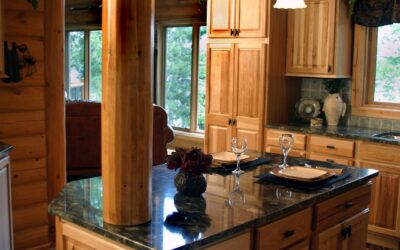
Wood does not have to cover your whole kitchen to earn its place. Many homeowners get the best result by using it strategically. A wood-topped island paired with stone perimeter counters delivers warmth at the room’s centerpiece while keeping the hardest-working zones around the sink and range in a waterproof material. A wood breakfast bar or a baking station also showcases the material without exposing it to constant water.
Consider your climate too. Wood expands and contracts with seasonal humidity, so a top installed in a dry winter may swell slightly in a humid summer. Quality fabricators account for this movement with proper board orientation and fastening that lets the wood breathe. Let a new counter acclimate in your home for several days before installation so it settles to your indoor humidity, which reduces the chance of gaps or cupping later.
Frequently Asked Questions
Is a wood countertop sanitary?
Yes. Research has shown that properly maintained hardwood surfaces actually draw bacteria below the surface where they die off. Clean regularly and re-oil to keep the surface sealed.
Can I put a wood counter next to the sink?
You can, but use a naturally oily species like teak or a durable film finish, seal end cuts thoroughly, and wipe water promptly. Many homeowners pair a wood island with stone around the sink for the best of both.
How often do I need to oil it?
Oil a new top weekly for the first month, then monthly for a few months, then every few months as the wood stabilizes. A quick water-bead test tells you when it is due.
Will it scratch?
Yes, wood scratches more easily than stone, but that is part of its charm and shallow marks sand out. End-grain butcher block hides and self-heals knife cuts best.
The Bottom Line
A solid wood countertop trades a little extra maintenance for warmth, character, and a surface you can literally refinish back to new. Match the species and grain to how you will actually use the counter, choose an oil finish for a cutting surface or a film finish for a low-fuss look, and keep water from lingering. Do that, and your wood counter will grow more beautiful with every year it spends in your kitchen.