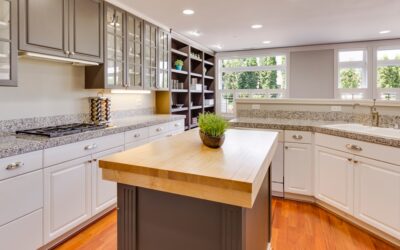
Imagine slicing vegetables directly on your counter without reaching for a board. A cutting board countertop is exactly that, a butcher block surface engineered to take a knife edge, and it’s one of the warmest, most functional materials you can put in a kitchen. After fitting dozens of these in everything from farmhouse remodels to compact city apartments, I’ve learned which wood species hold up, how much they really cost, and the maintenance routine that keeps them from cracking. Here’s the full picture before you commit.
Part of our Countertops guide — explore the full guide →
What Makes It Different
A standard countertop is sealed and not meant for direct cutting. A true cutting board countertop is end-grain or edge-grain butcher block finished with a food-safe oil rather than a hard film. That means knife marks self-heal in end-grain construction, and you can sand out deeper gouges over time. The surface is meant to be used, not just looked at.
The warmth of real wood is the headline appeal. It softens a kitchen visually and physically, going easy on dropped glassware and tired feet. It also doubles your usable prep space, since the entire counter becomes a chopping zone.
Edge Grain vs End Grain
Construction matters more than species for durability. The two main types behave very differently under a knife:
- Edge grain: wood strips laid on their sides, showing long lines. More affordable, very stable, but shows knife marks more readily.
- End grain: wood blocks standing upright, showing a checkerboard pattern. The knife slips between fibers, so marks self-heal and the edge of your knife stays sharper longer. Costs more and needs diligent moisture control.
For a surface you’ll genuinely chop on every day, end grain is the gold standard. If you mostly want the look and will use a separate board for heavy cutting, edge grain saves money and resists warping better.
Best Wood Species
Hardwoods with a tight, closed grain resist bacteria and stand up to knives. The proven performers:
- Hard maple: the classic choice, light color, dense, antibacterial properties, $40 to $100 per square foot
- Walnut: rich dark tone, slightly softer, $60 to $200 per square foot
- Cherry: warm reddish hue that deepens with age, $50 to $120 per square foot
- Teak: naturally oily and water-resistant, excellent near sinks, $80 to $200 per square foot
Avoid soft woods like pine and porous open-grain species like oak for cutting surfaces. They dent easily and trap moisture and food in the grain.
Cost and Sizing
Butcher block is mid-range in the countertop world. Pre-made IKEA-style maple counters start around $15 to $25 per square foot, while custom end-grain walnut from a millwork shop can hit $200 per square foot. A standard 30-square-foot kitchen of mid-grade maple edge grain lands near $1,000 to $2,000 in material.
Many homeowners use butcher block strategically, putting it on an island or a single run where they cook while keeping stone elsewhere near the sink. This hybrid approach gives you the warmth of wood without surrounding the sink with a material that hates standing water.
Sealing and Finish Options
How you finish the wood determines whether you can cut on it. There are two camps. Food-safe oil finishes, such as pure mineral oil or a beeswax blend, penetrate the wood and let you chop directly on the surface. They require reapplication every few weeks at first, then monthly. Film finishes like polyurethane create a durable waterproof shell but mean you should not cut directly on it.
For a genuine cutting board countertop, go with an oil finish. To season a new counter, flood the surface with mineral oil, let it soak in for several hours, wipe off the excess, and repeat for a few days running. A well-oiled surface beads water and resists stains.
Daily Care and Maintenance
Wood demands respect for moisture, but the routine is simple once you build the habit:
- Wipe up spills promptly, especially around the sink, and never let water pool
- Clean with mild soap and a damp cloth, then dry immediately
- Re-oil monthly, or whenever the wood looks dry and pale
- Sand out deep scratches or stains with fine grit, then re-oil
- Disinfect occasionally with a wipe of white vinegar or a diluted bleach solution, followed by rinsing and re-oiling
Never set a hot pan directly on the wood, since heat scorches and can crack the finish. Use a trivet. With this care, a quality butcher block surface lasts 20 years or more and can be refinished rather than replaced.
Hygiene and Food Safety
A common worry is whether cutting on wood is sanitary. Research has actually shown that wood has natural antimicrobial properties, and hardwoods like maple draw bacteria below the surface where they die off, rather than letting them linger on top the way scratched plastic can. The key is keeping the surface clean and dry. After cutting raw meat, wash the area with hot soapy water, dry it, and occasionally wipe it with diluted white vinegar or a light bleach solution followed by a rinse.
Never let raw meat juices sit and soak in. If you cut a lot of poultry, consider keeping a separate plastic board for that specific task and reserving the wood counter for produce, bread, and general prep. Re-oiling regularly also keeps the grain sealed against moisture and stains, which supports both hygiene and appearance.
Installation is worth a word too, since butcher block installs differently than stone. Because it’s wood, it expands and contracts with humidity, so it must be fastened in a way that allows slight movement, typically with elongated screw holes from below. Around a sink or cooktop, the exposed end grain needs careful sealing to keep water out. Many homeowners install pre-finished slabs themselves, since the material is light enough to handle and can be cut with standard woodworking tools, unlike stone that requires professional fabrication. Just allow the wood to acclimate in your kitchen for a few days before installing so it adjusts to the room’s humidity.
Is It Right for Your Kitchen?
A cutting board countertop rewards cooks who love the feel of wood and don’t mind a monthly oiling. It’s warm, repairable, and endlessly functional. If you want a zero-maintenance surface or you’re surrounding a busy sink, pair it with quartz or stone instead. But for the heart of a working kitchen, few materials are as inviting or as practical as a slab of seasoned butcher block.