
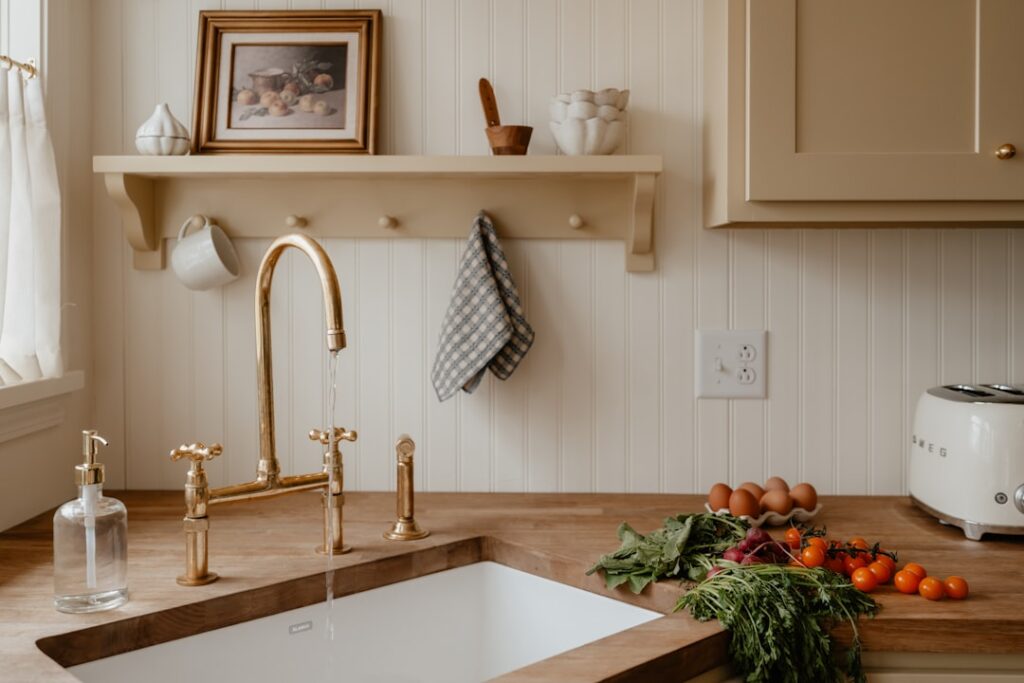
Few kitchen surfaces feel as inviting as a slab of solid wood under your hands. A well-cared-for butcher countertop can last decades, take a beating from knives and hot pans, and still sand back to like-new condition. The catch is that wood is a living material, and it will reward attention or punish neglect. Get the maintenance right and you have a surface that gets more beautiful with age.
Part of our Countertops guide — explore the full guide →
This guide walks through the wood species worth considering, how to oil and seal the surface, what it costs, and the day-to-day habits that keep it food-safe and crack-free.
What a Butcher Countertop Actually Is
The term covers any solid wood countertop, though it borrows its name from traditional butcher block. True butcher block is built from thick strips of hardwood glued together, and you will see it sold in three main constructions. Edge grain shows the long sides of the boards and is the most common for countertops. End grain shows the cut ends of the wood in a checkerboard pattern, the classic look of a chopping block, and it is the most durable for cutting directly on. Face grain shows the wide, flat surface of the board and looks the most like a plank tabletop but dents more easily.
Most homeowners install edge grain because it balances cost, looks, and toughness. If you plan to chop directly on the counter, an end grain section near the sink or range is worth the upgrade.
Best Wood Species
Hardness and grain pattern drive your choice. Harder woods resist dents and knife marks but cost more and can dull blades faster if you cut on them constantly.
- Hard maple: The traditional choice. Tight, pale grain, very hard, and food-friendly. A reliable all-rounder.
- Walnut: Rich chocolate tones and a softer feel underfoot for knives. Beautiful but pricier and slightly softer than maple.
- Cherry: Warm reddish color that darkens with age. Moderate hardness and a refined look.
- Oak: Strong and affordable, with pronounced open grain that needs thorough sealing to keep crumbs out.
- Birch and beech: Budget-friendly, light-colored, and widely available in prefabricated counters.
Oiling Versus Sealing
You have two basic finishing philosophies, and the one you pick depends on whether you intend to cut on the surface.
Food-safe oil finishes
Food-grade mineral oil, or a beeswax and mineral oil blend, soaks into the wood and is completely safe for direct food contact. It does not form a hard film, so the surface stays raw and renewable. The trade-off is frequent maintenance: re-oil a new counter once a week for the first month, then monthly, then whenever the wood looks dry or water stops beading. Avoid vegetable or olive oil, which can turn rancid.
Hard film finishes
A penetrating tung oil or a waterproof finish creates a more durable, water-resistant layer that needs less upkeep. Many film finishes are not rated for cutting directly on the surface, so treat that countertop as a work surface and use a separate board for knife work. Confirm the product label says food-safe once cured before using it in a kitchen.
How to Oil a Butcher Countertop
The routine is simple and only takes about 20 minutes of hands-on time.
- Clean the surface with mild soap and water, then let it dry fully.
- Pour a generous amount of food-grade mineral oil onto the wood.
- Spread it with a clean lint-free cloth, working in the direction of the grain.
- Let the oil soak in for several hours or overnight.
- Wipe away any excess that has not absorbed.
- For added water resistance, follow with a beeswax-based board cream and buff to a soft sheen.
What It Costs
Pricing depends heavily on species, thickness, and whether you buy prefabricated or custom. As general ranges, prefabricated maple or birch counters run roughly $30 to $60 per square foot. Custom edge-grain hardwood typically lands around $60 to $120 per square foot. Walnut, end grain, or live-edge slabs can climb to $150 per square foot or more. Installing it yourself can save several hundred dollars on a typical kitchen, since wood counters are lighter and easier to cut than stone.
Daily Care and Common Mistakes
Wood and standing water are enemies. Wipe up spills promptly, especially around the sink, and never let pooled water sit overnight. Use trivets for hot pans rather than setting cast iron directly on the wood. Skip the dishwasher-style flooding; a damp cloth is all you need for cleaning.
To sanitize a cutting section, wipe it with a diluted solution of one tablespoon of white vinegar per cup of water, or a light pass of three percent hydrogen peroxide, then dry it. Avoid soaking and avoid harsh bleach concentrations, which can dry and discolor the grain.
Repairing Scratches and Stains
One of the best things about a butcher countertop is that damage is rarely permanent. Light scratches buff out with a re-oiling. Deeper gouges or burn marks sand away: start with 120-grit sandpaper, move to 220-grit, then re-oil. A dark water stain often lifts with a paste of baking soda and water, and stubborn rings sometimes respond to fine sanding followed by fresh oil. Because you can renew the surface, a wood counter that looks tired can be made to look new again in an afternoon.
Edge Grain Versus End Grain in Practice
Beyond looks, the grain construction changes how a counter behaves over the years. End grain acts like the bristles of a brush: knife edges slip between the wood fibers rather than slicing across them, so the surface self-heals and stays kind to your blades. That is why traditional chopping blocks are end grain. The trade-off is that end grain costs more to manufacture and can be more sensitive to moisture swings if it is not kept oiled. Edge grain is stiffer and more dimensionally stable, which is why it dominates full-length countertops. If your budget allows, a hybrid kitchen with an end grain chopping station set into an edge grain run gives you the best of both worlds without committing the entire counter to the pricier construction.
Is It Right for Your Kitchen?
A butcher countertop suits cooks who want warmth, a forgiving surface for glassware, and a material they can repair themselves. It is less ideal for households that leave the kitchen wet or want a zero-maintenance surface. Many homeowners split the difference, running quartz or granite around wet zones and using a wood island or a single run of butcher block as a prep and serving station. Whatever you choose, consistent oiling is the single habit that keeps the wood healthy and food-safe for the long haul.


