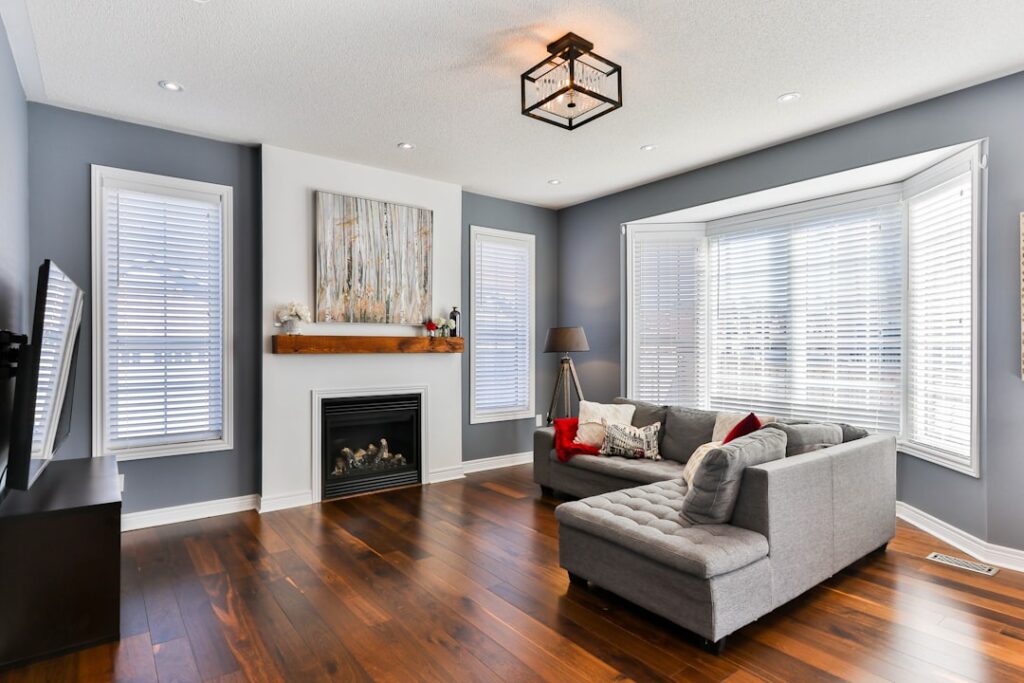
Walk into any newly built or remodeled home this year and you will notice the floors look nothing like the honey oak strips that defined the 1990s. Wider boards, softer sheens, and warmer-toned species are pulling the category in a fresher direction. The hardwood floor trends driving showroom traffic in 2026 lean European, lean wide, and lean low-gloss. Builders, designers, and DIYers are all chasing the same look: floors that feel like furniture, not finish carpentry.
- Wider Planks Keep Getting Wider
- White Oak Has Replaced Red Oak as the Default
- Matte and Wire-Brushed Finishes Dominate
- Reactive Stains and Smoked Tones
- Herringbone and Chevron Are Mainstream Again
- Sustainability Claims Carry More Weight
- Color Trends: Warm Neutrals Beat Gray
- Engineered Now Outsells Solid in Most Climates
- Texture Treatments Add Depth to the Floor
Wider Planks Keep Getting Wider
Five years ago, a 5-inch board felt generous. Today, 7 to 9-inch planks dominate the premium tier, and 10 to 12-inch widths show up in custom builds. Wider boards make small rooms feel larger by reducing visual joint clutter, and they showcase grain character that narrow strips cut off. Mohawk’s TecWood Select line now stocks 7.5-inch engineered planks, and Mannington’s Restoration Collection pushes to 9 inches in its hand-scraped looks.
The trade-off is movement. Wide solid planks expand and contract more across the grain, so most installers recommend engineered construction with a 3-layer or 5-ply core when the board exceeds 6 inches. Expect to pay $7 to $12 per square foot for engineered white oak in the 7-inch range.
White Oak Has Replaced Red Oak as the Default
For decades, red oak was the standard American hardwood. That has flipped. White oak now drives the majority of new installations because it accepts modern stains better, especially the gray, greige, and natural matte tones buyers ask for. Its closed grain pattern reads cleaner under wide-plank, light-stain finishes, while red oak’s pink undertones fight cool color palettes.
European white oak imported from France and Germany commands a premium of $9 to $15 per square foot, but domestic Appalachian white oak from suppliers like Shaw’s Castlewood line delivers similar visuals for $6 to $9. Janka hardness sits at 1,360, well above red oak’s 1,290, so wear performance is slightly better too.
Matte and Wire-Brushed Finishes Dominate
High-gloss polyurethane has all but disappeared from new specs. Matte and ultra-matte UV-cured urethanes, often listed as 5 to 10 sheen, hide micro-scratches and read like raw wood. Wire-brushing, where steel brushes pull soft spring grain from the surface, adds tactile depth and disguises wear in busy households with kids or dogs.
Bona Traffic HD Matte is the on-site refinishing standard for this look, running about $90 per gallon and covering roughly 500 square feet per coat. For factory finishes, Bruce’s American Honor and Mannington’s Hand Crafted Rustics ship pre-aged with the matte sheen baked in.
Reactive Stains and Smoked Tones
Designers are pushing past flat stain colors into reactive chemistry. Iron-acetate and tannin reactions darken the wood from the inside out, creating non-uniform color that shifts with the grain. Smoked oak, where the planks are fumed with ammonia in a controlled chamber, produces deep chocolate and espresso tones without the muddy look of pigmented stains.
Expect to see more rift-and-quartered cuts in this category, since the linear grain reacts more predictably than plain-sawn boards. Pricing on smoked European oak hits $12 to $18 per square foot installed.
Herringbone and Chevron Are Mainstream Again
Pattern installations used to mean custom millwork. Now most major manufacturers stock pre-cut herringbone and chevron planks ready for glue-down or floating installation. Mannington’s Maison Collection and Mirage’s Herringbone series both ship 600mm by 120mm pieces designed for fast layout.
Labor for herringbone runs 30 to 50 percent more than straight-lay, typically $3 to $5 per square foot on top of material. The visual payoff in entryways, dining rooms, and primary suites is undeniable, which is why specifiers keep coming back to it.
Sustainability Claims Carry More Weight
Buyers ask about source forests, formaldehyde emissions, and finish chemistry far more than they did even three years ago. NWFA’s Responsible Procurement Program and FSC certification show up in nearly every premium spec sheet. CARB Phase 2 and TSCA Title VI compliance is now table stakes for engineered cores.
Domestic species from sustainably managed Appalachian forests, including hickory, walnut, and maple, are gaining share because the shorter supply chain reduces both emissions and lead times. Shaw’s Epic Plus platform uses a recycled wood-fiber core that meets FloorScore IAQ standards.
Color Trends: Warm Neutrals Beat Gray
The gray-wash era that peaked around 2020 has cooled. Designers are specifying warm neutrals, soft browns, natural blonds, and creamy whites that work with the renewed interest in organic modern and Japandi interiors. Pure gray and whitewashed floors still sell, but they look dated in trend-forward markets like Austin, Nashville, and Brooklyn.
Natural-finish white oak with just a clear matte sealer is the bestselling SKU at most premium dealers in 2026. It pairs with everything and ages gracefully without needing refinishing for 8 to 12 years in moderate-traffic homes.
Engineered Now Outsells Solid in Most Climates
Solid 3/4-inch hardwood still has its place in second-story bedrooms over plywood subfloors, but engineered construction now owns the volume. A quality engineered board with a 4mm wear layer can be sanded and refinished two or three times, lasts 40 to 60 years, and installs over concrete slabs and radiant heat without the cupping risk solid wood carries.
If you are choosing between the two for a new install, ask the installer what the subfloor is. Slab on grade or radiant heat almost always means engineered. Above-grade plywood with stable humidity can go either way, and price differences have narrowed enough that the construction call should drive the decision, not the budget.
Texture Treatments Add Depth to the Floor
Beyond wire-brushing, several surface treatments are shaping current hardwood floor trends. Hand-scraped boards show the saw and plane marks of pre-industrial milling. Sawn-face engineered planks reveal the rotary cut pattern of the wear layer. Live-sawn cuts include heartwood and rift in the same board for natural color variation. Each treatment changes how the floor catches light and disguises wear, and each commands a $1 to $4 per square foot premium over flat-sawn smooth boards.
Mannington’s Restoration Hand Crafted and Mirage’s Imagine series both ship with multiple texture options. For DIY refinishing, you can replicate light wire-brushing with a Festool nylon abrasive brush attachment on a random-orbit sander, though the finish will be subtler than factory treatments.
Prefer to explore on your own?
See how new flooring looks in your actual room in seconds — free, no signup.
Try the free Floor Studio →