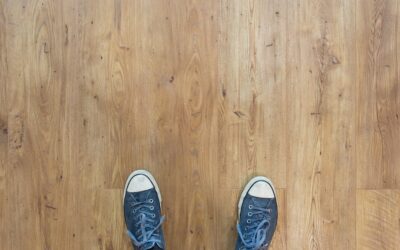
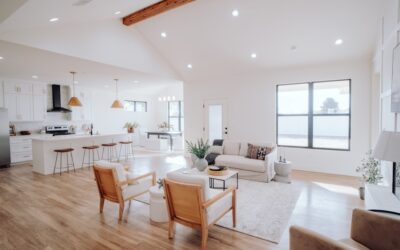
Gray is finally on its way out. After dominating showrooms for nearly a decade, cool-toned floors are being replaced by warmer, richer, and more textured options that feel lived-in from day one. The latest flooring trends moving through 2024 into 2026 focus on wider planks, honest matte finishes, and patterns that used to be reserved for European estates. If you are planning a remodel, these are the directions worth your attention — and the ones worth skipping.
- Wide Plank Is Now the Default
- Matte and Natural Finishes Beat Gloss
- Herringbone Returns in a Big Way
- Textured LVP That Finally Looks Real
- Warm and Darker Tones Replace Gray
- Large-Format Tile in Bathrooms and Kitchens
- Textured and Wire-Brushed Surfaces
- Sustainable and Low-VOC Materials
- Trends Worth Skipping
- Buying Strategy for the Next Five Years
Wide Plank Is Now the Default
Five-inch planks used to look premium. Today, 7 to 9-inch widths are the new baseline for hardwood and luxury vinyl alike. Brands like Shaw Floors, Mohawk, and COREtec all offer standard lines at 7.5 inches, with premium engineered lines pushing 10 to 12 inches wide.
Why the shift? Wider planks show off grain and character marks. They also make a room feel larger by reducing visible seam lines. Expect to pay $5 to $9 per square foot for wide-plank LVP and $8 to $14 for wide-plank engineered hardwood. The tradeoff is that wider planks are less forgiving over uneven subfloors and more prone to cupping in high-humidity regions.
Matte and Natural Finishes Beat Gloss
Polished, glossy floors now read as dated. The current preference is a matte or low-sheen finish that looks like raw wood rubbed with a white oil. Products labeled “natural,” “raw,” or “unfinished-look” are everywhere, and most top lines from Anderson Tuftex and Hallmark Floors default to a 5 to 10 percent sheen level.
The practical upside is huge. Matte surfaces hide dust, pet hair, foot traffic, and minor scratches far better than gloss. The downside is that they can feel chalky if the finish is low quality. Stick with aluminum-oxide or UV-cured polyurethane from a reputable brand — cheaper matte lacquers wear unevenly within three to four years.
Herringbone Returns in a Big Way
Herringbone is no longer a $30-per-square-foot luxury. Engineered herringbone planks from brands like Malmo, Lifeproof, and Pergo now start under $5 per square foot, making the pattern accessible to standard remodels. Installers have adapted too, and most good hardwood contractors can execute herringbone without quadrupling their rate.
Chevron follows close behind, though it still commands a premium because of the mitered end cuts. Both patterns photograph well for real estate listings and add roughly 2 to 4 percent to appraised home value when well installed. Expect this trend to hold strong through 2026, especially in kitchens, entryways, and formal dining rooms.
Textured LVP That Finally Looks Real
The early generation of luxury vinyl plank was plasticky and shiny. The newest products are different. Embossed-in-register (EIR) technology aligns the surface texture with the printed wood grain, so your hand feels what your eye sees. COREtec Pro Plus, Mohawk SolidTech, and Karndean Van Gogh lead this category.
Prices run $3.50 to $7 per square foot for quality EIR LVP, roughly double the flat-print stuff. Worth every penny. Pair it with an attached cork or IXPE underlayment for footfall quiet, and most guests cannot tell it is vinyl until they tap their knuckle on it.
Warm and Darker Tones Replace Gray
Cool gray floors peaked around 2019. Today the dominant palette is warm — honey oak, medium walnut, smoked hickory, and even deep espresso. Designers call it the “return to warm.” Brands have responded with color lines named after coffee, honey, amber, and chestnut.
- Honey oak: light golden tones with visible grain. Pairs with white and cream walls.
- Smoked oak: medium warm-brown, slight gray undertone. Versatile for transitional homes.
- Walnut-stained oak: medium-to-dark warm brown. Hides scratches and pet damage well.
- Espresso: near-black with chocolate undertones. Dramatic but shows dust.
Greige — the gray-beige hybrid — is still sold but feels transitional rather than fresh. If you are picking a floor to live with for 15 years, lean toward genuinely warm tones that complement wood cabinetry and natural-stone counters.
Large-Format Tile in Bathrooms and Kitchens
Tile is trending bigger. The 12-by-24-inch rectangle is standard, and 24-by-48-inch porcelain slabs are increasingly common in luxury bathrooms. Fewer grout lines mean easier cleaning and a more contemporary look.
Marble-look porcelain has matured to the point where it convincingly mimics Calacatta and Carrara. Daltile, MSI, and Emser all offer large-format marble-look lines between $4 and $10 per square foot. Real marble runs $12 to $40. For bathrooms and kitchens with heavy water exposure, porcelain is the smart choice.
Textured and Wire-Brushed Surfaces
Smooth planks look great in photographs. In person, they reveal every scuff. Wire-brushed, hand-scraped, and sawn-face textures are replacing smooth-milled hardwood in high-traffic homes. These finishes scatter light, hide wear, and give each plank distinct character.
Wire-brushed white oak is the dominant texture this cycle, often paired with a natural or smoked stain. Expect $7 to $12 per square foot for engineered wire-brushed oak from brands like Anderson Tuftex, Mullican, and Hallmark.
Sustainable and Low-VOC Materials
Homeowners are asking more questions about indoor air quality. Flooring certified by FloorScore, GreenGuard Gold, or CARB-2 has become a default expectation in the mid and upper price tiers. Cork, bamboo, and FSC-certified hardwood are gaining share in eco-conscious renovations.
Cork flooring specifically is having a moment. It is warm underfoot, naturally antimicrobial, and renewable. Premium cork from Globus or APC Cork runs $5 to $8 per square foot installed. Bamboo remains a good budget alternative at $3 to $6 per square foot, provided you buy strand-woven for durability.
Trends Worth Skipping
Not everything in a showroom is worth following. Very dark near-black hardwood shows every speck of dust and hair. Super-distressed hand-scraped floors with exaggerated chatter marks look artificial within a year. High-gloss finishes of any kind are out of step with current design. And overly narrow 2 to 3-inch planks feel dated unless you are restoring a historic home.
Buying Strategy for the Next Five Years
Pick a floor you will still like in 2030. That usually means warm tones, matte or low-sheen finish, 7-inch or wider planks, and a durable wear layer — 20 mils for LVP or an aluminum-oxide topcoat for hardwood. Herringbone adds timeless value in the right room. Large-format tile is the safe choice for wet spaces.
Keeping up with the latest flooring trends is useful, but the best floors are the ones that look intentional rather than fashionable. Buy for longevity, install it level, maintain it with a pH-neutral cleaner, and the trend chasing takes care of itself.
Prefer to explore on your own?
See how new flooring looks in your actual room in seconds — free, no signup.
Try the free Floor Studio →