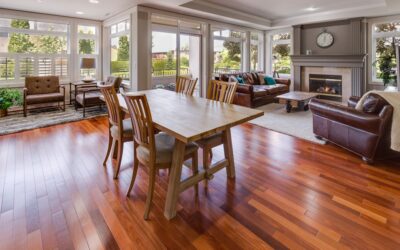
Walk into a high-end home or a designer showroom and the wide, warm planks underfoot are often french oak hardwood flooring. Milled from European white oak grown in the forests of France, it has become the benchmark for luxury wood floors, and not just for marketing reasons. Its tighter grain, superior grading, and ability to take beautiful finishes set it apart from the domestic red and white oak most Americans grew up with. Here is what makes it special, what it costs you, and how to buy it wisely.
French Oak vs. American Oak
Both are oak, but they are noticeably different woods. French oak is a species of European white oak, and slower growth in cooler climates gives it a tighter, more uniform grain with longer, straighter graining and fewer of the dramatic swirls found in American red oak. The result is a calmer, more elegant surface that suits contemporary and European-inspired interiors.
Compared with American white oak, french oak hardwood flooring also tends to have higher tannin content, which is why it reacts so beautifully to reactive and fumed finishes that draw out deep, natural coloration. In practical terms, French oak reads more refined and takes stains more evenly, while American oak is more affordable and slightly more open-grained.
Understanding the Grading System
One of French oak’s biggest selling points is the tight European grading, which lets you dial in exactly how much character you want. Grades describe the amount of knots, sapwood, and color variation:
- Select or Prime grade: minimal knots, uniform color, a clean and formal look.
- Character or Rustic grade: visible knots, mineral streaks, and color variation for a natural, lived-in feel.
- Mixed grades: a balance of clean boards with occasional character marks.
This precise sorting is why French oak delivers such consistency. When you order a select grade, you get exactly that, board after board, which matters enormously on large open floors.
The Appeal of Wide Planks
French oak is closely associated with wide-plank flooring, and for good reason. The mature European oak yields boards commonly milled 7 to 10 inches wide and in long lengths, creating expansive, seamless floors with fewer seams to interrupt the eye. Wide planks make rooms feel larger and more luxurious, and the tight French grain looks stunning across that broad surface.
Wide boards do demand proper installation and acclimation, because wider planks expand and contract more with humidity. Most premium French oak comes as engineered flooring precisely to keep those wide widths stable over subfloors and radiant heat. Solid wide-plank French oak exists but requires careful climate control.
Finishes That Bring It to Life
French oak is a favorite of designers partly because it accepts such a wide range of finishes gracefully. Its grain and tannins let it move from pale Scandinavian looks to deep, moody tones without fighting the wood:
- Natural oil finishes: low sheen, matte, and repairable, showing the grain honestly.
- White-washed and limed: soft, airy, popular in coastal and modern interiors.
- Fumed and reactive: chemical processes that deepen color from within for rich, complex tones.
- Wire-brushed textures: raised grain that adds depth and hides wear.
Many French oak floors ship pre-finished with these treatments, but the wood also refinishes beautifully if you buy solid or thick-veneer engineered planks.
The Honest Cost and Trade-Offs
French oak is a premium product and priced accordingly. It typically costs more than domestic oak once you factor the import, the wide-plank format, and the specialty finishes. Availability can be more limited, and lead times longer, since much of it is imported. If your budget is tight, high-grade American white oak offers a similar durability at a lower price, though without the exact grain refinement.
Oak of any origin is durable, with white oak rated around 1,350 on the Janka scale, hard enough for busy households and pets. So you are paying for the look, grading consistency, and wide-plank format more than for raw toughness.
Solid vs. Engineered French Oak
Most French oak sold today is engineered, and understanding why helps you choose correctly. Engineered planks bond a real French oak wear layer to a stable plywood or HDF core, which resists the expansion and contraction that wide solid boards suffer with humidity swings. This construction is what makes those coveted 8- and 10-inch widths practical and stable, and it allows installation over concrete and radiant heat.
Solid French oak exists and can be refinished more times over its lifetime, but its wide planks demand tight humidity control and a wood subfloor above grade. When comparing engineered products, check the wear-layer thickness; a 4mm or thicker top layer can be sanded and refinished several times, nearly matching solid wood, while a thin 2mm veneer offers little refinishing life. Thickness of the real oak layer, not the total plank, is the spec that matters.
Caring for a French Oak Floor
French oak is durable, but the finish dictates your maintenance routine. Oil-finished floors show grain honestly and are easy to spot-repair, but they need periodic re-oiling to stay protected. Hardwax-oil and UV-cured finishes offer more surface protection with lower upkeep. Whatever the finish, the fundamentals are the same:
- Sweep or vacuum grit regularly, since sand and dust act like sandpaper underfoot.
- Damp-mop with a cleaner made for your specific finish, never a wet mop or steam.
- Use felt pads under furniture and rugs at entry points to catch abrasive debris.
- Keep indoor humidity stable, ideally between 35 and 55 percent, to minimize seasonal movement.
Treated well, a quality French oak floor holds its refined good looks for decades and refinishes beautifully when the day finally comes.
Is French Oak Right for You?
Sourcing deserves a moment of scrutiny too. Because French oak commands a premium, some products labeled loosely as European or French oak may blend oak from various regions. If genuine French provenance matters to you, ask the supplier about the specific origin and look for documentation. More important for performance, verify the wear-layer thickness, core construction, and finish quality, since a beautifully marketed floor with a paper-thin veneer will not deliver the longevity that justifies the price.
Choose French oak hardwood flooring if you want a refined, timeless floor with wide planks, consistent grading, and access to the most sophisticated finishes available. It is the right call for statement spaces and homes where the floor is meant to be a defining feature. If you simply want a solid, attractive oak floor at a friendlier price, domestic white oak will serve you well. Either way, insist on proper acclimation and installation, because even the finest French oak fails if it is rushed into an unprepared room.
Prefer to explore on your own?
See how new flooring looks in your actual room in seconds — free, no signup.
Try the free Floor Studio →