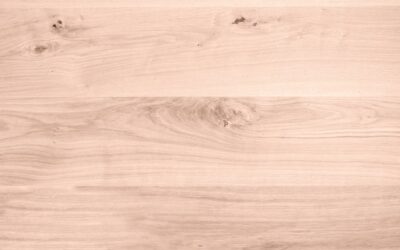
There is a reason designers keep specifying it in magazine-worthy kitchens and hotel lobbies alike. French oak flooring wide plank pairs a tight, elegant grain with dramatic board widths of 7 to 10 inches, creating floors that feel both timeless and quietly luxurious. It is milled from European white oak, primarily Quercus robur and Quercus petraea, grown across France, and it commands a premium over American oak for reasons rooted in the wood’s structure. Before you fall for the look, it helps to understand what you are actually paying for.
What Sets French Oak Apart
French oak and American white oak are close cousins, but they are not identical. French oak grows slowly in Europe’s cooler climate, producing tighter growth rings and a finer, more consistent grain. It also carries a higher tannin content, which is exactly why the wine and whiskey industries prize French oak barrels. Those tannins react beautifully with reactive stains and fuming, yielding deep, complex colors that American oak cannot quite match.
Visually, French oak shows longer, straighter grain lines with fewer wild swirls, plus subtle mineral streaks and small knots depending on grade. The result reads refined rather than rustic, though character grades deliver plenty of rustic charm when you want it.
Why Wide Planks Change the Whole Room
Narrow strip flooring visually chops a room into lines. Wide planks do the opposite. At 7 to 10 inches, French oak boards stretch the eye across the floor, make a space feel larger, and put the grain front and center. This is the look behind so many high-end European and coastal interiors.
- Fewer seams for a cleaner, more expansive appearance.
- Grain becomes a design feature rather than background texture.
- Works in both modern minimalist and warm traditional rooms.
- Long boards, often 6 to 12 feet, reduce end joints across a floor.
Engineered vs. Solid
Almost all quality french oak flooring wide plank is sold as engineered, and that is by design, not corner-cutting. Wide boards move a lot with humidity, and a solid 9-inch plank is prone to cupping and gapping across seasons. Engineered construction layers a thick French oak wear veneer, typically 3mm to 6mm, over a multi-ply birch or oak core that resists that movement.
A 4mm-or-thicker wear layer can be sanded and refinished one to three times, giving these floors real longevity. Engineered French oak also installs over concrete slabs, in basements, and over radiant heating, applications where solid wide planks would fail. If a seller offers solid French oak in a 10-inch width, ask hard questions about humidity control before committing.
Grades and Finishes
Grade drives both appearance and price. Understanding the tiers helps you shop:
- Prime or Select: minimal knots, uniform color, the most formal and expensive look.
- Character: more knots, mineral streaks, and color variation for a warmer, lived-in feel.
- Rustic: the most knots, cracks, and sapwood, often filled and stabilized, for a farmhouse aesthetic.
Popular finishes push French oak’s versatility. Wire-brushing pulls out the grain texture for a tactile surface that hides wear. Fuming exposes the wood to ammonia so tannins darken the whole board naturally. Reactive and smoked stains produce those deep grays and browns designers love. Hardwax oils like Rubio Monocoat give a matte, natural feel, while UV-cured urethane offers tougher scratch resistance for busy homes.
What French Oak Wide Plank Costs
This is premium flooring, and the price reflects the wood, the milling, and often an ocean of shipping from Europe. Typical material ranges:
- Entry-level engineered French oak: $8 to $12 per square foot.
- Mid-range, thicker veneer and better grades: $12 to $18 per square foot.
- High-end, custom-finished, extra-wide planks: $18 to $30-plus per square foot.
- Installation: $4 to $9 per square foot on top.
For a 500-square-foot living space, plan on $6,000 to $18,000 all in. By comparison, American white oak wide plank often runs $6 to $12 per square foot in materials, so you are paying a meaningful premium for the French pedigree, tighter grain, and richer stain response.
Hardness and Durability
European white oak carries a Janka hardness of roughly 1,360, slightly harder than American red oak at 1,290 and close to American white oak at 1,335. That makes it plenty durable for a family home. Wire-brushed surfaces and matte finishes further hide the small scratches that daily life brings. With a thick wear layer and the option to refinish, a quality French oak floor can last 30 years or more before it needs full attention.
French Oak vs. American White Oak
Since the two are cousins, buyers reasonably ask whether the premium for French oak is justified. The honest answer is that it depends on the look you want. French oak’s slower European growth yields tighter, more consistent grain and a longer, straighter figure, while American white oak shows more prominent cathedral patterns and occasional wild grain. French oak’s higher tannin content also lets it take reactive stains, fuming, and deep grays more dramatically.
- Grain: French oak is finer and more uniform; American oak is more varied and pronounced.
- Color response: French oak’s tannins produce richer reactive and smoked finishes.
- Hardness: nearly identical, both around 1,335 to 1,360 Janka.
- Price: French oak typically runs 30 to 60 percent more in materials.
If your design leans on a specific smoked or reactive finish, or you want the tightest possible grain, French oak earns its keep. If you simply want a durable, handsome oak floor in a natural or standard stain, American white oak delivers most of the look for less.
How to Shop Smart
Getting the most from your budget comes down to a few checks. First, confirm the wear-layer thickness, not just the overall board thickness. A 6mm veneer can be refinished more times than a 2mm one, and cheap engineered products sometimes hide a paper-thin layer under a thick core. Second, ask where the finishing happens; European-milled and finished boards often have more refined color work than raw wood stained on site.
- Order samples and view them in your actual room light before committing.
- Buy 7 to 10 percent extra for waste, cuts, and future repairs.
- Check the warranty; quality engineered French oak carries 25 to 50 year residential coverage.
- Verify the core material, with birch or oak plywood cores outperforming cheaper fiberboard.
- Confirm the product is rated for your subfloor and any radiant heat.
Caring for the Investment
Protecting a floor this expensive is worth the small effort:
- Fit felt pads to furniture and replace them as they compress.
- Sweep or vacuum grit regularly to prevent micro-scratching.
- Clean with a pH-neutral wood cleaner made for oiled or urethane finishes, matched to your product.
- Wipe spills quickly and never wet-mop.
- For hardwax-oil finishes, refresh the oil in traffic lanes every one to three years.
Is French Oak Wide Plank Worth It?
French oak flooring wide plank earns its premium if you want a refined, designer-grade floor with tight grain, deep custom color options, and generous board widths, and you have the budget to match. Choose engineered construction for stability, pick a wear layer of 4mm or more so you can refinish, and match the grade and finish to your style. Order samples, view them in your own light, and confirm the core and warranty before you buy. For homeowners chasing that quiet European luxury, few floors deliver it as convincingly, or as durably, as genuine French oak, and a well-chosen floor should still look current, and hold its value, two full decades from now.
Prefer to explore on your own?
See how new flooring looks in your actual room in seconds — free, no signup.
Try the free Floor Studio →