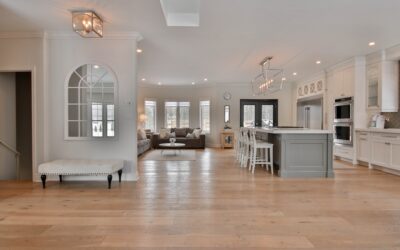
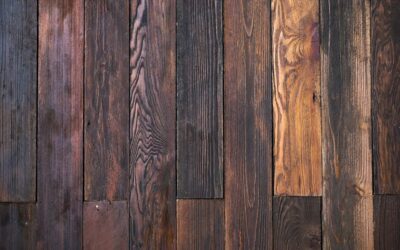
Wide plank flooring refers to hardwood planks that are 5 inches or wider — a departure from the traditional 2-1/4″ to 3-1/4″ strip flooring that dominated American homes for decades. The wider format shows off the natural beauty of wood grain, creates fewer seam lines, and gives rooms a more open, contemporary feel that has made it one of the most popular hardwood trends in recent years.
This guide covers everything you need to know about wide plank flooring: recommended wood species, engineered vs solid construction, cost expectations, installation considerations, trending widths, and the full list of pros and cons to help you decide if wide plank is right for your home.
- What Is Wide Plank Flooring?
- Best Wood Species for Wide Plank
- Engineered vs Solid for Wide Plank
- Trending Widths & Lengths
- Wide Plank Flooring Cost
- Installation Considerations
- Pros and Cons of Wide Plank Flooring
- Best Rooms for Wide Plank
- Frequently Asked Questions
- What width qualifies as wide plank flooring?
- Should I choose engineered or solid for wide plank?
- Does wide plank flooring cost more than standard?
- Will wide plank flooring gap in winter?
- What is the best wood species for wide plank?
- Can I install wide plank flooring over concrete?
- Is wide plank flooring a trend or a timeless choice?
What Is Wide Plank Flooring?
In the flooring industry, wide plank generally means any plank 5 inches or wider. Standard hardwood strip flooring is 2-1/4″ to 3-1/4″ wide, while wide plank ranges from 5″ to 12″ or even wider for specialty reclaimed wood products. The most popular widths today fall between 5″ and 7″, with ultra-wide planks of 8″ to 10″ growing in demand for modern and farmhouse designs.
The appeal is straightforward: wider planks mean fewer seams, which creates a cleaner, more expansive look. Each plank displays more of the wood’s natural grain, character marks, knots, and color variation. In large rooms, wide plank makes the space feel even bigger. In small rooms, it reduces visual clutter and creates a sense of calm.
Wide plank flooring is not new — it actually predates narrow strip flooring. Colonial-era homes used wide planks (often 10″ to 20″ wide) because they were milled from old-growth trees and required less labor to install. The narrow strip format became standard in the early 20th century when old-growth timber became scarce and dimensional stability concerns favored narrower boards. Today, modern engineering and kiln-drying have made wide plank viable and stable again. For a full overview of hardwood options, see our hardwood flooring guide.
Best Wood Species for Wide Plank
Not all wood species perform equally well in wide plank format. The wider the plank, the more it can expand and contract with humidity changes, so dimensionally stable species are preferred.
| Species | Janka Hardness | Stability in Wide Plank | Grain Character | Price Range (per sq ft) |
|---|---|---|---|---|
| White Oak | 1,360 | Excellent | Subtle, straight grain with ray flecks | $6 – $14 |
| Red Oak | 1,290 | Good | Pronounced grain, pinkish undertone | $5 – $10 |
| Hickory | 1,820 | Good | Bold, dramatic grain with color variation | $5 – $12 |
| Walnut | 1,010 | Good | Rich dark brown, flowing grain | $8 – $16 |
| Maple | 1,450 | Fair | Fine, subtle grain, light color | $6 – $12 |
| European Oak | 1,360 | Excellent | Tight grain, ideal for wide plank | $8 – $18 |
| Reclaimed Heart Pine | 1,225 | Good | Tight grain, warm patina, nail holes | $10 – $20 |
White oak is the undisputed champion of wide plank flooring. Its closed-pore structure makes it more water-resistant than red oak, its dimensional stability is excellent even in wide formats, and its neutral golden-brown tone takes stains beautifully. White oak is the most specified species for wide plank in both residential and commercial projects. Learn more in our white oak flooring guide.
Hickory is ideal for homeowners who want bold character. Its extreme grain variation and color range (from creamy white sapwood to rich brown heartwood) create a rustic, dynamic floor that hides wear and scratches exceptionally well.
Walnut delivers a naturally dark, luxurious floor without the need for staining. Its softer Janka rating (1,010) makes it more susceptible to dents in high-traffic areas, but the rich chocolate tones are unmatched. See our oak flooring guide for comparisons.
Engineered vs Solid for Wide Plank
This is the most important decision when choosing wide plank flooring. In wide formats, the difference between engineered and solid construction matters far more than it does with narrow strip flooring.
| Factor | Engineered Wide Plank | Solid Wide Plank |
|---|---|---|
| Dimensional stability | Excellent — cross-layer construction resists expansion/contraction | Fair — wide boards expand/contract significantly |
| Gapping risk | Low | High (especially in dry winter months) |
| Cupping risk | Low | Moderate to high |
| Installation over concrete | Yes (glue-down or floating) | Not recommended |
| Installation over radiant heat | Yes (most products approved) | Not recommended |
| Refinishing | 1 – 3 times (depends on wear layer thickness) | Multiple times (3/4″ thickness) |
| Cost | $6 – $18 per sq ft | $5 – $16 per sq ft |
| Recommended max width | Up to 10″ – 12″ | Best under 6″ – 7″ |
Engineered hardwood is strongly recommended for wide plank flooring. The cross-laminated plywood or HDF core prevents the wood from expanding and contracting as much as a solid board of the same width. A 7″ solid oak plank can develop visible gaps of 1/16″ to 1/8″ in winter when indoor humidity drops — a problem that engineered construction largely eliminates.
For widths of 7 inches and above, most flooring professionals will not install solid hardwood because the gapping, cupping, and buckling risks are too high unless the home’s humidity is meticulously controlled year-round (40% to 60% RH). Engineered wide plank tolerates a wider humidity range and is the industry standard for widths above 5 inches. Visit our engineered wood flooring guide for more details.
Trending Widths & Lengths
The trend in wide plank flooring continues to push wider and longer.
- 5″ wide — The entry point to wide plank. Common, widely available, relatively affordable. Works in any room size.
- 6″ to 7″ wide — The current sweet spot. Visually impactful but still practical. The most popular range for new construction and renovations in 2026.
- 8″ to 9″ wide — A premium look that is growing rapidly in popularity. Creates a dramatic, luxury feel. Almost exclusively available in engineered construction.
- 10″ to 12″ wide — Ultra-wide, often associated with European oak or reclaimed wood. Makes a bold design statement and is priced accordingly.
Plank length matters too. Longer planks (up to 7 feet or more) complement wide widths by further reducing seam lines and creating a more cohesive visual flow. Shorter planks (3 to 4 feet) in wide widths can look odd because the proportions feel stubby. When specifying wide plank, look for products with average lengths of 4 to 6 feet or longer.
Wide Plank Flooring Cost
Wide plank flooring carries a cost premium over standard-width hardwood, typically 10% to 30% more depending on the species, width, and construction type.
| Width Range | Material Cost (per sq ft) | Installation Cost (per sq ft) | Total Installed |
|---|---|---|---|
| Standard strip (2-1/4″ – 3-1/4″) | $3 – $8 | $3 – $5 | $6 – $13 |
| Wide plank (5″ – 6″) | $5 – $12 | $3 – $6 | $8 – $18 |
| Wide plank (7″ – 8″) | $7 – $15 | $4 – $7 | $11 – $22 |
| Ultra-wide (9″ – 12″) | $10 – $20 | $5 – $8 | $15 – $28 |
| Reclaimed wide plank | $10 – $25 | $5 – $10 | $15 – $35 |
The premium reflects both higher material costs (wider boards require larger, higher-grade logs) and slightly more labor-intensive installation (acclimation is critical, and glue-down installation is often recommended).
Installation Considerations
Installing wide plank flooring requires more attention to acclimation, subfloor preparation, and humidity control than standard-width hardwood.
Acclimation is critical. Wide planks must acclimate to your home’s environment for a minimum of 5 to 7 days (some manufacturers require up to 14 days). Open the boxes, separate the planks, and allow them to reach equilibrium with the room’s temperature and humidity. Skipping this step with wide plank almost guarantees gapping or cupping.
Subfloor flatness: Wide planks amplify subfloor irregularities. The subfloor must be flat to within 3/16″ over a 10-foot span. Sand high spots and fill low spots before installation.
Installation methods:
- Glue-down (recommended for wide plank) — Provides the most stable installation. Adhesive bonds the plank to the subfloor, limiting movement. Required for most products over 7″ wide.
- Nail-down — Acceptable for engineered wide plank over wood subfloors. Use a pneumatic flooring nailer with appropriate gauge cleats spaced every 6 to 8 inches.
- Floating — Some engineered wide plank products support floating installation with click-lock profiles, but glue-down is still preferred for widths over 6 inches for maximum stability.
Humidity control: Maintain indoor humidity between 35% and 55% year-round. In dry climates or during winter heating season, use a whole-home humidifier. This is especially important for wide plank because even small percentage changes in moisture content produce proportionally larger dimensional changes in wider boards.
Pros and Cons of Wide Plank Flooring
| Pros | Cons |
|---|---|
| Showcases natural wood grain beautifully | Higher cost than standard-width hardwood |
| Fewer seams for a cleaner, more open look | More susceptible to gapping if humidity is not controlled |
| Makes rooms feel larger and more spacious | Acclimation takes longer (5 – 14 days) |
| Works in both modern and traditional designs | Solid wide plank is prone to cupping and movement |
| Available in engineered for enhanced stability | Requires flatter subfloor preparation |
| Faster installation (fewer planks to lay per sq ft) | Glue-down installation recommended (adds cost) |
| Strong resale appeal — a desirable upgrade | Limited availability in some species and widths |
Best Rooms for Wide Plank
Wide plank flooring works beautifully in most rooms, with a few caveats.
Ideal rooms: Living rooms, bedrooms, dining rooms, hallways, home offices, and open-concept great rooms all benefit from wide plank’s expansive, seamless look. These climate-controlled spaces provide the stable humidity environment that wide plank performs best in.
Good with precautions: Kitchens work well with engineered wide plank, especially white oak, which has natural water resistance. Clean up spills promptly and use mats at the sink.
Not recommended: Bathrooms, laundry rooms, and below-grade basements with high moisture levels are not ideal for wide plank hardwood. In these spaces, consider luxury vinyl plank for a wide-plank look with waterproof performance.
Frequently Asked Questions
What width qualifies as wide plank flooring?
Any plank 5 inches or wider is generally considered wide plank. The most popular range in 2026 is 5″ to 7″, with ultra-wide options of 8″ to 12″ available in engineered construction. Standard strip flooring, by comparison, is 2-1/4″ to 3-1/4″ wide.
Should I choose engineered or solid for wide plank?
Engineered is strongly recommended for wide plank, especially for widths above 5 inches. The cross-laminated construction prevents the significant expansion and contraction that solid wide planks experience with humidity changes. Most flooring professionals will not install solid hardwood wider than 6 to 7 inches.
Does wide plank flooring cost more than standard?
Yes, typically 10% to 30% more. Wider boards require larger, higher-grade logs, which increases material costs. Installation may also cost slightly more due to longer acclimation requirements and the preference for glue-down methods.
Will wide plank flooring gap in winter?
Engineered wide plank has minimal seasonal gapping when indoor humidity is maintained between 35% and 55%. Solid wide plank will develop noticeable gaps in dry winter conditions. A whole-home humidifier is the best preventive measure for either type.
What is the best wood species for wide plank?
White oak is the most popular and best-performing species for wide plank flooring. Its closed-pore structure, dimensional stability, neutral color, and stain versatility make it the industry standard. European oak, hickory, and walnut are also excellent choices.
Can I install wide plank flooring over concrete?
Yes, with engineered wide plank using glue-down or floating installation. Solid wide plank should not be installed over concrete due to moisture and stability concerns. Always test the concrete slab for moisture before installation.
Is wide plank flooring a trend or a timeless choice?
Wide plank is a timeless format — it predates narrow strip flooring by centuries. The current trend toward 7″ to 9″ widths may evolve, but wide plank as a category is a permanent fixture in flooring design with enduring appeal and strong resale value.
Prefer to explore on your own?
See how new flooring looks in your actual room in seconds — free, no signup.
Try the free Floor Studio →