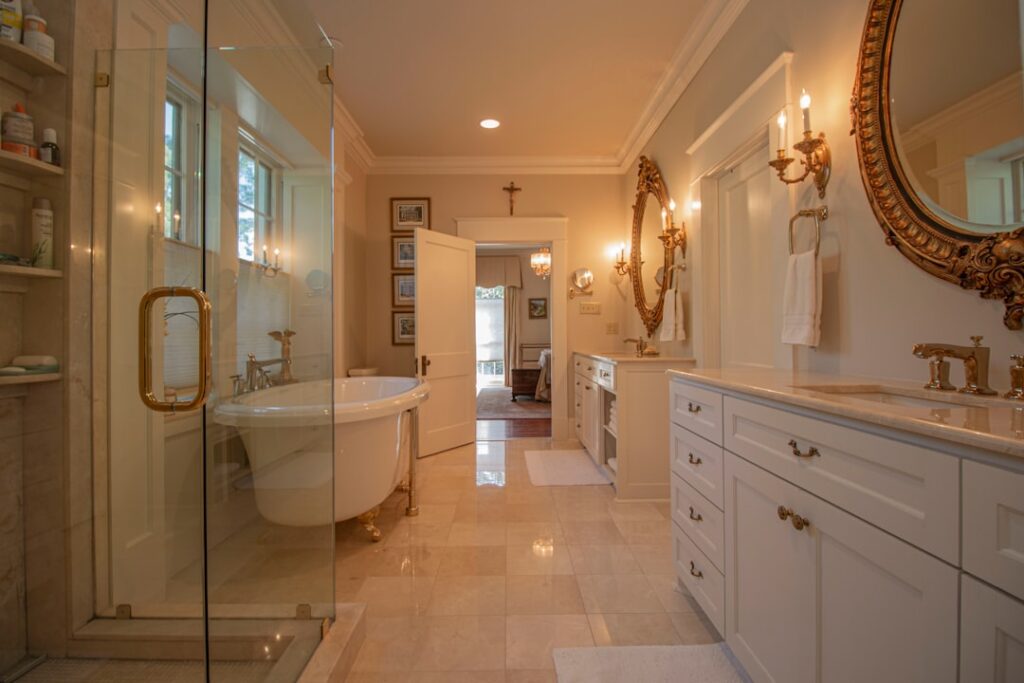
Few materials can match the timeless luxury of marble. A marble tile bathroom transforms an ordinary space into a spa-like retreat, with dramatic veining and a luminous surface that photographs beautifully and impresses guests. But marble comes with real maintenance requirements that every homeowner should understand before committing.
- Best Marble Types for Bathrooms
- Honed vs Polished Marble for Wet Areas
- The Reality of Marble Maintenance
- How to Seal Marble in a Bathroom
- Marble Tile in Showers: Special Considerations
- Marble-Look Porcelain: The Alternative
- Cost of a Marble Tile Bathroom
- Design Tips for Marble Bathrooms
- Frequently Asked Questions
This guide covers the best marble types for bathrooms, the honed versus polished debate for wet areas, sealing protocols, honest maintenance realities, and why marble-look porcelain might be the smarter choice for some households.
Best Marble Types for Bathrooms
| Marble Type | Color and Veining | Hardness | Price per Sq Ft | Best Bathroom Use |
|---|---|---|---|---|
| Carrara | White to blue-gray with soft gray veins | Moderate | $8 – $25 | Floors, walls, shower surrounds |
| Calacatta | Bright white with bold gold or gray veins | Moderate | $25 – $100+ | Feature walls, vanity tops |
| Statuario | White with dramatic gray veining | Moderate | $20 – $75 | Statement walls, shower niches |
| Emperador | Dark brown with light veins | Moderate to hard | $6 – $20 | Floors, accent borders |
| Crema Marfil | Warm cream with subtle veining | Moderate | $5 – $15 | Floors, full wall applications |
| Nero Marquina | Black with white veins | Hard | $10 – $30 | Accent floors, borders, modern baths |
Carrara remains the most popular choice for marble bathrooms because it offers genuine marble character at a relatively accessible price point. Calacatta is the aspirational option, prized by designers for its bold, high-contrast veining.
Honed vs Polished Marble for Wet Areas
The finish you choose matters as much as the marble type, especially in a bathroom where wet feet meet the floor every day.
| Feature | Honed (Matte) | Polished (Glossy) |
|---|---|---|
| Surface texture | Smooth, flat, matte | Mirror-like, reflective |
| Slip resistance | Better (slightly more grip) | Lower (very slick when wet) |
| Etching visibility | Less visible (matte hides etch marks) | Very visible (every etch shows on gloss) |
| Stain resistance | Slightly more porous (absorbs more) | Somewhat less porous |
| Aesthetic | Understated, contemporary, spa-like | Luxurious, traditional, glamorous |
| Recommended for bathroom floors | Yes (preferred) | Not recommended |
| Recommended for bathroom walls | Yes | Yes (etching is less of an issue on walls) |
Our recommendation: Use honed marble for bathroom floors and shower floors. Polished marble is acceptable for walls and vanity tops where slip risk is not a concern and cleaning products can be carefully controlled.
The Reality of Marble Maintenance
Marble is calcium carbonate, a soft, porous stone that reacts to acids. Before you invest in a marble bathroom, you need to understand exactly what that means for daily life.
Etching
Acids dissolve the surface of marble, creating dull spots called etch marks. In a bathroom, etching sources include shampoo, soap, body wash, toothpaste, lemon-based cleaners, and even some municipal water supplies with low pH. On polished marble, etch marks are immediately visible as cloudy spots. On honed marble, they are far less noticeable.
Staining
Marble is porous. Without a quality sealer, hair dye, makeup, rust from cans, and colored liquids can penetrate the surface and leave permanent discoloration. Sealing significantly reduces staining risk but does not eliminate it entirely.
Scratching
Marble is softer than granite, porcelain, and quartz. It can scratch from dropped objects, dragged furniture, or abrasive cleaning pads. Use only soft cloths and non-abrasive cleaners.
Honest Assessment
A marble bathroom is stunning but requires a level of care that goes beyond what most other bathroom floors demand. If you are someone who accepts patina and natural aging as part of the beauty, marble will reward you. If imperfections bother you, consider marble-look porcelain instead.
How to Seal Marble in a Bathroom
Sealing is the single most important maintenance step for marble. A good sealer fills the pores in the stone and slows the absorption of moisture and staining agents.
- Clean the marble thoroughly with a pH-neutral stone cleaner. Let it dry completely (24 hours for new installations).
- Apply an impregnating sealer (not a topical sealer). Impregnating sealers penetrate below the surface and do not change the appearance or add a coating on top.
- Spread evenly with a clean microfiber cloth or lambswool applicator. Let it absorb for the time specified on the product (typically 5 to 15 minutes).
- Wipe off excess. Any sealer left sitting on the surface will dry to a hazy film.
- Apply a second coat after the first coat has dried (usually 2 to 4 hours).
- Wait 24 hours before exposing the marble to water.
How Often to Reseal
- Shower floors and walls: Every 6 to 12 months (high water exposure)
- Bathroom floors: Every 12 months
- Vanity tops: Every 6 months (frequent contact with cosmetics)
- Test annually: Drip water on the surface. If it darkens the stone within 5 minutes, it is time to reseal.
Marble Tile in Showers: Special Considerations
Using marble in a shower is the ultimate luxury but also the highest-maintenance application.
- Use large-format tiles to minimize grout lines, which are the weakest point for water penetration.
- Choose honed finish for the shower floor. A textured or tumbled finish offers even more grip.
- Seal grout lines with an epoxy-based grout sealer in addition to sealing the marble itself.
- Squeegee after every shower. Removing standing water dramatically reduces mineral deposits and soap scum buildup.
- Avoid acidic cleaners. Use only pH-neutral stone cleaners. Vinegar, bleach, and bathroom spray cleaners will etch marble on contact.
- Ensure proper waterproofing. Behind the marble, the substrate must have a waterproof membrane (such as Kerdi, RedGard, or Hydroban). Marble is not waterproof on its own.
Marble-Look Porcelain: The Alternative
If you love the look of marble but not the maintenance, marble-look porcelain tile is worth serious consideration.
| Factor | Real Marble | Marble-Look Porcelain |
|---|---|---|
| Appearance | Natural, unique veining | High-definition print (improving every year) |
| Etching | Yes (acid-sensitive) | No |
| Staining | Yes (porous) | Virtually none (near-zero absorption) |
| Sealing required | Yes (every 6 – 12 months) | No |
| Slip resistance | Moderate (honed) | Excellent (textured options rated for wet areas) |
| Cost per sq ft | $8 – $100+ | $3 – $12 |
| Resale perception | Premium luxury | High-end (buyers often cannot tell the difference) |
Modern porcelain tile technology has reached a point where even designers struggle to distinguish high-quality marble-look porcelain from the real thing, especially in standard lighting. For family bathrooms, guest bathrooms, and rental properties, porcelain is the practical choice.
Cost of a Marble Tile Bathroom
| Component | Cost Range |
|---|---|
| Marble tile (floor and walls, ~150 sq ft) | $1,200 – $15,000+ |
| Installation labor | $1,500 – $4,500 |
| Waterproofing membrane | $200 – $500 |
| Grout and sealer | $100 – $250 |
| Trim pieces (bullnose, pencil liner) | $150 – $600 |
| Total | $3,150 – $20,850+ |
The wide cost range reflects the enormous price difference between Carrara marble and premium Calacatta slabs. For most homeowners, Carrara or Crema Marfil offers the best balance of beauty and budget.
Design Tips for Marble Bathrooms
- Book-match slabs for a dramatic mirror-image veining effect on shower walls.
- Mix marble formats: Use large-format tiles on walls and hexagonal or basketweave mosaics on the shower floor for texture contrast.
- Coordinate grout color. Use a grout color that closely matches the marble background. White marble calls for bright white grout; darker marble benefits from gray or charcoal grout.
- Limit contrasting accents. Let the marble be the star. Pair it with simple brass or matte black hardware for a clean, elegant look.
- Extend marble to the vanity. A matching marble vanity top and backsplash tie the room together.
For more bathroom flooring options, explore our complete comparison guide.
Frequently Asked Questions
Is marble tile good for bathroom floors?
Yes, marble is a beautiful bathroom floor option, but it requires regular sealing and careful cleaning. Choose a honed or tumbled finish for better slip resistance and to hide etch marks. Be prepared for a higher maintenance commitment than porcelain or vinyl.
How do you clean marble tile in a bathroom?
Use a pH-neutral stone cleaner and a soft microfiber cloth or mop. Never use vinegar, lemon juice, bleach, or abrasive scrubbers. Wipe up spills promptly and squeegee shower marble after each use.
Does marble stain easily in bathrooms?
Unsealed marble stains easily. Properly sealed marble resists most bathroom stains, but colored hair dye, rust from cans, and some cosmetics can still penetrate if left sitting on the surface for extended periods. Prompt cleanup is essential.
How much does a marble tile bathroom cost?
A full marble bathroom with floor and wall tile typically costs $3,000 to $20,000 or more, depending on the marble variety and bathroom size. Carrara marble offers the most affordable entry point at $8 to $25 per square foot for materials.
Is Carrara or Calacatta marble better for bathrooms?
Both perform similarly in terms of durability and maintenance. Carrara is more affordable and has softer, more subtle veining. Calacatta has bolder veining and a higher-end perception. Choose based on your design preference and budget.
Can I use marble in a steam shower?
Yes, but the steam environment increases moisture exposure significantly. Seal marble in a steam shower every 6 months and ensure the waterproofing membrane behind the tile is rated for steam applications.
Prefer to explore on your own?
See how new flooring looks in your actual room in seconds — free, no signup.
Try the free Floor Studio →