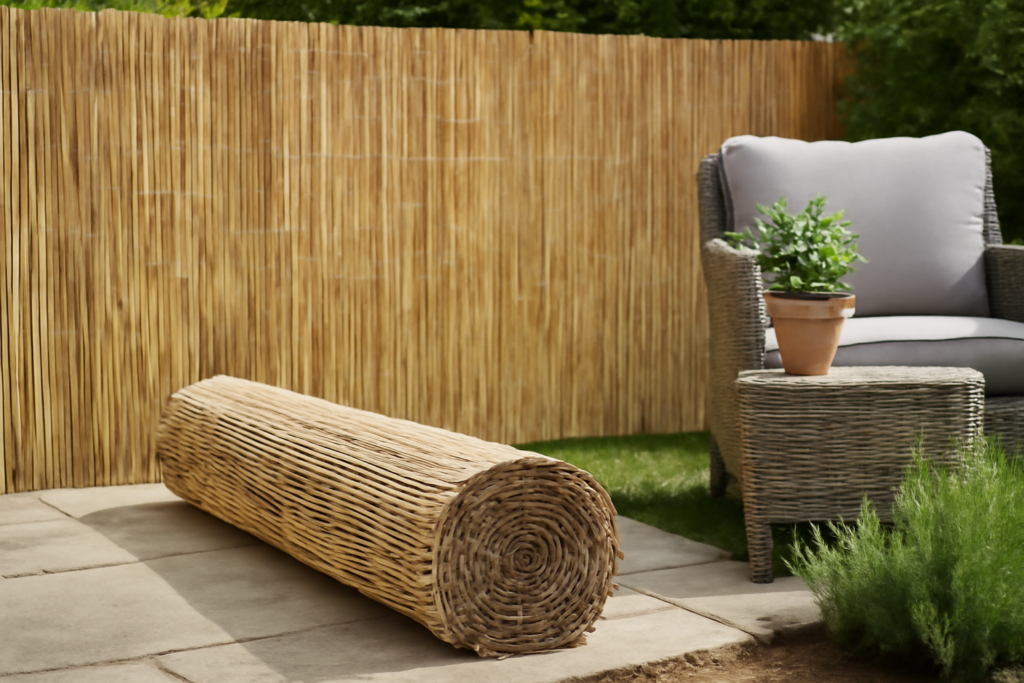
If you want privacy on a patio or balcony without pouring footings or bolting anything down, the mgp natural reed rolled fence panel is one of the cheapest ways to get there. It ships as a tight roll of dried reed stems wired together, and you unroll it against an existing rail, chain link, or lattice frame. I’ve hung dozens of reed and bamboo screens over the years, and this one lands squarely in the “seasonal privacy” category — great for a summer, honest about what it is, and not a permanent fence.
- What the Panel Actually Is
- Coverage, Density, and What Light Gets Through
- Installation: The 30-Minute Version
- Durability: How Long the Reed Really Lasts
- Where It Works Best
- Reed vs. Bamboo vs. Vinyl Screening
- Common Complaints and How to Avoid Them
- How Much Coverage One Roll Actually Buys
- One Safety Caveat: Keep It Away From Fire
- The Verdict
Here’s what you actually get, how long it lasts, and the tricks that keep it from unraveling by August.
What the Panel Actually Is
MGP sells its reed rolls in a few sizes, but the common ones are 6 ft tall by 16 ft long and 4 ft tall by 16 ft long. The reed stems run vertically, each roughly 1/4 to 3/8 inch in diameter, bound by three to five rows of galvanized wire that run horizontally through the roll. A 6-by-16 roll weighs only about 15 to 18 pounds, which tells you a lot: this is a lightweight screen, not a structural barrier.
Coverage is the selling point. One 16-foot roll blankets a long run of railing for around $30 to $55 depending on the retailer and season. Compare that to cedar pickets, where you’d spend $8 to $12 a linear foot just on lumber, and the appeal is obvious. The reed is a warm honey-tan when new, and it filters light rather than blocking it completely, so a screened porch stays bright instead of feeling boxed in.
Coverage, Density, and What Light Gets Through
Density matters more than height with these panels. Hold a section up to the sun and you’ll see thin gaps between stems — reed is a natural product, so the spacing isn’t perfectly uniform. From 8 to 10 feet away it reads as solid privacy; up close, a neighbor could see movement and color through it. For a hot tub screen or a balcony where you just want to break sightlines, that’s plenty. For true blackout privacy, it isn’t.
Wind is the other consideration. Because the reed filters rather than seals, it doesn’t catch wind like a solid vinyl panel does. That’s a genuine advantage on an exposed deck, where a solid screen can act like a sail and tear a railing loose. The reed lets gusts pass through, so your zip ties take far less abuse.
Installation: The 30-Minute Version
You do not need power tools for this. The whole job on a 16-foot rail takes one person about 30 minutes. Here’s the sequence I use:
- Unroll the panel on a flat surface and let it relax for an hour so it stops trying to curl.
- Start at one post, holding the top edge flush with the top rail, and secure the corner with two heavy-duty UV-rated zip ties or 16-gauge galvanized wire.
- Work along the rail every 12 to 16 inches, threading a tie through the reed and around the frame. More ties equals less sag.
- Fasten the top wire, a middle wire, and the bottom wire at each attachment point so the panel can’t accordion down.
- Trim excess with sharp shears or a fine-tooth saw, and tape or wire the cut end so stems don’t slide out.
The single biggest mistake I see is under-tying. People run one tie every 3 feet, and by the first windy week the panel bows and gaps open at the top. Tie it tight and tie it often. On a metal balcony railing, black zip ties disappear visually and hold up far better than the clear ones, which get brittle in UV within a season.
Durability: How Long the Reed Really Lasts
Be realistic. Natural reed is dried plant material, and outdoors it grays and gets brittle. In a dry, shaded spot you might get two to three seasons of decent looks. In full sun with freeze-thaw winters, plan on replacing it every one to two years. The wire binding usually outlasts the reed itself, so you’ll see individual stems snapping and dropping before the roll fully fails.
You can stretch the life. A coat of clear exterior wood sealer or spar urethane applied with a pump sprayer slows the graying and adds water resistance. Storing the roll indoors over winter, if your setup allows you to take it down, roughly doubles the usable life. Don’t expect the longevity of a real cedar fence — this is closer to outdoor decor than carpentry.
Where It Works Best
I steer homeowners toward reed rolls for specific jobs. It shines as a balcony privacy screen, a hot tub or AC-unit concealment, a temporary screen while a hedge fills in, or a facelift over ugly chain link. Renters love it because nothing is permanent — you zip-tie it on and cut the ties when you leave.
Where it disappoints is anywhere it needs to be a real fence: a property boundary, a pet enclosure, or a security barrier. It won’t stop a dog, a determined kid, or a raccoon, and it provides zero structural strength. If you need those things, spend the extra money on pickets or vinyl.
Reed vs. Bamboo vs. Vinyl Screening
MGP also sells bamboo rolls, and shoppers often cross-shop the two. Bamboo is stiffer, larger in diameter, and reads as more upscale, but it costs more and can crack at the nodes in hard freezes. Reed is finer, softer looking, and cheaper. Here’s the quick breakdown:
- Reed: cheapest, softest look, filters light, 1 to 3 seasons, best for a subtle screen.
- Bamboo: mid-price, stiffer and more textured, 2 to 4 seasons, better for a resort feel.
- Vinyl or composite screen: most expensive up front, true opacity, 10-plus years, best for permanent privacy.
If you’re the type who wants to hang it and forget it for a decade, none of the natural rolls are your answer. If you rotate your patio look every couple of years anyway, reed is the value pick.
Common Complaints and How to Avoid Them
Two complaints come up again and again in reviews. The first is loose stems in the box — because the reed is wired at intervals, the top and bottom inch of stems can slide before you secure them. Wire or tape both cut ends immediately and this stops. The second is uneven color, with some stems darker than others. That’s normal for a natural product and it blends within a few weeks of weathering. If uniform color matters to you, buy the dyed bamboo instead.
One more field tip: mount the panel a couple inches above the deck surface rather than letting it touch. Reed wicks water fast, and a bottom edge sitting in a puddle rots first. A small air gap at the base easily adds a season of life.
How Much Coverage One Roll Actually Buys
Plan your order by the linear foot, not by guesswork. A single 16-foot roll covers 16 linear feet of railing, and that’s usually one long side of a balcony or a full run between two posts. Measure every section you want screened, add them up, and divide by 16 to get your roll count — then buy one extra. Reed is a natural product with variation from batch to batch, so buying all your rolls at once keeps the color consistent across the whole project. Ordering a second roll months later, after weathering has already grayed the first, leaves you with a mismatch that’s obvious from the yard.
Height selection matters too. The 6-foot roll is right for full standing privacy on a patio or a tall fence; the 4-foot roll suits deck and balcony railings where you only need to block sightlines while seated. Buying a 6-foot roll and trimming it down to 4 feet works, but you’re paying for material you cut off and throw away. Match the roll height to the job and you waste nothing. For a typical 12-by-12 foot deck with railing on two open sides — roughly 24 linear feet — two 16-foot rolls cover it with reed to spare for a gate or an AC screen.
One Safety Caveat: Keep It Away From Fire
Dried reed is flammable, and that is the one safety point people overlook when they hang it around an outdoor living space. Keep the panel well clear of grills, fire pits, chimineas, and patio heaters, and never run it behind a cooking area where a stray ember can reach it. A reed screen that has grayed and dried out over a couple of seasons ignites even more easily than a fresh one. If your patio centers on a fire feature, either keep several feet of clearance or choose a non-combustible screen for that zone. Used sensibly away from open flame, the reed poses no more risk than any other dried landscaping material, but it deserves the same respect you would give a stack of kindling.
The Verdict
The mgp natural reed rolled fence panel is exactly what it claims to be: a cheap, fast, good-looking privacy screen for patios, balconies, and eyesore cover-ups. At roughly $2 to $3.50 a linear foot installed, nothing beats it for instant coverage, and the light-filtering, wind-passing nature makes it smarter than a solid panel on an exposed deck. Just go in knowing it’s seasonal. Tie it tight, seal it if you can, keep the bottom edge dry, and budget to refresh it every year or two. Treated as decor rather than a fence, it’s an easy recommendation. Treated as a permanent boundary, it will disappoint you — so match the product to the job and you’ll be happy with it.