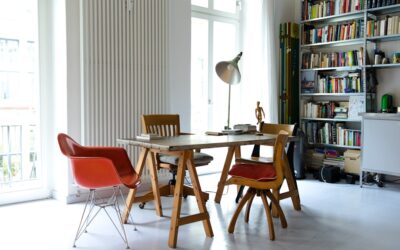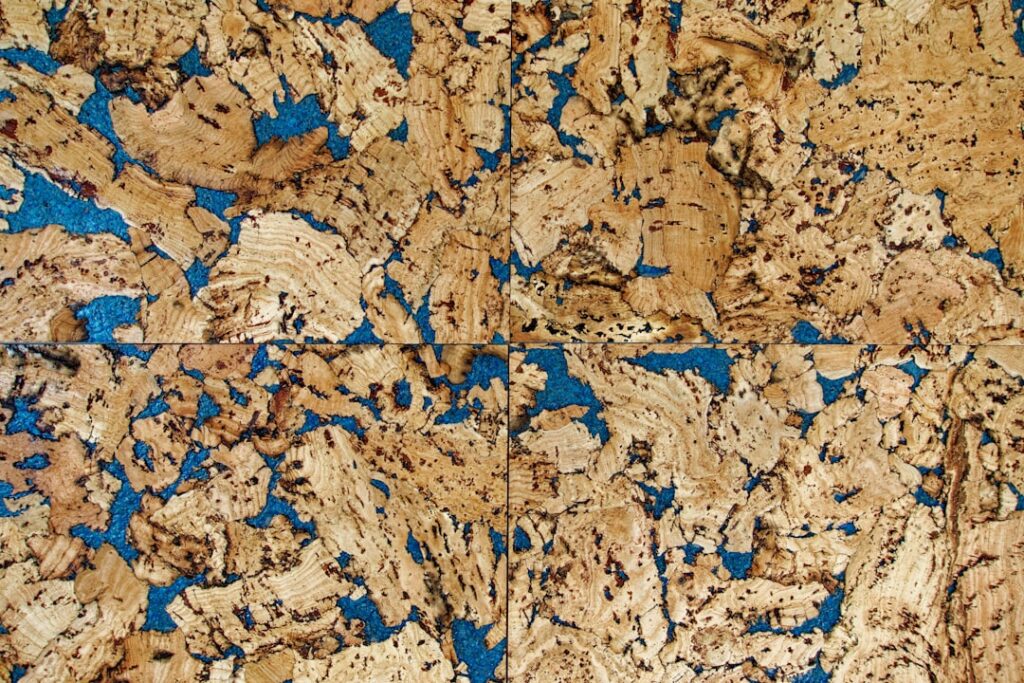
Most people still picture cork as the stuff on a bulletin board or inside a wine bottle. But modern cork flooring has quietly become one of the most comfortable, quiet, and sustainable surfaces you can put in a home. Today’s products come as click-together floating planks and glue-down tiles with printed or natural veneers, wear layers, and finishes that shrug off daily use. If you have ever wished hardwood were softer underfoot and warmer in winter, cork deserves a serious look.
What Makes Cork Different
Cork is harvested from the bark of the cork oak, primarily in Portugal and Spain. The tree is not cut down; its bark is stripped by hand every nine years and grows back, which is why cork is considered a renewable, low-impact material. That cellular structure is the secret to its performance. Each cubic inch contains millions of tiny air-filled chambers that compress and rebound, giving the floor its signature cushion and sound absorption.
Those same air pockets make cork a natural insulator. A cork floor typically registers several degrees warmer than tile or vinyl underfoot, and it dampens impact noise, which is why condo boards and second-floor bedrooms love it. Cork also contains suberin, a waxy substance that naturally resists mold, mildew, and pests.
Modern Cork Flooring Formats and Styles
The category has expanded well beyond the honey-colored squares of decades past. When shopping for modern cork flooring, you will run into three main constructions.
- Floating click planks: an HDF or SPC core with a cork veneer and wear layer, installed tongue-and-groove over an underlayment. No glue, DIY-friendly, and the most popular option.
- Glue-down tiles: solid cork tiles adhered to the subfloor, usually 12-by-12 or 12-by-24 inches. More water-resistant at the seams and fully repairable.
- Hybrid cork-vinyl: a waterproof rigid core topped with a cork comfort layer, blending cork feel with vinyl durability.
Finishes now include gray-washed tones, wide-plank wood looks, marbled patterns, and matte low-sheen surfaces that match current design trends far better than the orange-toned cork of the past.
Cost and Value
Material costs generally land between $3 and $8 per square foot, with premium printed or extra-thick planks reaching $10. Professional installation adds roughly $2 to $4 per square foot for floating floors and a bit more for glue-down, since the subfloor must be flatter and cleaner. For a 300-square-foot room, a realistic installed budget runs $1,500 to $3,600.
That places cork above basic laminate and vinyl but usually below solid hardwood. The value case rests on comfort and longevity. A well-maintained cork floor lasts 20 to 30 years, and because the color runs through solid cork, minor scuffs can be sanded and refinished rather than replaced.
Durability and Everyday Performance
Cork is softer than oak, which is both its charm and its main limitation. It forgives dropped dishes and tired feet, but sharp heels, unprotected furniture legs, and pet claws can leave dents. Most of those compress and recover thanks to the material’s elasticity, though deep gouges are permanent.
Protect your floor with a few simple habits:
- Add felt pads under all furniture and replace them as they wear.
- Use a quality underlayment during installation to boost cushion and sound control.
- Keep humidity between 35 and 65 percent so the planks neither shrink nor swell.
- Place walk-off mats at exterior doors to catch grit that scratches the finish.
Sunlight is worth noting too. Natural cork can fade or darken under direct UV exposure, so use blinds or UV-filtering window film in bright rooms to keep the color even.
Where Cork Works Best
Bedrooms, home offices, living rooms, playrooms, and kitchens are ideal. The warmth suits spaces where you stand or sit for long stretches, and the noise dampening is a genuine benefit in multi-story homes. Kitchens work well with a sealed or waterproof-core product, since cork tolerates occasional splashes but not standing water.
Be cautious in full bathrooms, laundry rooms, and basements prone to flooding. Traditional glue-down cork can swell if water sits at the seams. If you want cork in a moisture-heavy room, choose a waterproof rigid-core hybrid and seal any exposed edges. Cork over radiant heat is fine as long as the manufacturer approves it and the floor temperature stays under about 82 degrees Fahrenheit.
Cork Versus Other Popular Floors
It helps to see where cork lands against the alternatives you are probably weighing. Against hardwood, cork is softer and warmer but dents more easily, though it costs less and refreshes with a simple recoat rather than a full sanding. Against luxury vinyl, cork wins on comfort, warmth, and eco-credentials but loses on waterproofing, since most vinyl is fully water-resistant while standard cork is not.
Laminate is the closest price competitor. Both float over a subfloor and both suit DIY installs, but cork feels noticeably softer and quieter underfoot, while laminate resists scratches and moisture a bit better. Tile beats cork on durability and water resistance in every category, yet it is cold, hard, and loud by comparison. In short, cork’s edge is comfort, quiet, and sustainability. If those three qualities top your list, few floors compete. If you need maximum toughness or true waterproofing, one of the other options may serve you better.
Sustainability and Indoor Air Quality
Cork’s environmental story is a genuine selling point rather than marketing spin. Because harvesting strips only the bark and leaves the tree standing, a single cork oak can be harvested roughly a dozen times over its 150-to-200-year life. The bark regrows fully between harvests, and mature cork forests store significant carbon, so the material is renewable in a way hardwood is not.
Indoor air quality is another advantage worth checking. Look for products certified to FloorScore or GREENGUARD Gold, which verify low VOC emissions and confirm the adhesives and finishes will not off-gas noticeably into your home. Because cork naturally resists mold, mildew, and dust mites, it is often recommended for allergy-sensitive households. Just confirm any printed or vinyl-topped hybrid still carries a low-emission certification, since the cork layer alone does not guarantee the whole product is clean.
Installation and Maintenance Basics
Floating cork planks are one of the friendlier DIY floors. Acclimate the boxes in the room for 48 to 72 hours, make sure the subfloor is flat within 3/16 inch over 10 feet, and leave a 1/4-inch expansion gap around the perimeter. Most homeowners can finish a mid-size room in a weekend with a tapping block, spacers, and a pull bar.
Maintenance is refreshingly simple. Sweep or vacuum with a soft-brush head, and damp-mop with a well-wrung microfiber and a pH-neutral cleaner. Never soak the floor or use steam mops, which drive moisture into the seams. Reapply a compatible finish or wax coat every few years on solid cork to renew the protective layer.
Is Modern Cork Flooring Right for You
Choose modern cork flooring if you want a floor that feels soft and warm, keeps rooms quiet, and comes from a renewable source. It rewards homeowners who value comfort over brute hardness and who will use felt pads and manage humidity. If you have large dogs, drag heavy furniture often, or need a truly waterproof surface, pair those needs with a rigid-core hybrid or look at luxury vinyl instead. For the right rooms, cork delivers a combination of comfort, quiet, and eco-credibility that few other floors can claim.
Prefer to explore on your own?
See how new flooring looks in your actual room in seconds — free, no signup.
Try the free Floor Studio →