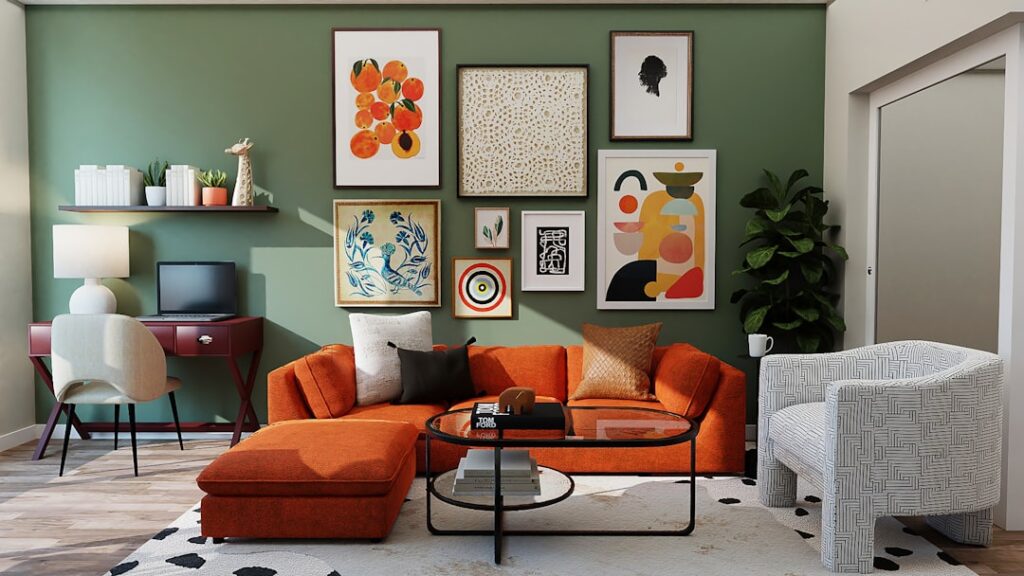
“Modern” gets thrown around a lot in paint, but it has a real meaning right now. Modern interior paint colors are warm, grounded, and confident — a move away from the cold, all-gray minimalism of the last decade toward palettes that feel calm, layered, and lived-in. After years of painting homes across every style, I can tell you what actually reads as current in 2025 and what quietly dates a room.
- What “Modern” Means in Paint Today
- The Modern Neutral Foundation
- Moody Accent Colors
- Earthy and Organic Tones
- Modern Sheen Choices
- Room-by-Room Combinations
- Building a Cohesive Whole-Home Palette
- Test Before You Commit
- Using Accent Walls the Modern Way
- Coordinating With Trim and Ceilings
- Texture and Sheen as Modern Tools
- Avoiding a Look That Dates Fast
- The Takeaway
Here is a practical guide to the modern palette: the neutrals to build on, the accents that add depth, the brand colors behind them, and how to combine them room by room.
What “Modern” Means in Paint Today
The modern look has shifted decisively. The defining traits now:
- Warm over cool — greiges and creamy whites instead of blue-grays.
- Depth and moodiness — deep greens, navies, and charcoals as accents.
- Earthy and organic — browns, taupes, terracottas, and sage tones borrowed from nature.
- Contrast with intention — a light body with one committed dark element rather than beige on beige.
What dates a room fast: stark cool grays, orange-toned “builder beige,” and high-contrast black-and-white with no warmth. Modern rooms feel soft and considered, not clinical.
The Modern Neutral Foundation
Every modern scheme starts with a warm, flexible base. The go-to colors:
- Sherwin-Williams Accessible Beige (SW 7036): the quintessential modern greige.
- Benjamin Moore White Dove (OC-17): a warm white for walls and trim that never feels sterile.
- Sherwin-Williams Alabaster (SW 7008): a soft, creamy white with wide appeal.
- Benjamin Moore Balboa Mist (OC-27): a light warm greige that shifts gracefully with the light.
These are your whole-house colors — the backdrop that lets furniture, art, and accent walls do the talking.
Moody Accent Colors
The modern look leans on one strong, deep color to give a room backbone:
- Deep green: Sherwin-Williams Rosemary (SW 6187), Benjamin Moore Hunter Green — sophisticated and grounding.
- Navy and slate blue: Benjamin Moore Hale Navy, Sherwin-Williams Naval — timeless and rich.
- Charcoal and near-black: Benjamin Moore Kendall Charcoal, Sherwin-Williams Iron Ore — dramatic on doors, built-ins, and accent walls.
- Warm terracotta and clay: earthy, hand-made warmth for an entry or niche.
The move is one accent per room, not five. A single deep-green built-in or a charcoal accent wall does more than a dozen competing colors.
Earthy and Organic Tones
Nature-inspired colors define the current moment. Soft sages like Sherwin-Williams Evergreen Fog (SW 9130), warm mochas and taupes, and muted olive tones bring the outdoors in without shouting. These work as either a whole-room color for a calm, enveloping feel or as a gentle accent. They pair naturally with warm woods, rattan, linen, and matte black hardware — the material palette of modern interiors.
Modern Sheen Choices
Color is only part of a modern look; sheen sets the mood. Current preferences run flatter and more matte:
- Walls: matte or eggshell — modern rooms favor low sheen that reads soft and hides imperfections.
- Trim and doors: satin (increasingly popular over old high-gloss) for a subtler, more contemporary look.
- Ceilings: flat, always.
- Accent walls and built-ins: matte or eggshell for depth; a deep color in flat looks especially rich and modern.
The dated look is high-gloss everything. Modern is soft, matte, and tactile.
Room-by-Room Combinations
How to put it together:
- Living room: Accessible Beige walls, a charcoal or deep-green feature wall, warm wood and matte black accents.
- Kitchen: creamy white walls and uppers, sage or navy lower cabinets.
- Primary bedroom: soft mocha or muted sage walls, White Dove trim for a restful cocoon.
- Home office: deep green or navy walls for focus and drama.
- Powder room: go bold — charcoal or deep terracotta makes a small space feel intentional and luxe.
- Entryway: a warm greige with a moody front-door color for a strong first impression.
Building a Cohesive Whole-Home Palette
Modern homes read as one connected space, so the colors should flow. A reliable formula:
- Pick one warm neutral for the main open areas.
- Choose one trim/white used consistently throughout.
- Select two or three accent colors from the same warm, earthy, or moody family and deploy them in different rooms.
Repeating a limited palette makes even a large home feel intentional and calm — the essence of the modern look.
Test Before You Commit
Modern warm tones are especially sensitive to light. A greige can read pink, purple, or green depending on your windows and bulbs. Always buy samples, paint 2×2-ft patches on at least two walls, and view them in morning, afternoon, and evening light. LED bulb temperature (warm 2700K vs. cool 4000K) shifts every color, so judge under the bulbs you actually live with.
Using Accent Walls the Modern Way
The accent wall is not dead — it just grew up. The dated version was a random bright wall with no connection to the room. The modern version is deliberate: a deep, rich color placed where it has architectural logic, like the wall behind a bed, a fireplace, or a set of built-ins. Choose a wall the eye naturally lands on, use a moody green, navy, or charcoal, and let the rest of the room stay in the warm neutral base. Painting the wall that holds a focal point, rather than a random side wall, is what separates an intentional modern accent from an amateur one.
Color-drenching — painting the walls, trim, and sometimes the ceiling all one deep color — is another current move that reads as confident and enveloping, especially in small rooms like a powder room, office, or bedroom. It takes nerve, but the result feels far more designed than a single accent wall.
Coordinating With Trim and Ceilings
Modern rooms treat trim and ceilings as part of the palette, not afterthoughts. A few current approaches:
- Matching trim to walls in the same color (different sheen) for a seamless, contemporary look.
- Crisp white trim like White Dove against warm walls for a softer take on classic contrast.
- Painted ceilings in a soft tone rather than default flat white, adding subtle warmth overhead.
The dated approach is bright white trim fighting cool gray walls. Modern trim either blends with the wall or provides warm, gentle contrast — never a harsh, high-gloss frame around every door and window.
Texture and Sheen as Modern Tools
Modern color is not only about the hue — it is about how light hits it. The current look leans into low-sheen, tactile finishes that read as soft and sophisticated. A deep charcoal in a dead-flat matte looks velvety and expensive; the same color in high-gloss looks dated and hard. Limewash and mineral-paint finishes, which give a subtle cloudy, textured depth, are also having a strong moment for feature walls and are a genuinely modern way to add interest without pattern. If you want a room to feel current, reach for matte and eggshell over gloss, and consider a textured finish on a single wall where you want quiet drama.
Avoiding a Look That Dates Fast
The fastest way to keep a modern palette timeless is restraint. A few guardrails:
- Do not chase every micro-trend — build on warm neutrals that outlast any single year’s “color of the year.”
- Limit bold colors to spaces you can easily repaint — a powder room or accent wall, not the whole open floor plan.
- Skip cool grays and stark white-on-white, the looks that now read as the previous decade.
- Anchor trends with classics — a timeless navy or forest green ages far better than a trendy off-tone.
Modern done well is warm, calm, and confident, not a scrapbook of whatever was trending the month you painted. Choose a tight, warm palette and let materials and light do the rest.
The Takeaway
Modern interior paint colors come down to a simple recipe: build on warm neutrals, add depth with one moody accent per room, weave in earthy organic tones, and keep your sheens low and soft. Repeat a tight palette through the house for flow, choose satin trim over high-gloss, and test every color in your own light. Follow that and you will land on a home that feels current, calm, and warm — the look that defines modern interiors right now and holds up for years.