
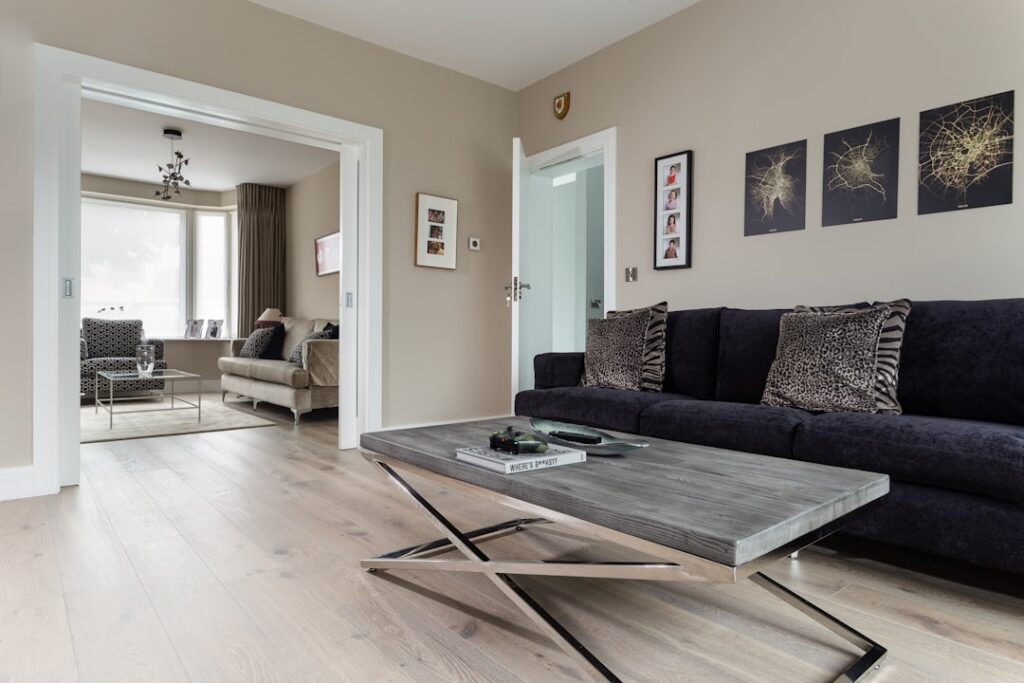
Laminate has quietly become one of the best value-per-dollar floors on the market, and collection-level brands like this one are why. Monroe Park laminate flooring is the kind of mid-range product line homeowners encounter at retailers and through installers, and the smart move is to evaluate it the same way you’d evaluate any laminate — by the specs that actually predict how it will perform, not by the name on the box. This guide breaks down what to check, where laminate excels, and how to decide whether a given Monroe Park style fits your room and budget.
How to Evaluate Any Laminate Collection
Laminate is a multi-layer product: a clear wear layer on top, a high-resolution printed design layer, a dense fiberboard core, and a balancing backer. The differences between a budget plank and a premium one come down to a handful of measurable specs. Before committing to a Monroe Park style, get the manufacturer’s spec sheet and confirm these numbers rather than relying on showroom impressions.
- AC rating: The Abrasion Class scale runs from AC1 to AC5. AC3 suits normal residential use; AC4 and AC5 handle heavy traffic and light commercial spaces.
- Thickness: Planks range from 7mm to 12mm. Thicker boards feel more solid underfoot and tolerate minor subfloor imperfections better.
- Water resistance: Look for stated water-resistant or waterproof claims and a specific hour rating for surface spills.
- Edge profile: Beveled or painted edges hide minor height differences and add a more realistic plank look.
- Warranty: Residential warranties of 25 years to lifetime are common; read the conditions carefully.
Pros of Laminate Flooring
Laminate’s appeal starts with price. Quality residential laminate often runs $1.50 to $4 per square foot for materials, well below most hardwood and many luxury vinyl options. The printed design layer has improved dramatically, so modern laminate convincingly mimics oak, hickory, and even stone, with embossed textures that line up with the visual grain.
Durability is the other selling point. A good AC4 wear layer resists scratches, dents, and fading better than many softwood hardwoods, which makes laminate a strong choice for households with kids and pets. Most collections use a glueless click-lock system, so installation is fast and DIY-friendly over a proper underlayment.
Cons and Limitations
Laminate’s core is fiberboard, and that’s its main weakness. Even water-resistant laminate can swell if standing water sits in the seams, so it isn’t the best pick for bathrooms with frequent flooding risk or basements prone to moisture. Waterproof rigid-core vinyl handles those rooms better.
Laminate also can’t be sanded and refinished. Once the wear layer is compromised, the only fix is replacement of the affected planks. And while textures have improved, the surface still feels harder and less warm underfoot than real wood. A quality underlayment helps with both sound and comfort.
Where Monroe Park Laminate Fits Best
Mid-range laminate collections shine in living rooms, bedrooms, hallways, and home offices — high-traffic, low-moisture spaces where you want a wood look without a hardwood budget. Confirm the specific Monroe Park style’s AC rating before placing it in a busy entryway or a home with large dogs; step up to AC4 or higher if the line offers it.
For kitchens, choose a water-resistant style and wipe up spills promptly. For below-grade basements, verify the manufacturer approves below-grade installation and pair the floor with a moisture barrier. When in doubt, ask the retailer for the exact spec sheet for the color you want, since specs can vary between styles in the same collection.
Installation Tips
- Acclimate the planks in the room for 48 hours so they adjust to your home’s temperature and humidity.
- Flatten the subfloor to within the manufacturer’s tolerance, usually about 3/16 inch over 10 feet.
- Use the right underlayment. If the planks don’t have an attached pad, add a foam or cork underlayment for sound and cushioning.
- Leave expansion gaps of roughly 1/4 to 3/8 inch around the perimeter, hidden by baseboards or quarter-round.
- Stagger the seams by at least 8 to 12 inches between rows for strength and a natural look.
Maintenance and Care
Laminate is easy to keep clean, but it has rules. Sweep or vacuum (hard-floor setting, no beater bar) to remove grit, and clean with a well-wrung damp mop and a laminate-safe cleaner. The cardinal rule is to avoid excess water — never wet-mop or let puddles sit on the seams, since the fiberboard core can swell. Wipe spills promptly.
Skip wax, polish, and abrasive cleaners, which laminate doesn’t need and which can dull or damage the surface. For most laminate, avoid steam mops as well, since heat and moisture can work into the seams. Felt pads under furniture and walk-off mats at entries do more to preserve the floor than any product.
Comparing Cost and Value
When you price Monroe Park laminate against alternatives, compare total installed cost, not just the per-square-foot sticker. Laminate’s DIY-friendly click system can save $1 to $3 per square foot in labor if you install it yourself. Against luxury vinyl, laminate often wins on price and authentic wood texture but loses on waterproofing. Against engineered hardwood, laminate is far cheaper but can’t be refinished.
Reading the Warranty Fine Print
Long warranty numbers grab attention, but the conditions matter more than the headline. Most residential laminate warranties cover wear-through, fading, and staining under normal household use — and they’re prorated, meaning coverage shrinks over time. Critically, water damage is often excluded or limited even on “water-resistant” products, so read exactly what the warranty promises about spills and standing water.
Warranties also typically require proper installation, the correct underlayment, and approved cleaning methods. Using a steam mop, wet-mopping, or skipping the recommended underlayment can void coverage. Keep your receipt and the warranty document, and follow the care instructions to the letter so the protection stays valid if you ever need it.
Final Verdict
The bottom line: a well-specced Monroe Park laminate style is a sensible choice for most living spaces if the AC rating, thickness, and water resistance match how the room is used. Pull the spec sheet for the exact color you want, confirm the warranty terms, and buy 7 to 10 percent extra for waste and future repairs. Match the product to the room, install it over a flat subfloor with the right underlayment, and you’ll get a convincing wood look and solid durability at a price that’s hard to beat.
Prefer to explore on your own?
See how new flooring looks in your actual room in seconds — free, no signup.
Try the free Floor Studio →

