For decades the biggest weakness of laminate was simple: a standing spill could swell the core in a matter of hours, ruining the plank. Modern water proof laminate flooring was engineered specifically to solve that problem, using sealed cores and tight locking systems that can hold back surface water for up to 24 or even 72 hours, depending on the brand. That single advance moved laminate out of the bedroom-only category and into kitchens, entryways, and even bathrooms. At D and G Flooring we get asked weekly whether it lives up to the marketing, so this guide breaks down exactly what these floors can and cannot do.
Part of our Roofing guide — explore the full guide →
What Makes Laminate Water Proof
Traditional laminate is built on a high-density fiberboard (HDF) core made from compressed wood fibers. Wood loves water, which is why old laminate failed at the seams. Waterproof versions attack the problem in two ways. First, the core is treated, resin-saturated, or in some products swapped for a waterproof composite so it resists swelling. Second, the locking edges are coated with wax or sealant and engineered to fit so tightly that water struggles to reach the core in the first place.
It helps to understand the terms manufacturers use. “Water resistant” laminate shrugs off splashes you wipe up quickly. “Waterproof” laminate is rated to survive standing water for a stated number of hours, commonly 24 to 72. Neither rating means you can submerge the floor or let water sit indefinitely, and almost all warranties exclude flooding and subfloor moisture pushing up from below.
The Pros of Water Proof Laminate
- Realistic wood look at a lower price. High-resolution printing plus deep embossing produces grain and texture that rivals engineered wood for a fraction of the cost.
- Outstanding scratch resistance. The aluminum-oxide wear layer makes laminate one of the toughest surfaces against scratches, which is a real edge over both hardwood and softer vinyl. Households with dogs notice the difference.
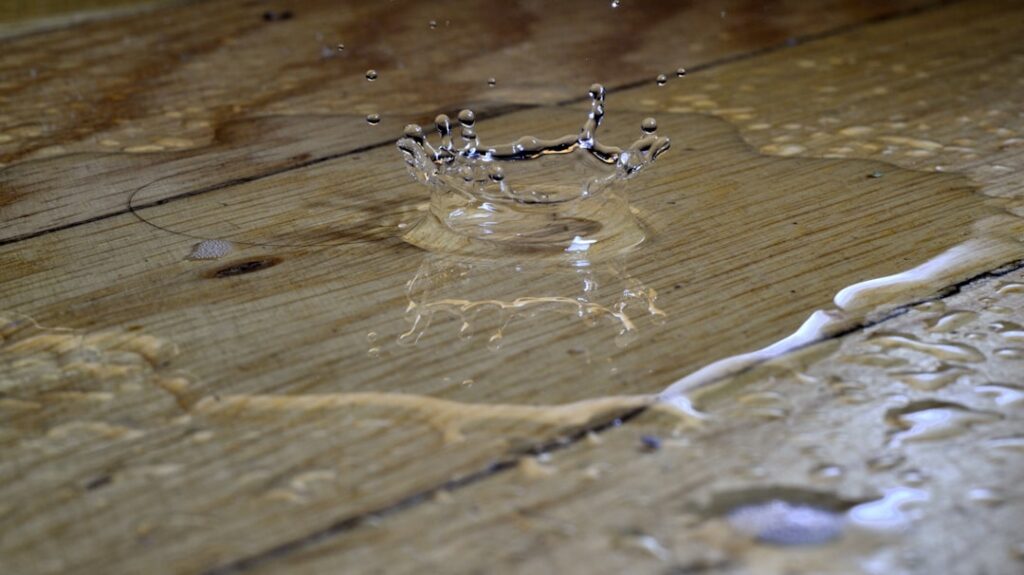
- Spill protection. The whole point of the category. Drop a glass of water or track in snow and you have hours to clean it up without damage.
- Easy floating installation. Click-lock planks float over the subfloor with no glue or nails, putting this project within reach of a confident DIYer.
- Low maintenance. No refinishing, no waxing. Sweep and occasionally damp mop and you are done.
The Cons to Keep in Mind
- Not invincible. The rating covers surface water for a limited time. Standing water beyond the rated window, or moisture rising through the subfloor, can still destroy planks.
- Hard and loud underfoot. Laminate can sound hollow and feel firm. A quality underlayment helps with both sound and comfort but adds cost.
- Cannot be refinished. Once the wear layer is gone, the plank is done. Hardwood can be sanded and refinished many times; laminate cannot be sanded at all.
- Lower resale value than real wood. Buyers still rank genuine hardwood above laminate, even premium waterproof lines.
- Seam care matters. If edge seals are damaged during a rough installation, the water protection at that joint is compromised.
How Much It Costs
Waterproof laminate sits in a comfortable middle-budget zone. Material commonly runs $2 to $5 per square foot, with thicker 12mm boards and longer waterproof warranties at the higher end. Professional installation typically adds $2 to $4 per square foot. For a 300-square-foot living room, expect roughly $600 to $1,500 in materials and another $600 to $1,200 in labor, for a total in the $1,200 to $2,700 range. DIY installation can cut the labor entirely, which is a big reason the category is popular with homeowners doing their own work.
Do not forget the extras. Underlayment runs $0.30 to $0.80 per square foot if it is not pre-attached, and transition strips, trim, and a moisture barrier over concrete add a modest amount. Budgeting an extra 10 percent for waste and cuts is wise.
Where to Use It and Where to Be Cautious
Waterproof laminate is excellent in kitchens, entryways, hallways, dining rooms, living rooms, and finished basements above grade. These are the spaces where occasional spills happen but true flooding is unlikely. It is a sensible whole-home option when you want a consistent wood look across rooms without paying hardwood prices.
Be more cautious in full bathrooms and laundry rooms where standing water is a routine risk, and confirm the specific product is rated and warrantied for those rooms before installing. For below-grade basements, always test the slab for moisture first, because vapor pushing up from concrete is a problem the surface rating does not address. In genuinely wet zones, many homeowners still prefer rigid waterproof vinyl plank.
Buying Guide: Specs That Matter
- Waterproof rating. Look for a clearly stated hours-of-protection figure (24, 72, or fully waterproof) backed by the written warranty, not just a marketing badge.
- AC rating. This abrasion-class scale runs AC1 to AC5. For most homes, choose AC3 or AC4; AC5 suits very heavy traffic.
- Thickness. Boards range from 8mm to 12mm. Thicker planks feel more solid underfoot and tend to lock more securely.
- Locking system. Angle-tap and drop-lock systems vary in ease. Sealed, tight-fitting joints are central to the waterproof claim.
- Attached underlayment. Some planks include a pad, which simplifies installation and adds sound damping.
- Warranty fine print. Confirm whether the waterproof coverage requires professional installation or specific edge sealant at perimeter cuts.
Installation Tips for a Lasting Floor
The floating click-lock system is forgiving, but a few details protect the waterproof performance. Acclimate the planks in the room for at least 48 hours so they adjust to temperature and humidity. Leave a 1/4-inch to 3/8-inch expansion gap around the entire perimeter, since the planks expand and contract with the seasons and a pinched floor can buckle. Over concrete, lay a 6-mil polyethylene vapor barrier to stop ground moisture. Many manufacturers recommend a bead of manufacturer-approved silicone sealant at perimeter cuts and around pipes in wet areas to seal the one place water can reach the core. Stagger end joints by at least 8 to 12 inches so the floor looks natural and locks together strongly.
Keeping It Looking New
Maintenance is genuinely low-effort. Sweep or vacuum with a hard-floor setting to remove grit. Damp mop with a laminate-safe cleaner, wringing the mop well, because the goal is a damp surface and not a wet one. Avoid steam mops, which can force moisture and heat into the seams and void warranties. Wipe spills reasonably promptly even though you have a buffer, and use felt pads under furniture plus mats at doorways. Treated this way, a quality waterproof laminate floor commonly lasts 15 to 25 years.
The Bottom Line
Water proof laminate flooring delivers a convincing wood look, class-leading scratch resistance, and real spill protection at a mid-range price, making it one of the best value floors a homeowner can buy today. Just keep the rating in perspective: it is built to survive surface water for hours, not flooding or subfloor moisture. Match the AC rating and thickness to your traffic, seal perimeter cuts in damp rooms, and the team at D and G Flooring is confident you will get a floor that looks great and shrugs off the everyday spills that used to be laminate’s downfall.
Prefer to explore on your own?
See how new flooring looks in your actual room in seconds — free, no signup.
Try the free Floor Studio →