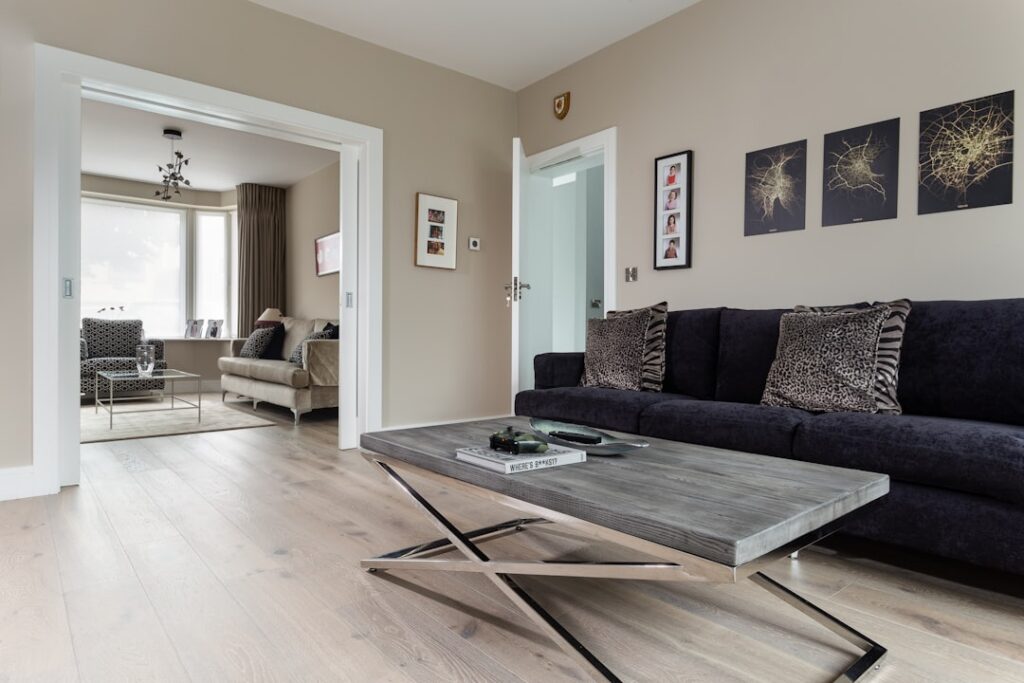
The fastest way to make a room feel bigger, brighter, and timeless is to put down a floor that does not fight with anything else. Neutral laminate flooring, in soft grays, warm greiges, natural oaks, and pale beiges, has become the default choice for homeowners who want a versatile backdrop that survives changing trends and appeals to future buyers. It pairs the design flexibility of muted tones with laminate’s tough, affordable, scratch-resistant surface. This guide covers the most popular neutral shades, the genuine pros and cons of laminate, what you will pay, and how to choose a color and finish that looks expensive without acting expensive.
Why Neutral Tones Work So Well
Neutral floors are popular for good reason: they go with everything. A muted floor lets your walls, furniture, and decor take center stage, and it adapts as your style evolves so you are not locked into a look you will tire of in three years. Lighter neutrals visually expand a space and bounce natural light, making them a favorite for smaller rooms and open-concept layouts.
For resale, neutral flooring is a safe bet. It appeals to the widest range of buyers and reads as move-in ready, which is exactly what you want if you might sell within a decade.
The Most Popular Neutral Shades
“Neutral” covers a spectrum, and the undertone matters as much as the color. The leading options include:
- Greige (gray-beige): The most versatile choice, warm enough to feel cozy and cool enough to feel modern.
- Natural oak: Light to medium honey tones that bring warmth and a classic, timeless feel.
- Soft gray: Cool and contemporary, ideal for modern interiors, though it can read cold in low light.
- Pale beige and blonde: Bright and airy, perfect for Scandinavian and coastal styles.
Match the undertone to your home’s lighting and palette. Warm neutrals flatter rooms with limited natural light, while cool grays shine in bright, modern spaces.
The Pros of Laminate Flooring
Laminate earns its popularity on value and durability. The wear layer resists scratches, dents, and fading better than many hardwoods, which makes it a strong pick for families, pets, and high-traffic rooms. It costs far less than hardwood or tile, installs quickly with click-lock systems that many homeowners do themselves, and the printed design layer now mimics real wood grain convincingly.
- Highly scratch- and fade-resistant, especially in high-AC-rating products.
- Budget-friendly compared with hardwood and engineered wood.
- Easy floating installation over many subfloors.
- Low maintenance: sweep and damp-mop, no sealing or refinishing.
The Cons to Keep in Mind
Laminate’s main weakness is moisture. Standard laminate has a fiberboard core that swells permanently when water sits at the seams, so it is a poor choice for bathrooms and chronically wet areas unless you buy a specifically water-resistant or waterproof product. It also cannot be refinished, the way solid wood can, so a badly damaged plank must be replaced. Some laminates sound hollow underfoot without a quality underlayment, and very cheap products can look flat or repeat their pattern noticeably across a large floor.
While laminate is durable, it does not add the resale value of genuine hardwood. It reads as a practical, attractive floor rather than a premium one.
What Neutral Laminate Costs
Laminate is one of the most affordable hard-surface floors. Plan around these figures:
- Budget laminate: $1 to $2 per sq ft material.
- Mid-grade (AC4, water-resistant): $2 to $3 per sq ft.
- Premium (AC5, waterproof, realistic texture): $3 to $5 per sq ft.
- Installation: $2 to $4 per sq ft, plus $0.30 to $0.60 for underlayment if not attached.
For a 300 sq ft room, a quality installed neutral laminate floor typically runs $1,200 to $2,400. DIY installation can remove the labor line if your subfloor is flat.
How to Choose the Right Neutral Laminate
A few decisions separate a floor that looks high-end from one that looks cheap:
- Pick an AC rating of at least AC4 for living areas; AC5 for the busiest rooms.
- Choose a water-resistant or waterproof core if the floor runs into a kitchen or entryway.
- Match the undertone, warm greige or oak for low light, cool gray for bright rooms.
- Favor textured, embossed-in-register finishes over flat prints for a realistic look.
- Order samples and view them in your room across morning and evening light.
Wider planks and longer boards read as more upscale, and a matte or low-sheen finish hides dust and scratches better than a glossy one.
Styling and Maintaining Neutral Laminate
One of the joys of a neutral floor is how easily it adapts as your taste changes. Against greige or natural oak, you can swing from warm earthy decor to cool modern minimalism without the floor ever clashing. Pair lighter neutrals with darker furniture for contrast, or keep everything tonal for a calm, expansive feel. Layering area rugs lets you introduce color and pattern seasonally while protecting high-traffic lanes, so the floor itself stays neutral and timeless.
Maintenance is refreshingly simple. Sweep or dust-mop to clear grit, and clean with a barely damp mop and a laminate-safe cleaner, never a soaking wet mop or steam, which can swell the seams. Wipe spills promptly, use felt pads under furniture, and place walk-off mats at entries to trap the sand and dirt that scratch finishes. Follow these habits and a quality neutral laminate keeps its understated good looks for many years with almost no effort.
The Bottom Line
Neutral laminate flooring is a smart, budget-friendly way to get a versatile, timeless floor that works with any decor and appeals to future buyers. Greige and natural oak are the safest, most flattering choices, soft gray and pale beige suit modern and coastal styles. Buy an AC4 or AC5 product with a water-resistant core for busy or moisture-adjacent rooms, choose a textured finish for realism, and view samples in your own light before committing. Match the tone to your space and the spec to your traffic, and you will have an attractive, hardworking floor that stays in style for years.
Prefer to explore on your own?
See how new flooring looks in your actual room in seconds — free, no signup.
Try the free Floor Studio →