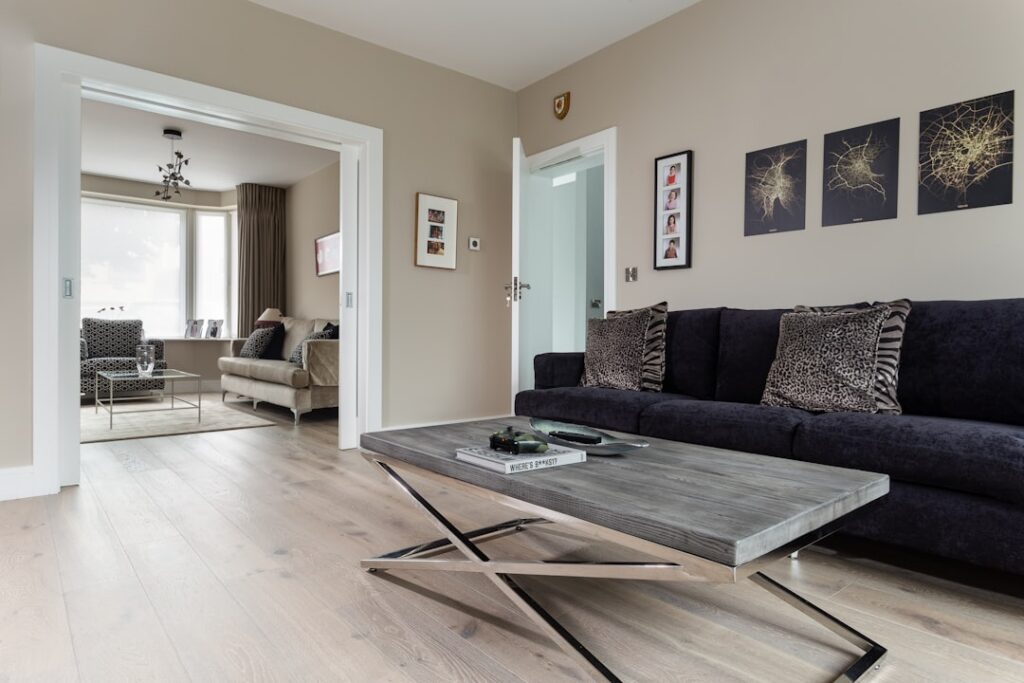
White laminate flooring has become a go-to choice for homeowners chasing a bright, airy, contemporary look without the price tag of white-washed hardwood. It bounces natural light around a room, makes small spaces feel larger, and pairs effortlessly with nearly any wall color or furniture style. Best of all, modern laminate delivers that crisp finish with a tough, scratch-resistant surface built for real life.
Here is everything you need to know about choosing, installing, and living with white laminate floors.
Why White Laminate Appeals to Homeowners
The visual payoff is the obvious draw. A pale floor opens up cramped apartments, dim hallways, and north-facing rooms that never seem to get enough light. White laminate also reads clean and modern, a perfect match for Scandinavian, coastal, farmhouse, and minimalist interiors.
Practical advantages back up the looks. Laminate is a fraction of the cost of solid hardwood, and the photographic layer beneath its wear surface can reproduce white-oak grain, limed wood, or smooth painted planks with surprising realism. You get the high-design aesthetic of bleached timber without the constant refinishing that real white-stained wood demands.
Shades and Styles of White
White is not a single color, and choosing the right tone matters more than buyers expect. The undertone you pick sets the mood of the entire room.
- Pure bright white: Bold and gallery-like, best in modern spaces with plenty of contrast in the furnishings.
- Whitewashed or limed oak: White pigment over visible grain, warm and forgiving, the most popular residential choice.
- Greige and cool gray-white: A muted, sophisticated tone that hides dust and pairs with contemporary palettes.
- Cream and ivory: Warmer whites that feel cozy and soften a room rather than sharpening it.
Texture matters too. Many white laminates come with embossed-in-register surfaces that align the texture with the printed grain, plus matte finishes that look more natural and hide footprints better than high gloss.
Durability and the AC Rating
Do not let the light color fool you into thinking the floor is delicate. Laminate durability is measured on the Abrasion Class (AC) scale from AC1 to AC5. For a busy household, look for at least AC3, which handles general residential traffic, or AC4 if you have kids, pets, or heavy use.
A quality laminate wear layer resists scratches, dents, and fading far better than most homeowners assume. The aluminum-oxide top coat shrugs off chair legs and pet claws, and UV-stable printing keeps that white tone from yellowing in sunlit rooms. Pay attention to the water-resistance rating as well; many newer white laminates carry a 24- to 72-hour spill warranty thanks to tighter locking joints and treated cores.
Where to Use It and Where to Be Careful
White laminate performs beautifully in living rooms, bedrooms, hallways, and home offices. Its light tone is especially effective in any space that feels dark or boxed in.
Standard laminate is more moisture-sensitive than vinyl, so kitchens and entryways call for a water-resistant or waterproof grade with sealed seams. Full bathrooms and laundry rooms with standing-water risk are generally better served by tile or luxury vinyl. When in doubt, check the manufacturer’s wet-area warranty before installing.
Installing White Laminate
One reason laminate stays so popular is its DIY-friendly click-lock installation, which floats over most existing subfloors without glue or nails.
- Acclimate the planks. Let boxes sit in the room for 48 hours so the material adjusts to your home’s temperature and humidity.
- Prep the subfloor. It must be clean, dry, and flat within the manufacturer’s tolerance, usually about 3/16 inch over 10 feet.
- Lay underlayment. Roll out foam or a combination vapor-barrier pad to cushion the floor and quiet footsteps.
- Click the planks together. Work left to right, staggering end joints at least 8 to 12 inches, and leave a 1/4- to 3/8-inch expansion gap at every wall.
- Finish the edges. Install baseboards or quarter-round and transition strips at doorways.
A pale floor shows installation flaws more readily than a dark one, so take care with seam alignment and keep adhesives or marker lines off the surface. If your subfloor is uneven or you are tackling a large open area, a professional installer can ensure a flat, gap-free result.
Decorating Around White Floors
A pale floor is a blank canvas, which is both its strength and its challenge. Because it reflects rather than anchors, you have freedom to go bold elsewhere. Dark furniture and deep accent walls pop dramatically against white laminate, while an all-light palette creates the serene, airy Scandinavian feel many homeowners are after.
Texture becomes your friend in a light room. Layer in woven rugs, linen upholstery, and natural wood tones to keep the space from feeling cold or clinical. Warm whites and whitewashed grains pair beautifully with brass and wood accents, whereas cool gray-whites suit black metal fixtures and modern furnishings. The floor sets a quiet stage; the rest of the room provides the contrast.
Pros and Cons at a Glance
Before committing, weigh the trade-offs honestly so the floor matches how you actually live.
- Pros: brightens and enlarges rooms, affordable, scratch-resistant wear layer, easy click-lock install, huge range of white tones and grains.
- Cons: bright pure-white shows crumbs and hair, standard laminate is moisture-sensitive, cannot be sanded or refinished, and pale tones reveal seam flaws more than dark ones.
For most households the cons are manageable with the right shade choice and a water-resistant grade. If you have a busy family with pets, a whitewashed oak in AC4 with a 72-hour spill warranty hits the sweet spot between looks and practicality.
Cost Expectations
White laminate is budget-friendly. Material typically runs $1.50 to $4 per square foot for mid-range product, with premium water-resistant and designer lines reaching $5 to $7. Underlayment adds roughly $0.30 to $0.60 per square foot if it is not pre-attached.
Professional installation generally adds $2 to $5 per square foot. For a 200-square-foot room, expect a total of roughly $700 to $2,000 installed, depending on the grade you choose. DIY installation can cut that figure substantially since labor is often the largest line item.
Keeping White Floors Clean
The biggest concern homeowners raise about white laminate is whether it shows dirt. The honest answer: pure bright white reveals crumbs and pet hair, while whitewashed and greige tones hide everyday mess remarkably well. If low maintenance is a priority, lean toward a grain-visible or gray-white shade.
Cleaning is straightforward regardless of tone. Sweep or vacuum with a hard-floor setting to keep grit from dulling the finish, and damp-mop with a laminate-safe cleaner. Never wet-mop or use steam, which can swell the core through the seams. Wipe spills promptly, add felt pads under furniture legs, and place mats at entry points. With that routine, a white laminate floor stays bright, clean, and stylish for 15 to 25 years.
Prefer to explore on your own?
See how new flooring looks in your actual room in seconds — free, no signup.
Try the free Floor Studio →