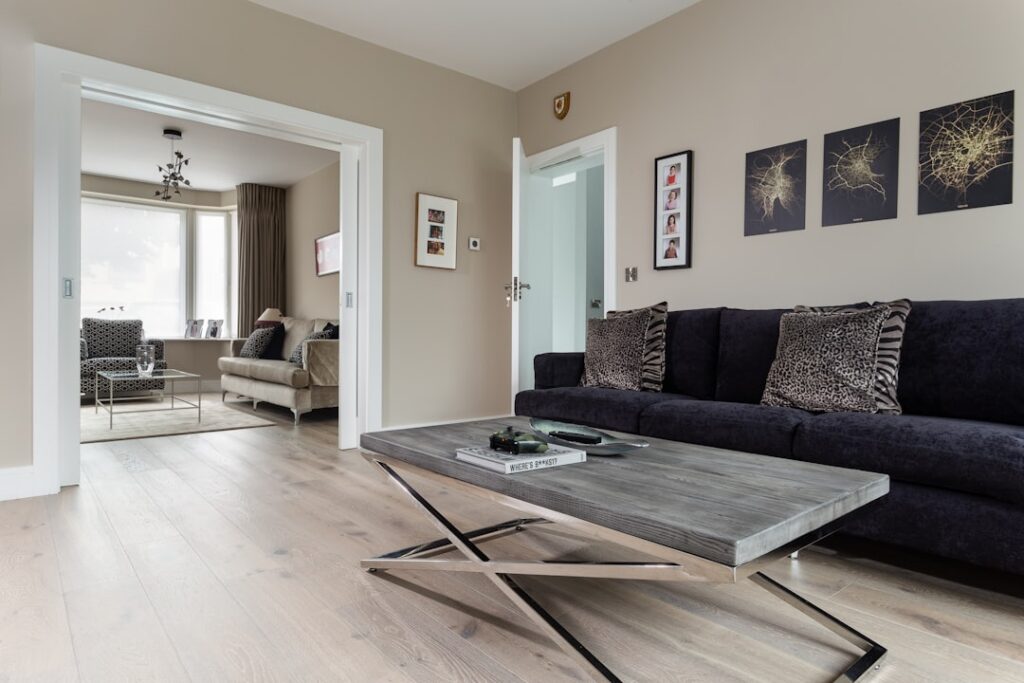
Laminate spent two decades pretending to be hardwood, but the same photographic-layer technology reproduces slate, travertine, and ceramic just as convincingly — at a fraction of tile’s installed cost. Choosing laminate tile flooring kitchen installations means weighing that value against laminate’s historic enemy: standing water in the busiest, wettest room of the house. The honest answer in 2026 is more nuanced than the old “never put laminate in a kitchen” rule, because modern water-resistant laminates have changed the math. This guide covers what tile-look laminate is, how it really handles kitchen life, what it costs against LVT and porcelain, and the installation details that determine whether it thrives or swells.
What Tile-Look Laminate Actually Is
Laminate is a sandwich: a high-density fiberboard (HDF) core, a photographic design layer, and a clear aluminum-oxide wear layer that is genuinely harder than vinyl’s polyurethane coatings. Tile-visual versions print stone and ceramic imagery — often with beveled or grout-line edges pressed into the surface — in large-format pieces, typically 12×24 or 16×48, or in planks with a stone visual. Quality is graded by AC rating: AC3 suits residential rooms, while AC4 adds a margin for hard-service areas like kitchens. The core is the story, though. HDF is wood fiber, and untreated HDF swells when it absorbs water. Every kitchen-suitability question about laminate comes back to how well the product and installation keep water away from that core.
The Water Question, Answered Honestly
Standard laminate does not belong in kitchens with dishwashers, ice makers, and kids with cups. But the category has split. Water-resistant laminates — Pergo WetProtect, Mohawk RevWood Plus/Select, Shaw Repel, AquaGuard and similar lines — combine tighter click joints, sealed or waxed edges, and denser treated cores, and most carry residential warranties covering topical spills for 24 to 72 hours or better, some marketed as waterproof from the top down. That is genuinely good enough for real kitchen life: a spilled pot of pasta water wiped up within the hour is a non-event. What no laminate handles is flooding from below or prolonged saturation — a dishwasher line that leaks overnight into the click seams can still swell a laminate floor that a rigid-core vinyl would shrug off. Frame the decision that way: water-resistant laminate handles kitchen spills; it does not handle kitchen disasters.
Why Choose Laminate Over LVT at All
Since stone-look luxury vinyl is fully waterproof, why would anyone pick laminate for a kitchen? Three real reasons. Scratch resistance: laminate’s aluminum-oxide wear layer outperforms vinyl against chair legs, dog claws, and dragged grit — a meaningful difference in hard-use kitchens. Feel and sound: laminate is stiffer and its 8 to 12 mm thickness feels more solid and less hollow underfoot than 5 mm vinyl, closer to the sensation of real tile without tile’s cold. Dent resistance: the dense HDF core resists appliance-foot and dropped-can dents that can mark softer vinyl cores. Add lower cost per performance tier and wide availability, and laminate keeps a legitimate seat at the kitchen table — for households that respect its water rules.
One more honest note on the comparison: laminate cannot be refinished, and neither can vinyl, so both are replace-when-worn floors. The difference is that a quality AC4 laminate wear surface typically outlasts a mid-grade vinyl wear layer under abrasive traffic, while the vinyl outlasts the laminate the first time real water finds a seam. Match the failure mode you are more likely to experience.
Cost Breakdown
Tile-look laminate is among the cheapest ways to get a stone-visual floor:
- Materials: $1.50 to $3 per sq ft for standard laminate; $2.50 to $5 for water-resistant kitchen-appropriate lines.
- Underlayment: $0.30 to $0.60 per sq ft if not pre-attached, plus a 6-mil vapor barrier over concrete.
- Professional installation: $1.50 to $3 per sq ft — floating click-lock floors are fast labor.
- Typical 200 sq ft kitchen, installed: roughly $800 to $1,700.
Compare that with stone-look LVT at about $1,100 to $2,200 installed for the same kitchen, and porcelain tile at $2,400 to $5,000 once backer board, thinset, and grout labor enter the picture. Laminate is also the most DIY-friendly of the three; a confident homeowner with a miter saw and tapping block can floor a kitchen in a weekend and pocket the labor line entirely.
Buying Checklist for a Kitchen
Specs to insist on when the room is a kitchen: an explicit water-resistance warranty naming kitchens as an approved space (read the exclusions — some warranties die if pets’ water bowls or refrigerators with ice makers are involved); AC4 wear rating; 8 mm minimum thickness, with 10 to 12 mm noticeably more solid; and embossed-in-register texture if you want the stone look to survive close inspection. Check the edge treatment too — beveled, sealed edges shed surface water better than raw square-cut joints. On looks, large-format pieces with realistic grout lines read most convincingly, and matte low-gloss finishes hide the micro-scratches and footprints that plague glossy laminate in a room this trafficked.
Installation Rules That Keep Water Out
In a kitchen, installation quality is water defense. Acclimate boxes in the room for 48 hours. Keep the subfloor flat to 3/16 inch over 10 feet, since gaps under a floating floor flex the joints open. Maintain the manufacturer’s expansion gap at walls and cabinets — laminate floats, and cabinets and islands should never pin it down. Then add the kitchen-specific layer of protection: run a bead of manufacturer-approved 100 percent silicone sealant in the expansion gap at dishwasher, sink, and refrigerator zones (most water-resistant systems specify this), use transition moldings sealed at doorways, and put leak trays under the dishwasher and fridge. Those trays cost $15 to $30 each and neutralize the two appliances responsible for most laminate kitchen failures.
Verdict: Right Floor for the Right Household
A laminate tile flooring kitchen makes sense for budget-conscious households that want the stone look, prize scratch resistance, wipe up spills promptly, and are willing to buy a true water-resistant line and install it by the book. Choose rigid-core LVT instead if your kitchen sees standing water, you have young kids or a sloppy ice maker, or you want zero-thought waterproofing. Choose porcelain if resale prestige and permanence top the list. But dismissing modern laminate from the kitchen entirely is fighting the last war — today’s sealed-edge, treated-core products deliver the best scratch-per-dollar performance in the room, as long as the dishwasher behaves. Keep two or three spare boxes in the basement after installation; a floating floor can be partially disassembled from the nearest wall to swap a damaged piece, and matching stock years later is never guaranteed.
Prefer to explore on your own?
See how new flooring looks in your actual room in seconds — free, no signup.
Try the free Floor Studio →