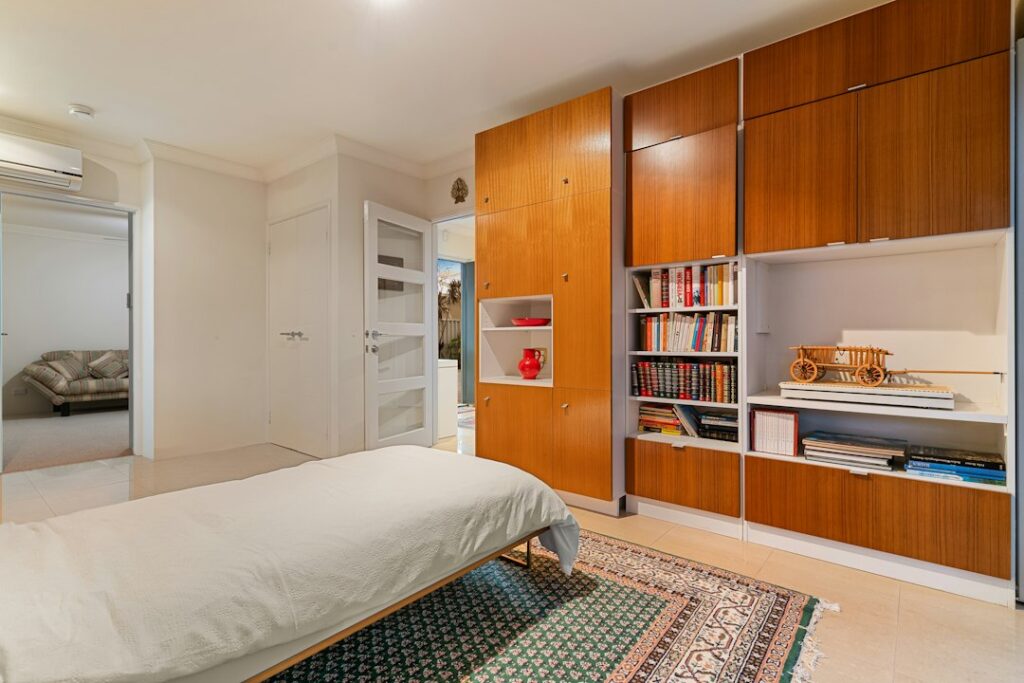
A wall bed on its own frees up floor space, but it leaves the rest of the wall doing nothing. A murphy bed with storage fixes that by flanking the bed cabinet with shelving, wardrobe towers or drawer units, so one wall handles sleeping, clothes and books. In a home office that doubles as a guest room, that can replace a dresser, a bookcase and a closet you do not have.
The catch is that a full storage wall is a big, heavy installation. A queen wall bed with storage on both sides can run 9 to 11 feet wide and weigh several hundred pounds before anything goes on the shelves. Getting the width right, anchoring the entire run to the wall framing and respecting shelf weight limits matter far more than the finish you pick.
- What a Murphy Bed With Storage Includes
- Planning the Wall: Width, Depth and Clearance
- Anchoring the Whole Run
- Shelf and Cabinet Weight Limits
- Tools and Materials
- Installation Steps
- Murphy Bed Dresser and Closet Options
- Troubleshooting
- Cost Ranges
- When to Call a Licensed Professional
- Frequently Asked Questions
Here is how the main configurations compare, how to plan the wall, how installation works, and what it typically costs.
What a Murphy Bed With Storage Includes
The core is the bed cabinet: a deep box that holds the mattress and the lift mechanism, usually pistons or springs. Storage modules attach to one or both sides. Common options include:
- Side piers with shelves. Tall, narrow towers, often 12 to 24 inches wide, with open or glass-door shelving. These create a library wall bed look and work well for books and display pieces.
- Wardrobe towers. Deeper units with a hanging rod and doors. A wall bed with wardrobe towers on each side can stand in for a reach-in closet in a room that lacks one.
- Drawer units. Lower or full-height drawer stacks that function as a built-in dresser. Some designs put a desk or a fold-down surface on the bed face itself.
- Bridge or overhead cabinets. A shelf or cabinet that spans across the top of the bed and connects both piers, giving the whole run a built-in appearance.
- Side cabinets with doors. Closed storage that hides clutter, linens and pillows. Murphy bed with side cabinets designs are popular in living rooms where the bed should disappear completely.
Some people call the complete assembly a wall unit bed or a murphy bed wall unit, and in a primary suite it can serve as a full bedroom wall unit with a headboard look when the bed is down.
Planning the Wall: Width, Depth and Clearance
Start with mattress size, because the cabinet width follows from it. A full vertical bed cabinet is roughly 60 to 62 inches wide, and a queen about 66 to 68 inches wide. Horizontal (side-tilt) twin and full beds are wider but shorter, which suits rooms with low ceilings or windows above.
Then add the storage. Two 18 inch piers on a queen take the run to around 102 inches, and two 24 inch wardrobes push it past 115 inches. Measure the full wall and subtract room for trim at each end and any outlets, switches or vents you need to keep accessible.
Key dimensions to confirm:
- Ceiling height. Most vertical queen cabinets stand around 85 to 90 inches tall, and the bed swings through an arc as it opens. Check for crown molding, soffits and ceiling fans.
- Cabinet depth. Bed cabinets run about 16 to 20 inches deep when closed. Wardrobe towers need roughly 22 to 24 inches for hangers, so some designs stagger the depth.
- Open bed length. A queen in the down position projects about 85 to 90 inches from the wall. You need that much clear floor plus walking room.
- Baseboards. The cabinet must sit tight to the wall. Plan to notch or remove baseboard behind the unit so the back panel contacts the wall evenly.
- Floor. The bed legs and cabinet base need a level, solid surface. On thick carpet, the unit may need a level platform or the maker’s leveling feet.
Anchoring the Whole Run
Every wall bed must be secured to the wall framing exactly as the maker specifies. The lift mechanism creates real force as the bed moves, and if the cabinet is not fastened, a lowered or raised bed can pull the cabinet forward. With storage piers attached, the leverage gets worse, because loaded shelves and open wardrobe doors add weight away from the wall.
- Locate studs across the full width and plan fasteners for the bed cabinet and each side unit, not just the bed.
- Use the maker’s mounting rail or brackets and the screw length they specify. Hollow-wall anchors are not a substitute for studs.
- Steel stud, plaster or masonry walls need hardware rated for those materials. Follow the instructions or hire an installer.
- Connect side piers to the bed cabinet with the supplied connector bolts so the whole run moves as one structure.
- Keep the bed locked in the closed position whenever children are around, and teach kids that the bed is not something to climb or hang on.
Shelf and Cabinet Weight Limits
Shelves in a murphy bed with storage are often thinner panels than a dedicated bookcase, and many have published weight limits per shelf. Books are heavy: a 30 inch run of hardcovers can easily reach 40 to 50 pounds. Read the limit for each shelf, spread heavy items to the lowest shelves, and avoid putting heavy objects in the bridge cabinet above the bed, where a falling item could land on a sleeper.
Never mount a television, mirror or heavy artwork to the bed face or to a pier unless the maker approves it. Added weight on the bed face also changes the balance of the lift mechanism, which can make the bed drop faster or refuse to stay closed.
Tools and Materials
- Stud finder, level (a 4 foot level helps on a long run) and tape measure
- Drill/driver with the bits the instructions call for
- Mounting rail, brackets and fasteners supplied by the maker
- Oscillating tool or pry bar for baseboard removal
- Shims for leveling the cabinet base
- Clamps for pulling piers tight to the bed cabinet
- At least two adults, three for large queen units
Installation Steps
- Clear and measure the wall. Mark the centerline of the bed cabinet and the edges of each storage unit. Mark every stud.
- Prep baseboards and outlets. Remove or notch baseboard where cabinets will sit. If an outlet will end up inside or behind a cabinet, turn off the breaker and confirm power is off with a non-contact voltage tester before working near it. Relocating or adding an outlet is a job for a licensed electrician.
- Assemble the bed cabinet. Build the box square, checking diagonal measurements. Leave the mechanism uninstalled or locked per the instructions until the cabinet is anchored.
- Level and anchor the bed cabinet. Shim the base level, then fasten the cabinet into studs with the specified hardware.
- Add the side units. Set each pier or wardrobe, level it to match the bed cabinet, clamp it tight, connect it to the cabinet and anchor it to studs.
- Install the bridge or overhead cabinet. Attach it to both piers and to the wall if the design calls for it.
- Install the mechanism and bed panel. Follow the tensioning steps exactly. Spring or piston settings are matched to mattress weight, so use the mattress type and thickness the maker lists.
- Test the cycle. Raise and lower the bed several times. It should move smoothly, stay down when lowered and stay up when closed. Adjust tension per the instructions only.
- Load storage last. Fill shelves from the bottom up and check that nothing interferes with the bed’s swing.
Murphy Bed Dresser and Closet Options
A murphy bed dresser setup pairs the bed with drawer towers instead of open shelving, which keeps everyday clothes out of sight. A murphy bed with closet towers works better for long garments and coats. For a guest room, a mix is common: one wardrobe for hanging items and one shelf pier for linens and books.
Consider who uses the room daily. In a home office, open shelves and a fold-down desk on the bed face give the most daily value. In a studio apartment, closed cabinets reduce visual clutter when the bed is up.
Troubleshooting
The Bed Is Hard to Lower or Lift
Mechanism tension usually needs adjustment after the final mattress goes in. A heavier or lighter mattress than specified throws the balance off. Adjust according to the instructions and never remove spring tension without the maker’s procedure; loaded springs store a lot of energy.
Doors on the Piers Do Not Line Up
The cabinet is likely out of level or racked. Recheck the base with a level and adjust shims, then use hinge adjustment screws to fine-tune the doors.
Shelves Sag
Sagging means the shelf is overloaded or too long for its thickness. Move heavy items lower, add a center support if the design allows, or swap in thicker shelves from the maker.
The Cabinet Moves When the Bed Opens
Stop using the bed. The anchors are not in framing or have loosened. Re-anchor into studs before further use.
Cost Ranges
Ready-to-assemble wall bed cabinets with one or two shelving piers sit at the lower end of the market. Mid-range systems with solid hardwood or quality plywood cabinets, wardrobe towers and a bridge cabinet cost noticeably more, and custom-built storage walls from a cabinetmaker can reach the high end, especially with lighting and specialty finishes. Professional installation for a full run commonly adds a moderate amount on top and is often worth it for a queen with two wardrobes. Budget separately for a mattress that matches the mechanism’s specifications.
When to Call a Licensed Professional
Hire a professional installer if the wall has no accessible studs where the cabinet must sit, the wall is plaster, masonry or steel stud, or the floor is badly out of level. Any change to wiring, such as moving an outlet, adding a switch or installing hardwired lighting in the piers, should go to a licensed electrician. If you plan to remove or alter a wall, add framing, or the installation is part of a larger remodel, check local permit requirements and involve a contractor. Plug-in shelf lighting should use listed, low-voltage fixtures with the power supply kept outside enclosed cabinets.
Done well, a murphy bed with storage turns a single wall into a guest bed, a closet and a bookcase. Plan the width carefully, anchor every unit to the framing, and keep shelf loads within the published limits.
Frequently Asked Questions
How wide is a queen murphy bed with storage on both sides?
A queen bed cabinet is roughly 66 to 68 inches wide. Adding two side piers usually brings the total to about 100 to 120 inches, depending on whether you choose narrow shelf towers or deeper wardrobes.
Do murphy beds with storage need to be anchored to the wall?
Yes. The bed cabinet and every storage unit attached to it should be fastened into wall studs or other framing exactly as the maker specifies. The lift mechanism and loaded shelves create forces that can pull an unanchored cabinet forward.
Can I put heavy books on wall bed shelves?
Only within the published weight limit for each shelf. Keep the heaviest items on the lowest shelves and avoid storing heavy objects in any cabinet that spans over the bed.
Can I add storage units to an existing murphy bed?
Often yes if the maker sells matching piers, though finish and height must line up. Each added unit needs its own anchoring to the wall and should connect to the bed cabinet with the specified hardware.
Can a murphy bed with storage go on carpet?
It can, but the cabinet needs a firm, level base. Thick carpet and pad can let the unit settle, so many installers cut the carpet back or use a level platform under the cabinet.